
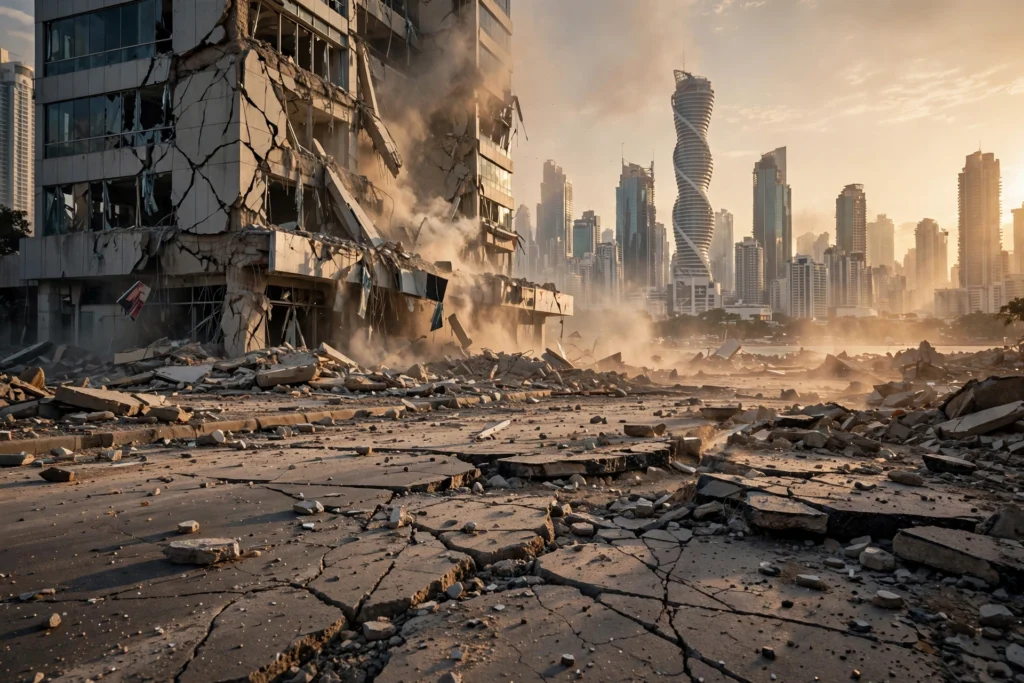
7.7-Magnitude Earthquake Shakes Panama: Buildings Crack, Streets Empty in Mass Evacuations
A Powerful Earthquake Hits Panama: What Happened, Who Felt It, and What Comes Next
Imagine sitting at your office desk on an ordinary Friday afternoon when the floor starts to move under your feet. The windows rattle. Your coffee spills. And then somebody yells the word nobody wants to hear: evacuate.
That’s exactly what happened across Panama on October 9, 2026, when one of the strongest earthquakes to strike the country in decades rocked its southern provinces. In a matter of seconds, a normal workday turned into a scramble for safety — from cracked cathedrals in small towns to shaken skyscrapers in Panama City, more than 100 kilometers away.
Here’s the full story: how big the Panama earthquake really was, the damage it caused, why tsunami alarms briefly lit up across two continents, and what residents are bracing for now.
A 7.7-Magnitude Quake, Striking Just Before 1 PM
The earth shook at 12:56 p.m. local time on Friday, when a massive magnitude 7.7 earthquake struck near Panama’s southern coast, according to the U.S. Geological Survey (USGS). Panama’s own Geosciences Institute measured it slightly lower, at magnitude 7.2 — a common early discrepancy as different monitoring networks analyze the data. Either way, scientists agreed on one thing: this was a major seismic event.
The epicenter sat near the southern tip of the country, in Herrera province, roughly 14 kilometers southwest of the community of Pitaloza Arriba and not far from the town of Tonosí. What made this quake especially jarring was how shallow it was — the USGS put the depth at about 12.6 kilometers. When an earthquake ruptures that close to the surface, far more of its energy slams into buildings above instead of being absorbed deep underground.
Seismologists attributed the shaking to the Azuero-Soná fault system, a fracture in the earth’s crust that cuts across the Azuero Peninsula. The USGS said the quake involved left-lateral strike-slip movement — the two sides of the fault grinding horizontally past each other. It wasn’t a surprise in geological terms: Panama sits near the Pacific’s notorious “Ring of Fire,” the 40,000-kilometer band of volcanoes and fault lines where most of the world’s earthquakes happen. Significant historical events in the region include a magnitude 7.5 quake in 1934 and a magnitude 7.2 in 1962.
Buildings Cracked, Streets Emptied
The shallow quake was felt across much of the country. In Panama City — home to hundreds of skyscrapers — buildings swayed and office workers poured into the streets, waiting anxiously for updates. Communications were briefly disrupted in some areas.
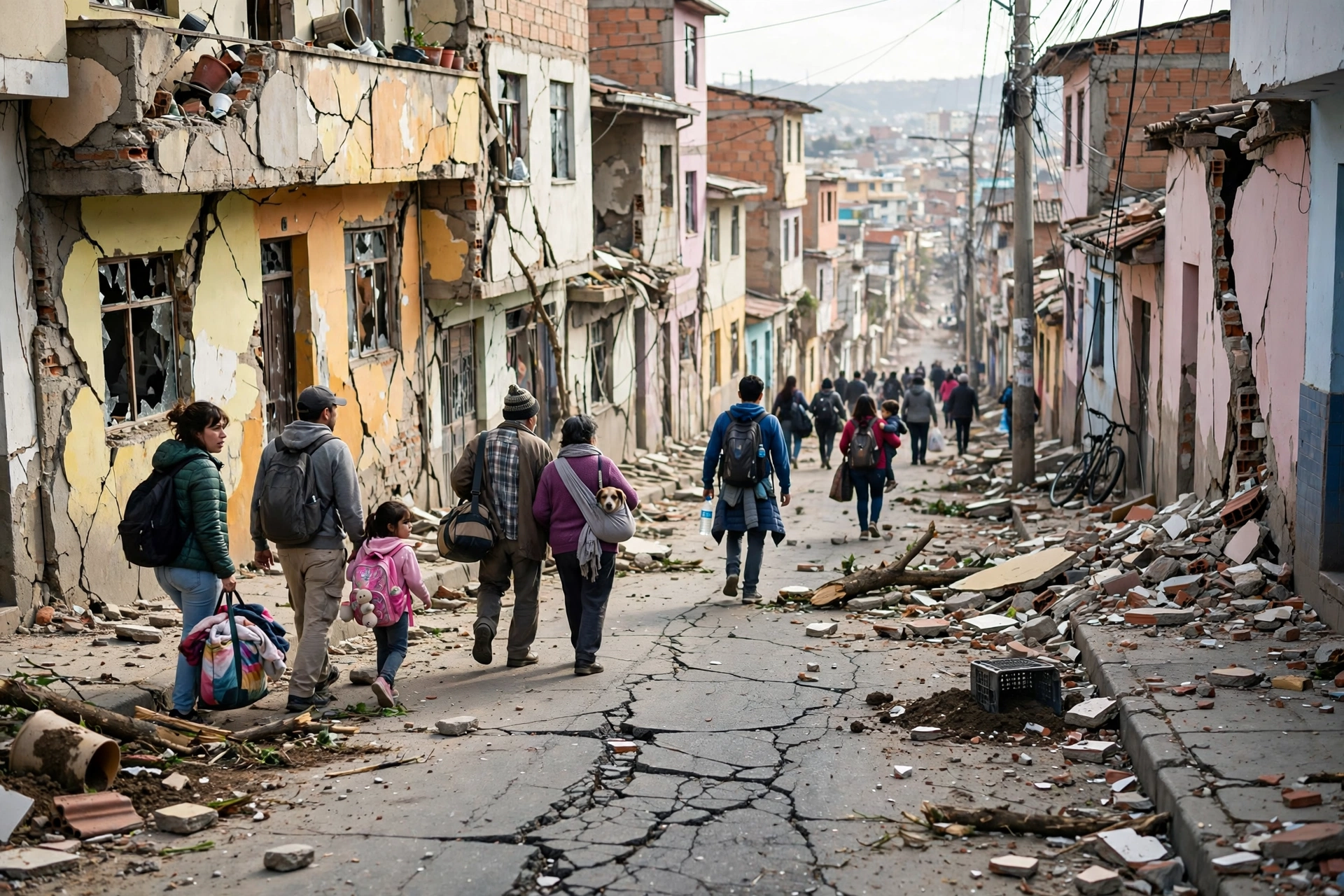
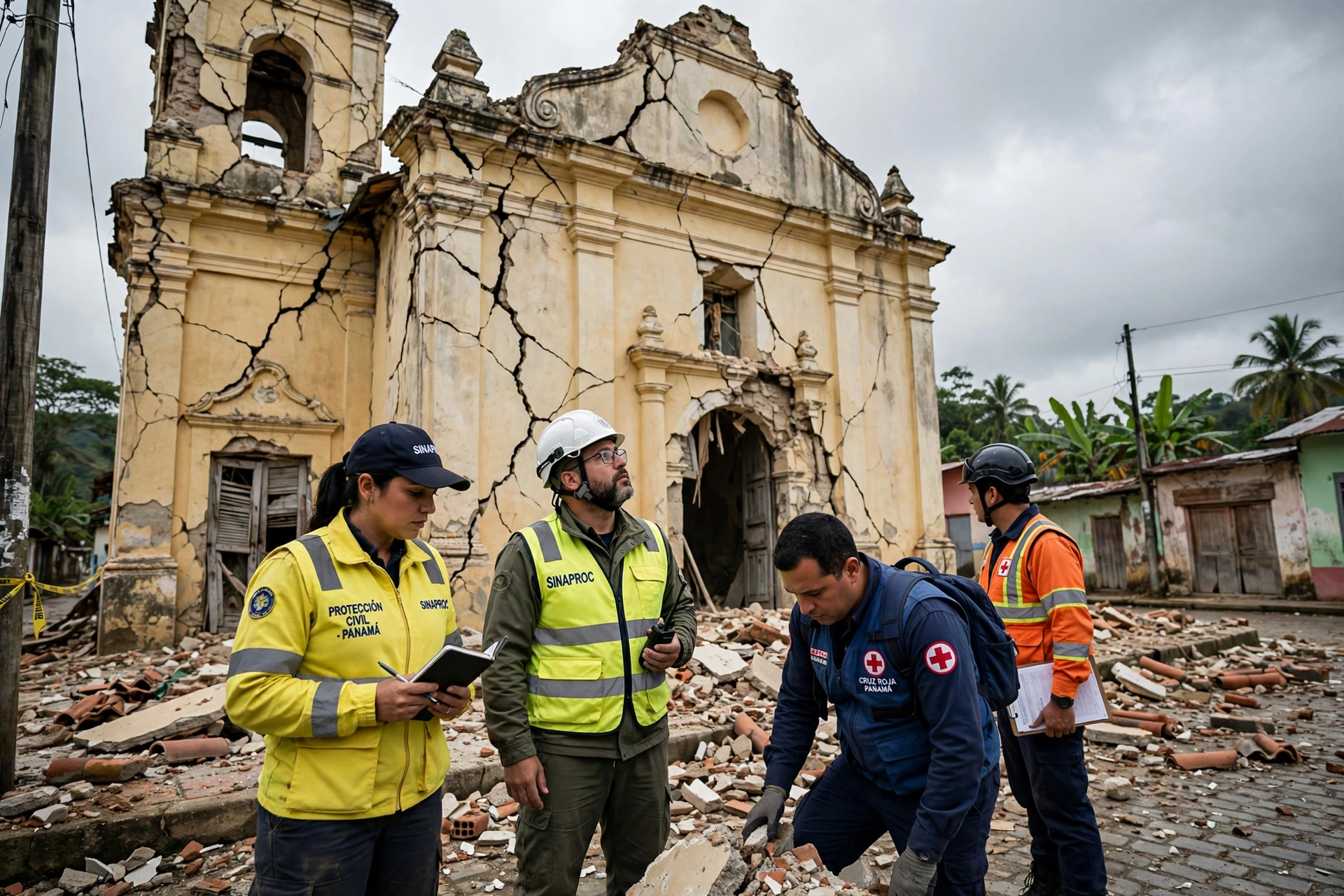
The heaviest damage appeared in the central provinces of Veraguas, Herrera and Los Santos, near the epicenter. In Penonomé, damage was documented at the San Juan Bautista Cathedral, the provincial government building, Hotel Dos Continentes and Iguana Mall. Early damage reports also came in from Venao and Chitré. Panama’s National Civil Protection Service (Sinaproc) advised residents to stay clear of visibly damaged structures until they could be inspected.
The authorities moved fast. Panama’s Education Ministry suspended afternoon classes nationwide and closed its administrative offices. Tocumen International Airport briefly suspended operations as a precaution. The Panama Canal — the country’s economic lifeline — kept functioning normally. President José Raúl Mulino urged calm, telling the public on X: “What happened should not be used to cause alarm or disorder.”
Mass evacuations like this are never taken lightly. They follow the same kind of split-second decision-making seen when a major hurricane forced Gulf Coast evacuations — officials would always rather move people out of harm’s way than wait to count the damage.
Tsunami Warnings Across the Pacific
Within minutes of the quake, the U.S. National Weather Service issued a tsunami warning covering Pacific coastal areas of Panama, Colombia, Ecuador, Nicaragua and Guatemala. For residents of low-lying coastal communities, it was a terrifying second act to the shaking.
Fortunately, the threat never materialized. The U.S. Tsunami Warning Centers later reported that no tsunami warning, advisory, watch or threat remained in effect, and monitoring agencies stood the alerts down after further evaluation. Hazardous waves had been considered possible along an even wider stretch of coastline, from Costa Rica to Mexico — a reminder of how seriously a quake this size is treated across the region.
More Than 80 Aftershocks — Including a 6.6
If the main quake wasn’t frightening enough, the ground refused to settle. The USGS recorded aftershocks of magnitudes 5.8 and 5.5, and seismologists at the University of Panama later recorded more than 80 aftershocks in total, most too weak to feel.
The largest of them was no small event on its own: a magnitude 6.6 aftershock struck at 8:25 p.m. UTC the same day, strong enough to rattle nerves and threaten already weakened buildings. Officials warned that more aftershocks should be expected — a normal pattern, but a nerve-shredding one for families still assessing cracks in their walls.
Even Sports Took a Hit: Football Ferns Confirmed Safe
The earthquake reached into an unexpected corner of the news: international football. New Zealand’s national women’s team, the Football Ferns, were in Panama preparing for two international friendlies when the quake struck near La Pitaloza in Herrera province — southwest of Panama City, close to where the squad was based.
New Zealand Football confirmed on Saturday that all members of the squad and support staff were safe and accounted for, and that it was in contact with local authorities, team management and match organizers. A domestic league fixture at the Estadio Rommel Fernández Gutiérrez in Panama City — the venue for the friendlies — was among the matches suspended, with stadium inspections ordered before sporting activities could resume.
It’s a reminder that natural disasters don’t just disrupt lives; they interrupt everything from school days to high-profile international sporting fixtures. For the Ferns and their fans, the relief is that this story ends with everyone safe.
Frequently Asked Questions
How strong was the Panama earthquake?
The USGS measured the main quake at magnitude 7.7, while Panama’s Geosciences Institute reported magnitude 7.2. It struck at 12:56 p.m. local time on Friday, October 9, 2026, at a shallow depth of about 12.6 kilometers near the southern coast — making it one of the strongest quakes to hit the country in decades.
Was there a tsunami?
No tsunami occurred. A tsunami warning was briefly issued for Pacific coastal areas of Panama, Colombia, Ecuador, Nicaragua and Guatemala, but monitoring agencies stood the warnings down after assessing the threat. The Panama Canal continued operating normally throughout.
How much damage did the earthquake cause?
Damage was concentrated in the central provinces of Veraguas, Herrera and Los Santos, with cracked buildings reported in Venao, Chitré and Penonomé — including a cathedral, a government building, a hotel and a shopping mall. No damage was reported in Panama City itself. A complete national assessment was still underway as authorities surveyed infrastructure.
Are aftershocks continuing?
Yes. Seismologists at the University of Panama recorded more than 80 aftershocks, including a magnitude 6.6 event the same evening. Officials have warned that further aftershocks should be expected, and advised people to stay out of visibly damaged buildings until they are inspected.
The Bottom Line
Panama dodged the worst-case scenario on October 9 — a shallow 7.7-magnitude quake, a multi-country tsunami scare, and yet no confirmed wave and no reported damage in the capital. But the cracked cathedrals, the closed schools and the families still waiting for building inspections are a sobering reminder of how thin the margin between routine and catastrophe can be in an earthquake zone.
For now, Panama is in watch-and-recover mode: engineers surveying structures, officials monitoring the fault line, and residents keeping one eye on the ground beneath their feet. We’ll keep following this story as damage assessments and aftershock updates come in.
Sources
Facts in this article were verified from the U.S. Geological Survey’s earthquake report, Panama’s Geosciences Institute via Balboa News, Euronews reporting, the University of Panama’s aftershock data, and an official safety statement from New Zealand Football.
Pingback: Nepal Flash Flood: Budhi Gandaki River Sweeps Away Homes and Bridges, Villagers Evacuated - Storion News