
Kolkata Durga Puja Stampede: 19 Dead as Rain and Crowd Surge Turn Chorbagan Pandal Into Tragedy
What was supposed to be a night of celebration turned into one of Kolkata’s worst tragedies in years
Ask anyone in Kolkata, and they’ll tell you Durga Puja is more than a festival — it is the city’s heartbeat. For four days every autumn, the streets fill with millions of people moving from pandal to pandal, eating, laughing, praying. On Saturday evening, at the Chorbagan Sarbojanin Durga Puja pandal in north Kolkata, that heartbeat stopped for nineteen families. A sudden crowd surge, heavy rain and a collapsing exit structure turned an ordinary evening of worship into a stampede that killed 19 people and injured 25 more.
How does this keep happening? That is the question ringing across West Bengal this morning — and it deserves an honest answer.
What happened at the Chorbagan pandal
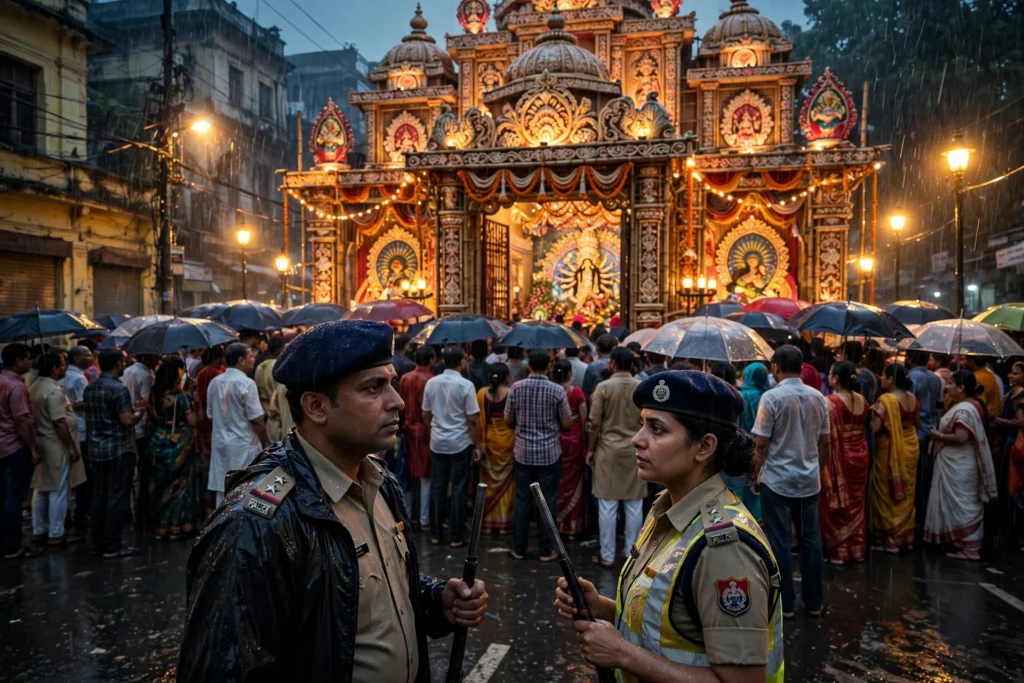
According to news agency PTI, citing West Bengal Chief Minister Suvendu Adhikari, the crush began on Saturday evening at the Chorbagan pandal, one of north Kolkata’s busiest. A sudden burst of rain drove visitors to rush toward the exit all at once. Then, per multiple reports, a portion of the exit gate structure collapsed — and panic spread faster than anyone could contain it.
Preliminary accounts, reported by outlets including The Daily Jagran, point to a chain of small failures that became one catastrophic one: a loudspeaker announcement by the puja organisers, repeated whistles blown by private security guards, a narrow exit route, and poor lighting. Together, they created exactly the kind of bottleneck that crowd-safety experts warn about before every major festival — and exactly the kind that keeps being ignored.
Rescue teams, Kolkata Police and hospital staff worked through the evening. Seventeen of the dead were brought to Calcutta Medical College and Hospital, where 25 injured were also treated. One of the injured remains in critical condition; eleven injured were referred to SSKM Hospital, with others taken to Calcutta Medical College and Hospital.
Who the victims were
The dead range from a 13-year-old boy to a 66-year-old man — a cross-section of the city and beyond. Among those named in reports: Sriparna Poddar (26), Mithu Mondal (45), Akriti Kumari (17), Barnali Haldar (17), Shubham Shankar (33), Aarti Sarkar Biswas (45), Tagor Bej (37), Tania Biswas (18), Kalpana Jana (46), Vikas Bhattacharya (66), Sneha Bhandari (20), Sandeep Bej (14), Piyali Pramanik (25), Priya Samaddar (18) and Pranjal Sarkar (13).
A married couple, Dilip Ghosh (59) and Deepali Ghosh, died together. And two members of the same family from Bihar — Abhishek Srivastava (38) and his 7-year-old son Ayansh — were among the dead, a reminder that Durga Puja draws devotees from far beyond Kolkata.
Arrests and the probe: who is being held responsible
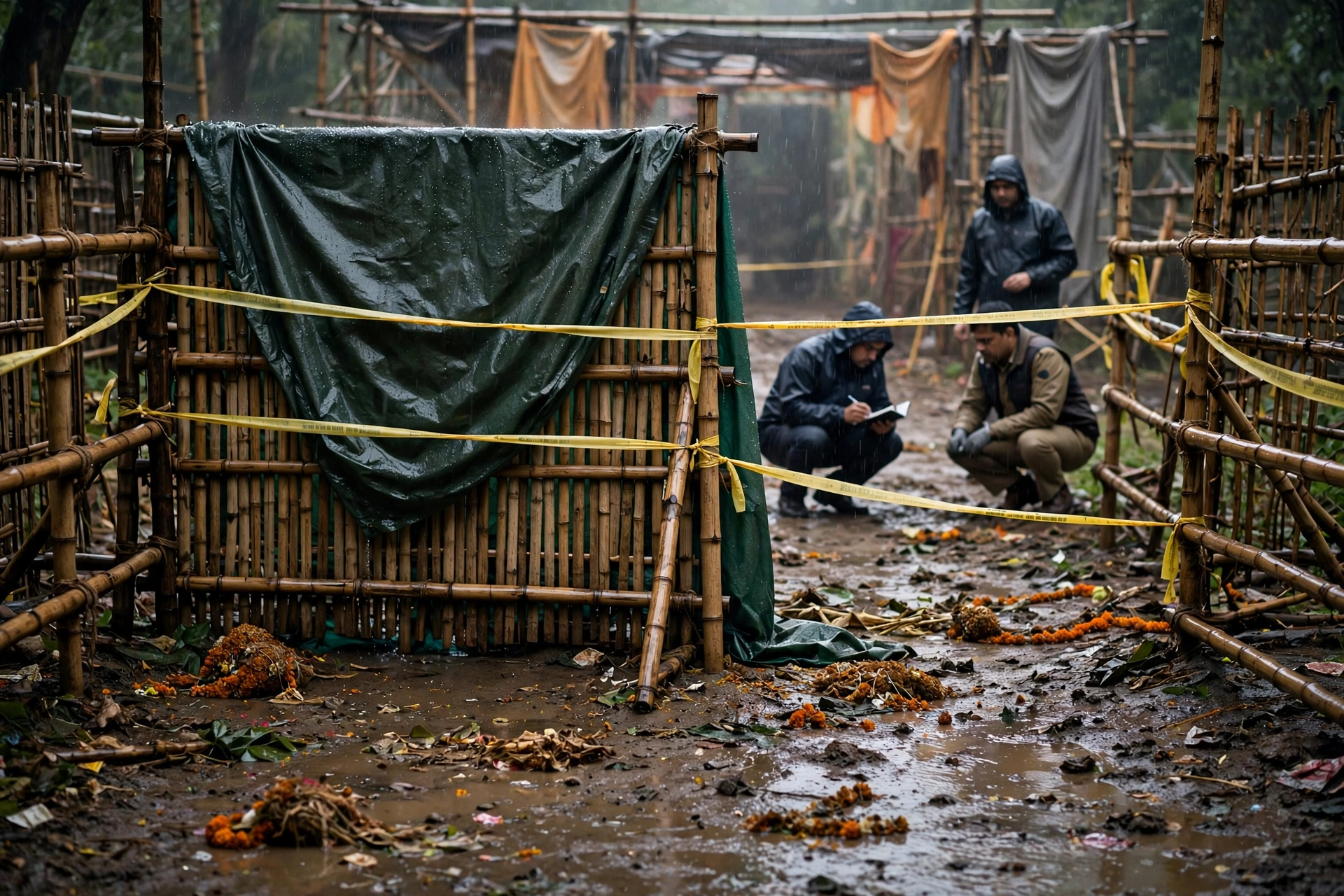
Kolkata Police have registered a case against the organisers and others, based on a complaint filed by a sub-inspector of Girish Park police station. So far, seven people have been arrested and fourteen detained for questioning. The arrested include puja committee secretary Raj Kumar Sewda alias Raja (48), vice president Santanu Dubey (55), Biplab Mukherjee alias Joy (48) — the man involved in constructing the bamboo structure — Koushik Saha (53) and Pintu Dey (51), who handled crowd control and VIP pass checking, and private security in-charges Suman Chakraborty (30) and Rajesh Pal (29).
Investigators are examining CCTV footage to determine whether lapses in crowd management contributed to the tragedy. The site has been handed over to forensic experts, the police Special Task Force and the Fire Brigade. And in a significant step, the state has ordered a judge-led probe — a Special Investigation Team supervised by a sitting Calcutta High Court judge — alongside a high-level committee to review pandal safety across the city.
Compensation, hospital visits and the political response
Chief Minister Suvendu Adhikari visited the injured at Calcutta Medical College and Hospital and announced an ex-gratia of Rs 25 lakh for the family of each deceased person, along with a Group D government job for one eligible member of every bereaved family. The injured will receive Rs 5 lakh each, with the state covering the full cost of their medical treatment. Prime Minister Modi also announced relief from the Prime Minister’s National Relief Fund for the victims’ families.
On Sunday, Union Home Minister Amit Shah and the Chief Minister visited injured victims at Apollo Hospital. The Chief Minister has said corrective steps will follow from the probe reports, and advised organisers to conduct pujas with priests only while installing LED screens outside pandals rather than allowing visitors inside — a measure meant to thin out the crowds without cancelling the festival.
This isn’t the first time large gatherings in India have raised safety alarms. Earlier this year, a false hijack alarm forced Air India flight AI2030 to divert to Jaipur — a different kind of scare, but another reminder of how quickly routine situations turn critical when systems fail. And earlier this month, authorities foiled a shooting plot targeting a Hindu temple in Aurora, Colorado, underscoring how much vigilance crowded places of worship demand everywhere.
A wider safety crisis at India’s religious gatherings
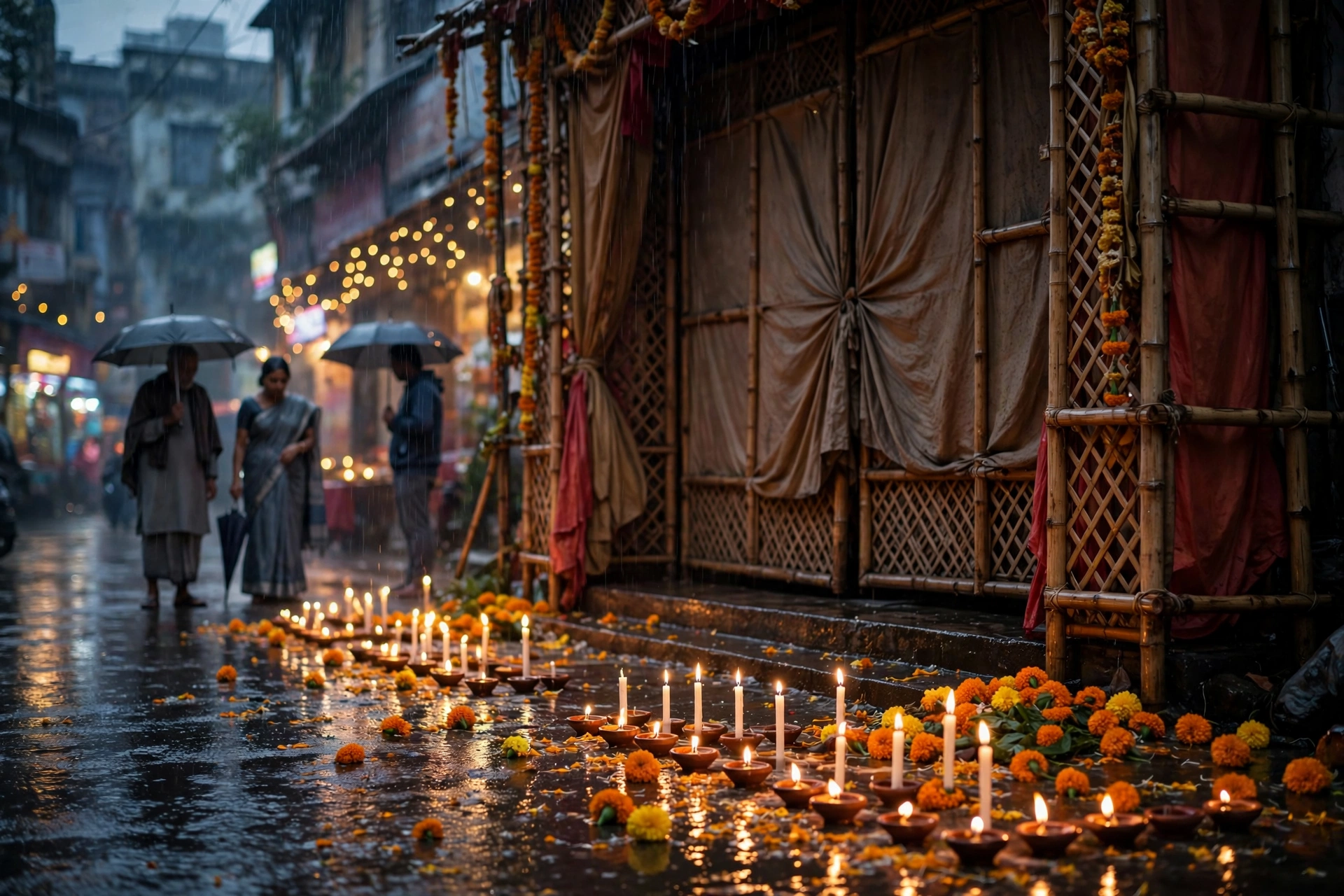
The Chorbagan stampede is among the deadliest crowd incidents at a religious gathering in West Bengal in recent memory — and it arrives at a moment when crowd safety at India’s large public events is already under intense scrutiny following similar tragedies at religious gatherings in other states. Roughly 58,000 Durga Puja celebrations are continuing across West Bengal even now. Prohibitory orders have been imposed near the Chorbagan pandal, which has been closed, and helplines set up for families.
The uncomfortable truth: every major stampede investigation in India ends with the same findings — narrow exits, poor crowd control, vague accountability — and then another festival season arrives. The judge-led SIT and the safety committee could break that cycle, or they could become another file in a drawer. What happens in the next three weeks of puja season will tell.
Frequently asked questions
What happened at the Chorbagan Durga Puja pandal?
A stampede at the Chorbagan Sarbojanin Durga Puja pandal in north Kolkata on Saturday evening, October 17, killed 19 people and injured 25. A rain-driven crowd surge at the exit, compounded by the partial collapse of the exit gate structure, narrow exits and poor lighting, caused a deadly crush, according to preliminary reports cited by PTI and local outlets.
How many people died in the Kolkata Durga Puja stampede?
Nineteen people died, according to figures provided by the West Bengal government. Seventeen were brought dead to Calcutta Medical College and Hospital. Twenty-five were injured, with one in critical condition.
What compensation has the government announced?
Chief Minister Suvendu Adhikari announced Rs 25 lakh in ex-gratia and a Group D government job for one eligible member of each of the 19 bereaved families. Each injured person receives Rs 5 lakh, with full medical expenses covered by the state. Prime Minister Modi also announced relief from the national relief fund.
What is being done to prevent another stampede?
A Special Investigation Team led by a sitting Calcutta High Court judge will probe the incident, and a high-level committee will review pandal safety. Seven people have been arrested, CCTV footage is being examined, and the state has urged all organisers to follow fire brigade and police crowd-control guidelines strictly.
The bottom line
Nineteen people went to a festival and never came home. That sentence should be impossible to write in 2026 — and yet the recipe for it is ancient: too many people, too little space, too little planning, and a single spark of panic. The arrests, the ex-gratia and the judge-led probe are the right first steps. But the real test isn’t whether Kolkata finds someone to blame for Chorbagan — it’s whether next year’s Durga Puja has wider exits, real crowd counts and someone in charge who treats safety as sacred as the festival itself. Until then, every crowded pandal in Bengal is a gamble nobody signed up for.