

16 Pulled From Dark Pacific Waters, 11 Still Missing: The Harrowing Coast Guard Rescue Off Baja California
Imagine being in the water at 1 a.m., 140 miles from the nearest shore, holding onto a piece of debris with everything you have — and the only thing standing between you and the dark Pacific is a helicopter crew flying toward a mayday call. That is exactly what 27 people lived through early Friday morning off Mexico’s Baja California coast. Sixteen of them made it out alive. Eleven are still missing.
The U.S. Coast Guard’s response — launched within hours of the distress call — is being described as one of the most dramatic mass rescues in recent years off the Southern California maritime border. And the details emerging from the survivors are almost unbearably grim: hours adrift in cold water, some suffering injuries consistent with shark bites while they waited for help that seemed like it might never come.
The 1 A.M. Mayday Call That Launched a Massive Rescue
It started with a mayday call transmitted from the sinking vessel at approximately 1:00 a.m. local time on Friday, October 16. Someone on board had managed to send a distress signal saying the boat was going down — and then, silence.
Coast Guard Lieutenant Santiago Tamburini later described what happened next. A rescue helicopter reached the remote site roughly two hours after the distress call — a staggeringly fast response given the location: about 140 miles (225 kilometers) west of Ensenada, Mexico, far outside U.S. waters in the open Pacific.
What the crew found was chaos. Survivors were scattered across the water, some clinging to floating debris, others simply holding onto each other. The rescue swimmer went into the sea, and it took the crew approximately 90 minutes to haul all 16 people out of the water, one by one.
“People were holding onto each other, to debris, just treading and trying to stay above water before being rescued,” Tamburini said. It is a simple sentence. It tells you everything about those hours.
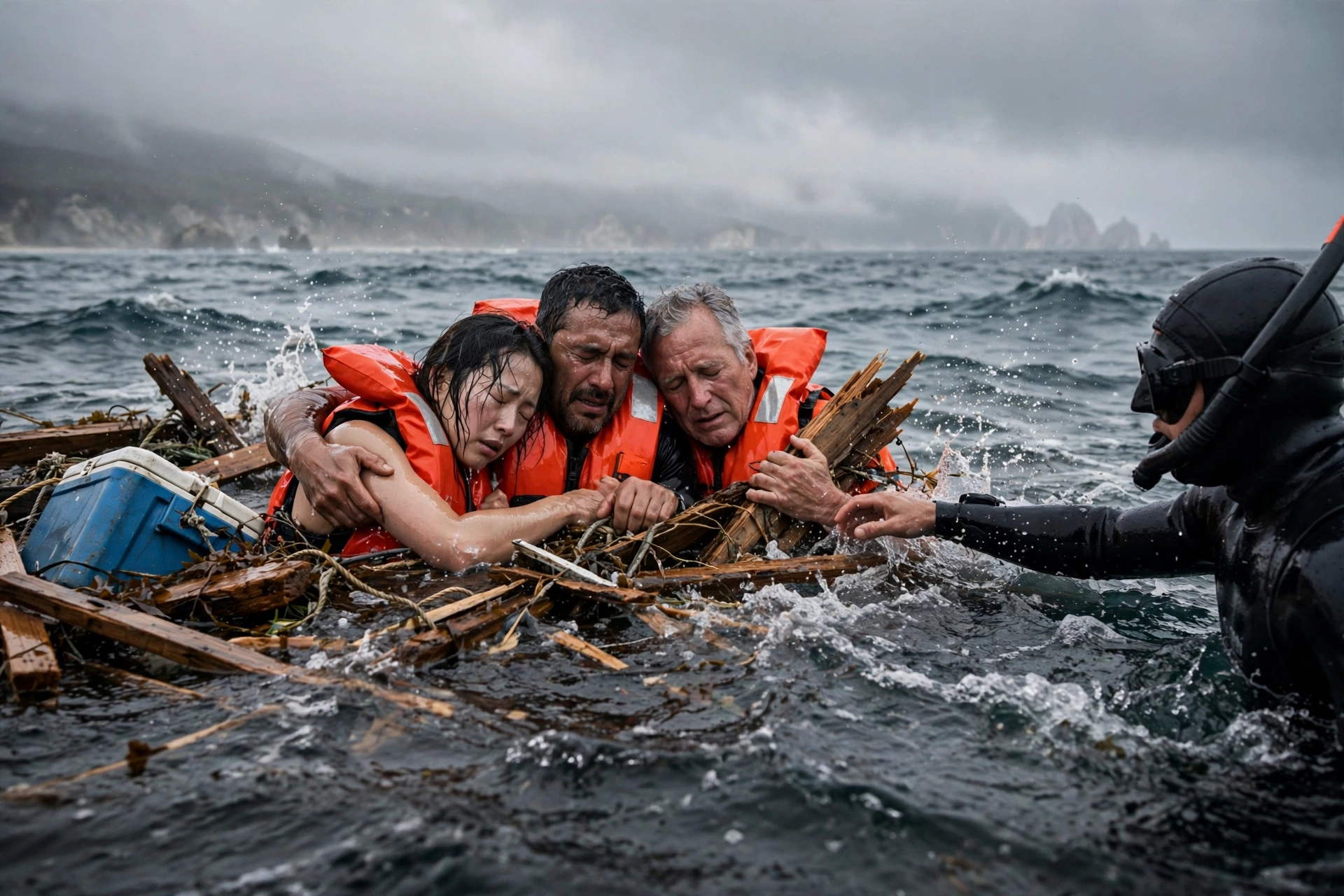 Survivors clung to each other and floating debris for hours in the open Pacific before the Coast Guard helicopter arrived. (Illustrative image)
27 Aboard, 16 Rescued — and Wounds That Suggest Shark Encounters
Once the survivors were aboard, investigators began piecing together what happened. According to those rescued, 27 people had been on the vessel when it capsized. That left 11 unaccounted for — and triggered a search operation spanning some 950 square nautical miles (roughly 3,200 square kilometers) of open ocean.
The Mexican consulate in San Diego confirmed that all 16 rescued passengers were Mexican nationals. But the boat’s origin, its destination, and what exactly it was doing remain unclear. The area where it went down is frequented by smugglers moving migrants toward the United States — it is also popular with fishing and leisure boats, which makes pinning down the vessel’s purpose harder.
Then came the detail that shocked even seasoned rescue personnel: several survivors had severe injuries consistent with shark bites. Three of the 16 rescued sustained injuries of that nature, the Coast Guard told USA TODAY, and Coast Guard crews provided life-saving first aid while transporting them toward San Diego. One survivor was being treated for a suspected shark bite and two were in critical condition, authorities said.
Three survivors were taken to Scripps Mercy Hospital in San Diego, according to hospital spokesperson Janice Collins. One was treated for a suspected shark bite; two others were being treated for cold exposure — because even in October, hours in the Pacific can kill you by hypothermia long before anything else gets to you.
A Search Across Two Navies and 950 Square Miles
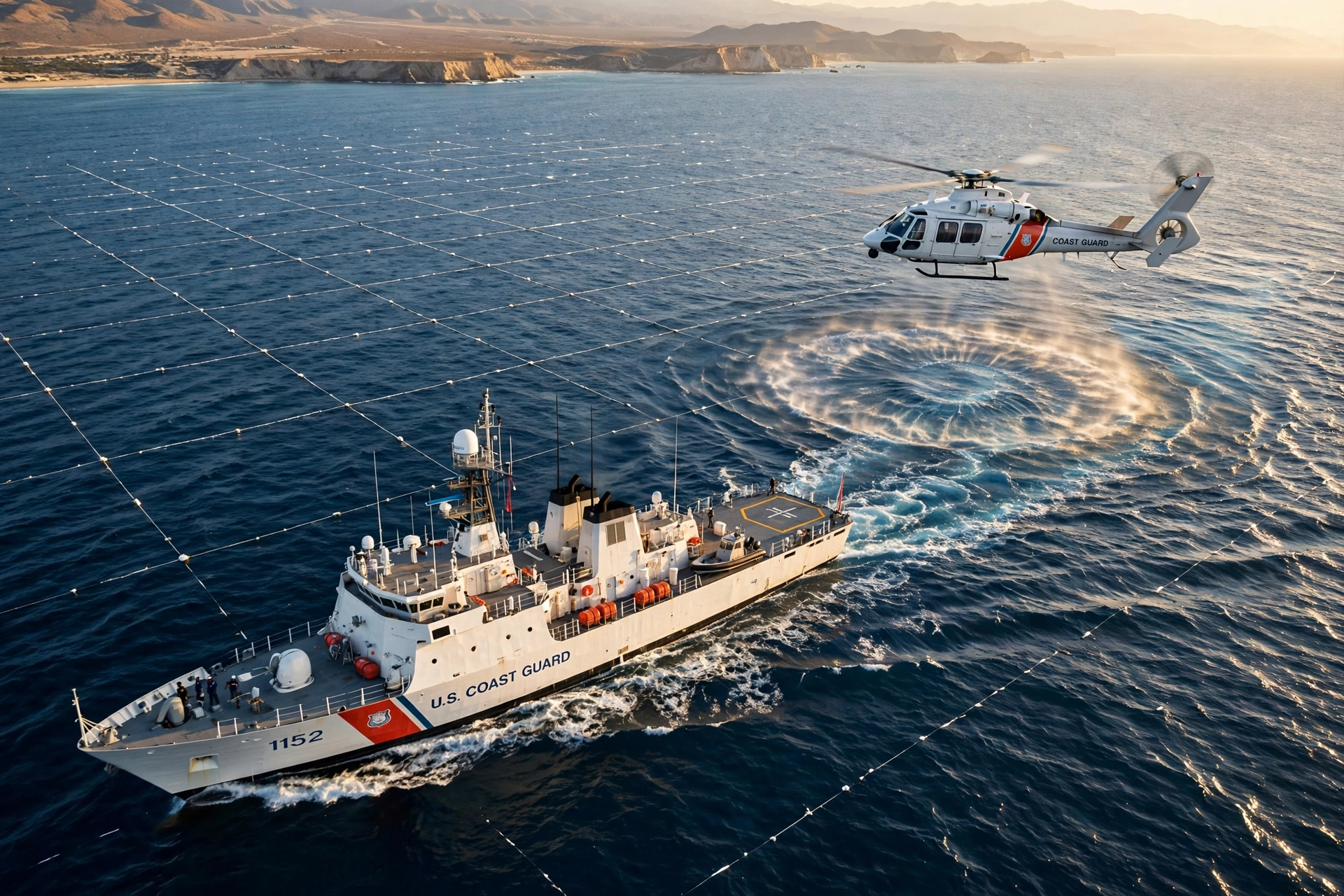
The search for the 11 missing drew in an extraordinary coalition: the U.S. Coast Guard, the U.S. Navy, and the Mexican Navy, deploying helicopters, a fixed-wing aircraft, a Coast Guard cutter, and a Navy combat ship. The Coast Guard planned to add another helicopter to the operation as the search grid expanded across the Pacific.
Crews kept combing the search area through Saturday and into Sunday, October 18 — but no additional survivors had been reported found. At sea, the math is brutal: every hour that passes reduces the odds of survival, and the waters west of Baja are vast.
Why This Stretch of Ocean Keeps Turning Deadly
This is not an isolated tragedy. The waters off Baja California and Southern California have become one of the most dangerous maritime corridors in North America — a place where desperation meets the ocean.
Migrants are increasingly turning to smugglers’ boats to reach the United States by sea, attempting to avoid heavily guarded land borders. The vessels are often small, open wooden fishing boats — “pangas” — overloaded far beyond safe capacity and launched in the dead of night.
The record is grim. In May 2025, at least three people died when a panga flipped off the coast about 35 miles north of the U.S.-Mexico border. And in 2023, eight people were killed when two boats approached a San Diego beach in heavy fog — one capsized in the surf. It was one of the deadliest maritime smuggling cases ever recorded in waters off the U.S. coast.
It is the same cruel arithmetic of the sea that we saw this week in the Strait of Hormuz crisis, where thousands of sailors found themselves trapped in contested waters — a reminder that the ocean remains one of the most unforgiving environments on Earth, whether the danger comes from geopolitics or from a smuggler’s overloaded boat.
The Coast Guard has repeatedly warned about the surge in maritime smuggling attempts off California’s coast. But warnings mean little to people willing to risk everything for a chance at a different life — and they mean nothing at all once a boat starts taking on water 140 miles from shore.
The Investigation: What We Still Don’t Know
Investigators are still trying to answer the most basic questions: Where did the boat come from? Where was it going? Who organized the voyage? Debris and floating seats were found in the search area, but the vessel itself was never recovered intact.
What is known is that the boat went down in an area frequented by smugglers transporting migrants to the U.S. — but officials have been careful not to definitively label this a smuggling operation until the investigation is further along. Petty Officer Chris Sappey noted that it remained unclear why the individuals were in the water or what they were doing.
The survivors’ medical conditions had not been updated publicly as of Sunday. And for the families of the 11 missing, the wait continues — the kind of wait that no one should have to endure.
What the Rescuers Say It Took
Mass rescues like this one are the kind of operation the Coast Guard trains for but rarely hopes to face. Pulling 16 exhausted, injured, hypothermic people from open water in the dark — over 90 minutes, in ocean swells, with a rescue swimmer in the water — is an extraordinary feat of seamanship and nerve.
The coordinated response also speaks to something larger: when disaster strikes at sea, it does not respect borders. American helicopters, an American cutter, a Navy combat ship, and the Mexican Navy all searched together for people who, hours earlier, had been strangers. That is what emergency response is supposed to look like — as we also saw in the massive rescue response at CFB Wainwright, where overwhelming force and coordination saved lives against impossible odds.
FAQ: Coast Guard Baja Rescue
How many people were on the boat when it capsized?
Survivors told authorities that 27 people were aboard the vessel. Sixteen were rescued; 11 remained missing as of Sunday, October 18.
Where did the boat go down?
Approximately 140 miles (225 kilometers) west of Ensenada, Mexico, in the Pacific Ocean — outside U.S. waters, in an area known both for smuggling routes and for fishing and leisure boating.
Did survivors really suffer shark bites?
The Coast Guard reported that several survivors had severe injuries consistent with shark bites. Three of the 16 rescued sustained injuries of that nature, according to what the agency told USA TODAY. Officials have not publicly established the exact circumstances of the injuries.
Who were the survivors?
The Mexican consulate in San Diego confirmed all 16 rescued passengers were Mexican nationals. They were transported to hospitals in San Diego, with some in critical condition.
Is the search still ongoing?
As of Sunday, October 18, the U.S. Coast Guard, U.S. Navy, and Mexican Navy were still searching. No additional survivors had been reported found.
The Bottom Line
Sixteen people are alive today because a helicopter crew flew into the dark Pacific on two hours’ notice and pulled them out one by one. Eleven more are still out there. And somewhere in the cold water west of Ensenada, the question of how 27 people ended up in an overloaded boat at 1 a.m. remains unanswered.
This is the story the Coast Guard’s rescue numbers don’t tell: every one of those rescues represents someone who, in the dark, decided to keep treading water for one more minute. For 16 of them, it was enough. For 11 others, we still don’t know.
Storion News will continue following this story as the search develops. Sources: The Associated Press, USA TODAY, Al Jazeera, The New York Times, hospital officials in San Diego.