
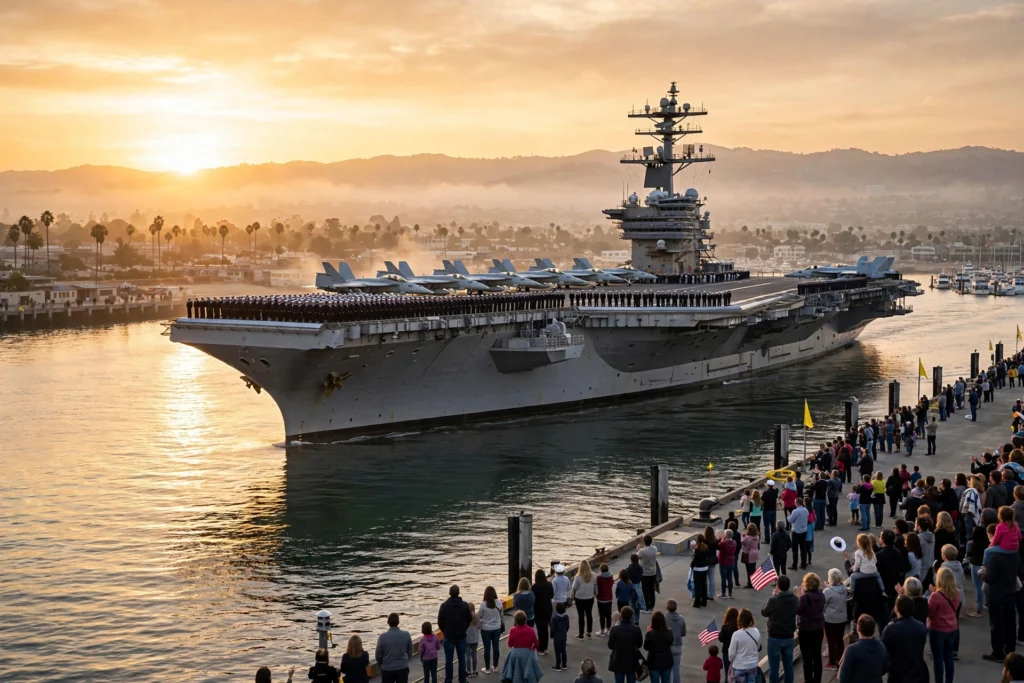
USS Lincoln Homecoming: Carrier Returns to San Diego After 320 Days at Sea
Picture this: you leave home in November, say goodbye to your family, and don’t touch solid ground — not once — for more than eight months.
That was life aboard the USS Abraham Lincoln. On Thursday, October 8, 2026, the giant Nimitz-class aircraft carrier sailed into San Diego Bay, ending a deployment that stretched past 320 days — the second-longest carrier deployment since the Vietnam War. Sailors who had spent over ten months in a combat zone, surrounded by nothing but ocean, finally got to hold their families again. Some of them met their babies for the very first time.
It was a homecoming filled with tears, flags, and a long list of comfort foods. But behind the celebration lies a much darker story — one of grueling combat operations, mental health crises, and questions about how long the US Navy can keep pushing its crews this hard. This is the full story of the USS Lincoln homecoming, and why it matters far beyond one harbor in California.
A Tearful Return to San Diego
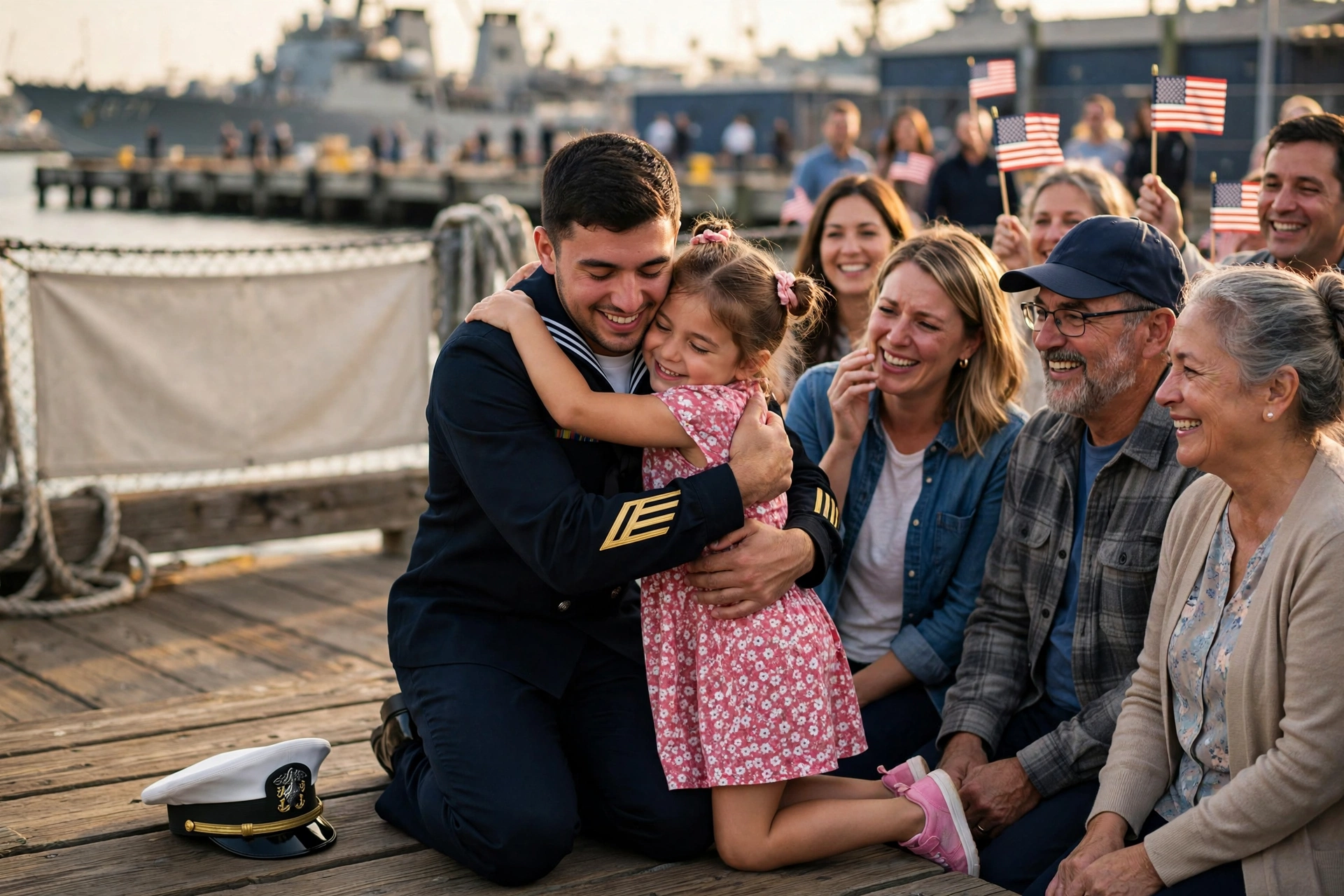
The scene at Naval Base Coronado was pure emotion. As the Lincoln — one of the largest warships on Earth — glided into San Diego Bay, the pier was packed with families waving American flags and homemade banners. The Associated Press captured the kind of moments that make even hardened sailors break down.
Among the first to step off the carrier were 64 fathers meeting their babies for the first time, the Navy said. Counting the ship’s air wing, the number of brand-new dads aboard was 122. Sailor Kathy Monterrosa stood on the pier holding her 6-month-old daughter, Sarahi, dressed in a tiny blue-and-white sailor dress. “She’s our deployment baby,” Monterrosa said. She had spent her pregnancy terrified, hearing about the conditions aboard while her husband was thousands of miles away. When he finally called, his description of life on board was blunt: “pretty bad.”
Sailor Steven Rivas beamed as he held his own 7-month-old daughter, his eyes welling up as the ship pulled into the bay. “I couldn’t grasp the reality of it,” he said, describing the moment he saw his family waiting on the pier. Alma Solano Velez said her husband had given her an extensive list of the foods he had been craving for the past ten months: oxtail, barbecue chicken, broccoli, and shrimp empanadas, to name a few.
After 320-plus days at sea, who could blame him?
What Turned a Routine Deployment Into a Record-Breaker
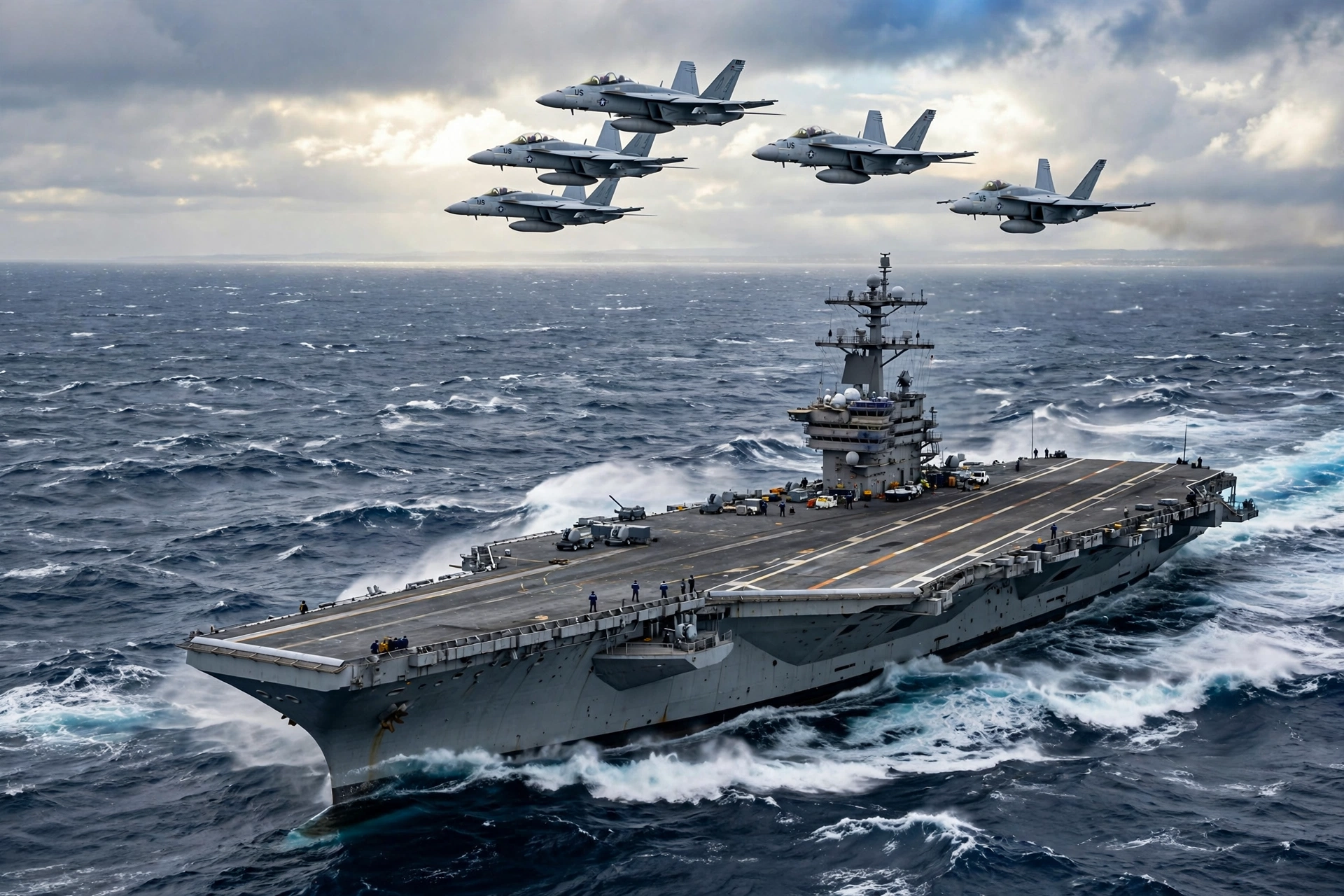
The Lincoln left Naval Air Station North Island in San Diego in November 2025, originally headed for a scheduled deployment to the Pacific. But the plan changed fast. When the United States and Israel launched military operations against Iran in February 2026, the carrier was redirected to the Middle East — and stayed there.
What followed was one of the most punishing deployments in modern US Navy history. According to the Pentagon, the ship logged a “record-breaking 321 days” on deployment, including 264 consecutive days at sea without docking at any port. Its crew of more than 5,000 sailors and Marines flew thousands of combat flight missions and steamed over 90,000 miles — roughly 145,000 kilometers — in support of the campaign.
To put that in perspective: the previous record for consecutive days at sea was 206, set by the USS Eisenhower in 2020. The Lincoln blew past it by nearly two months. Only one carrier has endured a longer deployment in the past half-century — the USS Gerald R. Ford, whose 326-day deployment during the same Iranian conflict ended with a homecoming this past May.
The deployment was extended again and again, keeping thousands of sailors separated from their families far longer than anyone had planned. The ship’s first port call in more than 260 days finally came in Thailand, where the crew spent a single week before turning back toward American waters.
The Hidden Toll: Mental Health Under Strain
Here is the part of the story that didn’t make the highlight reels. As the months dragged on, the strain aboard the Lincoln became impossible to hide. Reports described supply shortages, disrupted mail deliveries, poor sanitary conditions, and sailors who couldn’t reach their families even at the worst moments — including when Iran attacked the US naval base in Bahrain.
Then came the number that stopped everyone cold. In a September letter to Senator Kirsten Gillibrand, who sits on the Senate Armed Services Committee, Acting Navy Secretary Hung Cao disclosed that eight service members assigned to the Lincoln Carrier Strike Group had attempted suicide during the deployment. The figure covers the carrier, its embarked air wing, and accompanying warships. The Navy says no one in the strike group died by suicide.
Some sailors told their families there were too few mental health professionals aboard and too little psychiatric support during the endless months without a single port call. A few outlets reported sailors attempting to jump overboard. Whether every one of those reports holds up, the overall picture is grim: a crew pushed to its limits by an operational tempo that never let up.
How far can the Navy stretch its crews before the human cost becomes the story itself?
Hegseth’s Citation — and His Message to the Media
Ahead of the return, Defense Secretary Pete Hegseth awarded the Lincoln’s crew the Presidential Unit Citation — an honor typically reserved for significant achievement in combat. The Lincoln is the second carrier of the Iran war to receive it, after the Ford.
Hegseth used the occasion to praise the crew and push back hard against reporting on conditions aboard the ship, accusing outlets of trying to turn the USS Abraham Lincoln into “a symbol of dysfunction” and “a symbol of low morale.” When he spoke to the crew, he said, the reality was the opposite — success and excellence under extraordinary difficulty.
But the Pentagon’s defensive posture shows just how sensitive this has become — the scrutiny of American conduct in the Iran campaign has played out on the world stage, in a week that also saw the spotlight fall on Navi Pillay’s 2026 Nobel Peace Prize followed by Washington’s extraordinary decision to sanction the International Criminal Court within hours.
The Bigger Picture: An Overstretched Force
The Lincoln’s deployment doesn’t exist in a vacuum. It happened in the same war that just forced the United States to pull a dozen B-1 bombers out of a British base over a suspected Iranian terror plot — a sign that Washington now treats even its most secure overseas installations as potential targets.
Together, these stories paint a picture of an American military machine operating at the very edge of its limits. Carriers designed for six-month deployments are staying out for nearly eleven. Crews are breaking down in numbers that reach the Senate. Bases on two continents are on edge.
None of this is abstract for the families in San Diego, who lived it month after month — which is exactly why the homecoming was so joyful.
What Happens Next
For the crew, the immediate future is simple: rest, family, and food that isn’t served in a mess hall. The Lincoln will now enter a maintenance and training cycle before it can deploy again — a process that typically takes more than a year.
For the Navy, the harder questions are just beginning. Senators are asking how mental health support failed on a ship carrying 5,000 people. Military families are asking how long these “extended” deployments can keep happening. And strategists are asking whether America’s carrier fleet — the backbone of its global power — is being worn down faster than it can be rebuilt.
The ship made it home. The sailors made it home. But the toll of 320 days at sea will follow them far longer than the applause on the pier.
Frequently Asked Questions
How long was the USS Abraham Lincoln deployed?
The USS Abraham Lincoln (CVN-72) was deployed for over 320 days — reports range from 320 to 322 — after departing San Diego in November 2025. It included roughly 264 consecutive days at sea without a port call, making it the second-longest US carrier deployment since the Vietnam War, after the USS Gerald R. Ford’s 326-day deployment.
Why was the USS Lincoln deployment extended so long?
The carrier was originally sent to the Pacific but was redirected to the Middle East after the United States and Israel began military operations against Iran in February 2026. The mission was repeatedly extended as combat operations continued, keeping the ship and its 5,000-plus crew at sea for more than ten months.
What is the Presidential Unit Citation the crew received?
The Presidential Unit Citation is a prestigious US military honor awarded to units for extraordinary heroism or outstanding performance in combat. Defense Secretary Pete Hegseth presented it to the Lincoln’s crew ahead of the homecoming, recognizing their service during the extended Iran-war deployment.
What mental health concerns were reported aboard the USS Lincoln?
Acting Navy Secretary Hung Cao disclosed that eight service members in the Lincoln Carrier Strike Group attempted suicide during the deployment; the Navy says none died by suicide. Reports also described supply shortages, disrupted mail, limited family communication, poor sanitary conditions, and what sailors described as inadequate mental health support during the months without a port call.
The Bottom Line
The USS Lincoln homecoming gave America the images it wanted: flags, babies, and sailors finally back on dry land. But those images are only half the story. The other half is eight suicide attempts, months without mail or a port call, and a crew stretched to its breaking point in service of a war with no clear end date.
Celebrating the homecoming shouldn’t stop us from asking the harder question it leaves behind: if this is what winning a deployment looks like, what is it costing the people fighting it?