
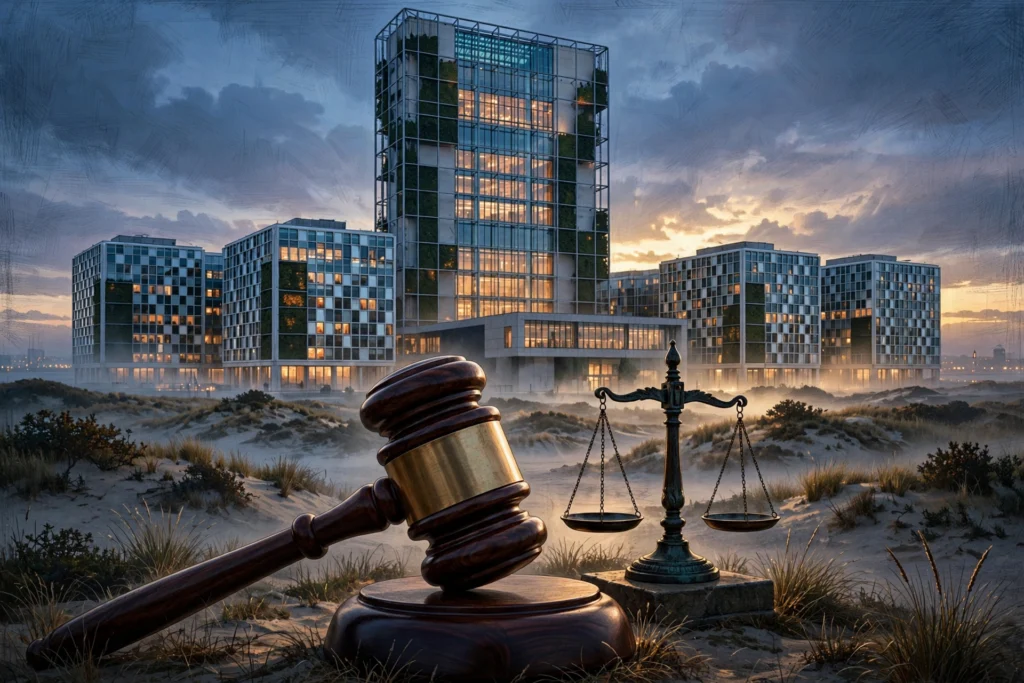
US Sanctions the ICC Hours After Navi Pillay Wins the Nobel Peace Prize — What It Means for Global Justice
Timing, as they say, is everything — and Washington’s timing on Friday was impossible to ignore. Just hours after the Norwegian Nobel Committee announced that former International Criminal Court judge Navi Pillay had won the 2026 Nobel Peace Prize, the United States dropped a bombshell of its own: sweeping US sanctions on the ICC itself, aimed at cutting off the court’s lifelines to banks, insurers, and technology companies around the world.
It was a move no administration had ever tried before. And it has left diplomats, legal experts, and human rights advocates asking the same question: what exactly just happened — and what does it mean for the world’s only permanent war-crimes tribunal?
Here’s the full story, minus the spin.
What the US Sanctions on the ICC Actually Do
Let’s start with the mechanics, because sanctions can sound abstract until you see what they hit. These measures, announced Friday by Secretary of State Marco Rubio, target the court as an institution — not just the individuals on its benches.
In practical terms, the sanctions generally prohibit American companies from doing business with the court unless a specific exemption applies. Banks could be forced to close accounts, insurers could terminate coverage, and technology firms could suspend the software and services the ICC depends on to run investigations, trials, and day-to-day operations. The Treasury Department gave U.S. companies a six-month window to wind down existing dealings, and issued four general licences covering telecommunications, software, pension payments, and detainee-related transactions.
The court didn’t wait for the announcement to start preparing. According to Reuters, ICC officials have spent months quietly reorganizing the court’s banking and health insurance arrangements, even replacing Microsoft programs on office computers with open-source software to reduce dependence on American tech. When the world’s financial plumbing runs through one country, a sanctions order from Washington lands very differently than a strongly worded statement.
Why Now? The Nobel Prize Timing That Lit Up the World
The announcement landed hours after Navi Pillay — the South African jurist who served on the ICC’s Appeals Chamber from 2003 to 2008 — was awarded the 2026 Nobel Peace Prize for her work advancing peace and international law. The Nobel Committee’s chair, Jørgen Watne Frydnes, framed the award as a message that “international law and its institutions are the cornerstone of a more peaceful world.”
Pillay is no obscure figure. Before her time at the ICC, she served as president of the International Criminal Tribunal for Rwanda and as the UN High Commissioner for Human Rights, and her career has been defined by confronting atrocity crimes head-on. Her Nobel Peace Prize win was celebrated across the human rights world as a victory for the very institutions Washington is now targeting.
Was the timing deliberate? The U.S. has not publicly connected the two events, and officials insist the sanctions are about the court’s conduct, not the prize. But the sequence — a former ICC judge honored with the world’s most prestigious peace award in the morning, the institution itself sanctioned by the afternoon — has fueled a fierce debate about whether the move was designed to send a message.
One detail worth noting: President Trump has long made no secret of his desire for the Nobel Peace Prize. Days before the announcement, he told reporters he believed he deserved it, noting he had “settled eight wars,” while acknowledging the committee has “a reputation for maybe not giving it to people like me.” This year’s prize drew 287 nominations and carries a purse of 12 million Swedish kronor, roughly $1.2 million.
“A Rogue Court”: What the US Is Saying
Secretary of State Marco Rubio announced the sanctions in a video posted on social media, and he didn’t mince words. “We will ban transactions with this rogue court, cutting off their resources and crippling its ability to operate,” Rubio said. He added that the United States and the American people “are not subject to the jurisdiction of this fake ICC,” and warned: “Either the ICC will end its threats, or we will end the ICC.”
Rubio also called on America’s allies that are ICC member states to pressure the court to change course, warning that the administration intends to dismantle it “brick by brick” until Americans are no longer threatened. The underlying argument is sovereignty: neither the United States nor Israel is a member of the court, and Washington maintains the ICC has no legitimate authority over American or Israeli citizens.
To understand why the anger is so sharp, you have to look at the investigations that triggered it. The court previously examined the conduct of U.S. military personnel in Afghanistan — an investigation that has since been closed — and, far more explosively, issued arrest warrants for Israeli Prime Minister Benjamin Netanyahu and former Defense Minister Yoav Gallant over alleged war crimes in Gaza. Those warrants put Washington and The Hague on a collision course that has now escalated to the institutional level.
The ICC Fights Back: “Our Work Will Continue”
The court did not stay silent. In a statement issued Friday, the ICC condemned the sanctions as an attempt to obstruct justice and undermine the international legal order, pledging to continue its work independently and impartially.
ICC Deputy Prosecutor Nazhat Shameem Khan put it bluntly to Reuters: “Our work will continue across all our situations, our investigations and our prosecutions.”
The condemnation found echoes beyond The Hague. The American Civil Liberties Union called the move “disastrous for global justice and human rights accountability,” warning that it could make it harder for survivors of atrocities to ever see justice done. The ACLU also represents two U.S. human rights advocates in a federal lawsuit challenging the administration’s earlier ICC sanctions on First Amendment grounds, arguing the measures prohibit Americans from even communicating with the court.
This Isn’t Out of Nowhere: How We Got Here
Friday’s announcement may have been unprecedented, but the confrontation has been building for years. It helps to rewind:
- 2002 — The ICC opens its doors in The Hague under the Rome Statute, the treaty that created the world’s first permanent court for genocide, war crimes, and crimes against humanity. Today, 125 countries are members.
- Early 2025 — The Trump administration imposes its first round of ICC sanctions, targeting individual judges and prosecutors. The ACLU’s legal challenge to those measures is still working its way through federal court.
- 2024–2026 — Arrest warrants for Netanyahu and Gallant, plus scrutiny of the Afghanistan file, deepen the rupture between Washington and The Hague.
- October 9, 2026 — Navi Pillay wins the Nobel Peace Prize, and within hours the U.S. escalates from sanctioning individuals to sanctioning the court itself.
Each step raised the stakes. Each step narrowed the room for compromise. And Friday’s move took the fight somewhere no one had gone before: directly at the institution’s ability to function.
What Happens Next — And Why It Matters to Everyone
Here’s the uncomfortable truth: this fight is about far more than one court in the Netherlands. The ICC was built on a simple idea — that some crimes are so grave that they concern all of humanity, and that domestic courts sometimes can’t or won’t prosecute them. Undermining the court’s operations doesn’t just affect cases about Gaza or Afghanistan; it affects the tribunal’s ability to pursue justice in every situation on its docket, from ongoing conflicts to crimes against humanity that never make headlines.
Supporters of the sanctions argue that an unaccountable court cannot be allowed to threaten sovereign democracies. Critics counter that shielding powerful nations from scrutiny is exactly what the court was designed to prevent — and that sanctioning the institution itself sets a precedent other governments could follow against any international body they dislike.
Expect three things in the coming weeks: legal challenges in U.S. federal courts, intense diplomatic pressure from European allies of the ICC, and a test of whether the court’s preparations — the new banking arrangements, the open-source software, the restructured insurance — are enough to keep it running under the heaviest pressure it has ever faced.
Frequently Asked Questions
Why did the US sanction the ICC?
Washington argues the court has overstepped its authority by pursuing investigations involving U.S. personnel and by issuing arrest warrants for Israeli leaders. The sanctions are meant to cut off the court’s resources and force it to end what the U.S. calls threats to American sovereignty.
What is the connection to the Nobel Peace Prize?
The sanctions were announced hours after former ICC judge Navi Pillay won the 2026 Nobel Peace Prize. The U.S. has not linked the two events publicly, but the timing has drawn intense global attention and debate.
Will the ICC stop working?
The court says no — it has pledged to continue its investigations and prosecutions, and spent months preparing by reorganizing banking, insurance, and technology arrangements. The six-month wind-down period also gives some breathing room. But sanctions of this scale will make its operations significantly harder.
Has the US ever sanctioned an international court before?
The administration had previously sanctioned individual ICC officials, but targeting the institution itself is a first — and legal experts say it marks a major escalation in the standoff between Washington and The Hague.
The Bottom Line
In a single day, the world watched two radically different visions of international justice collide: a Nobel Prize honoring the institutions of international law, and sanctions aimed at crippling one of them. Whether the ICC survives this pressure test intact will shape not just the future of one court, but the future of the idea that anyone, anywhere, can be held accountable for the gravest crimes. Keep watching The Hague — this story is far from over.
Sources: reporting by Reuters, NPR/KNKX, the American Civil Liberties Union, and AnewZ, with background from the Norwegian Nobel Committee and the U.S. State Department.
Pingback: US Pulls B-1 Bombers From UK Air Base Over Suspected Iranian Plot: What We Know - Storion News
Pingback: Trump Strikes Russian Diesel Deal With Putin — Zelensky Calls It a "Gift to Putin" - Storion News