
Malaysia Haze Crisis: Schools Shut as Indonesian Wildfire Smoke Chokes Southeast Asia
When the Sky Turned Orange Over Kuala Lumpur
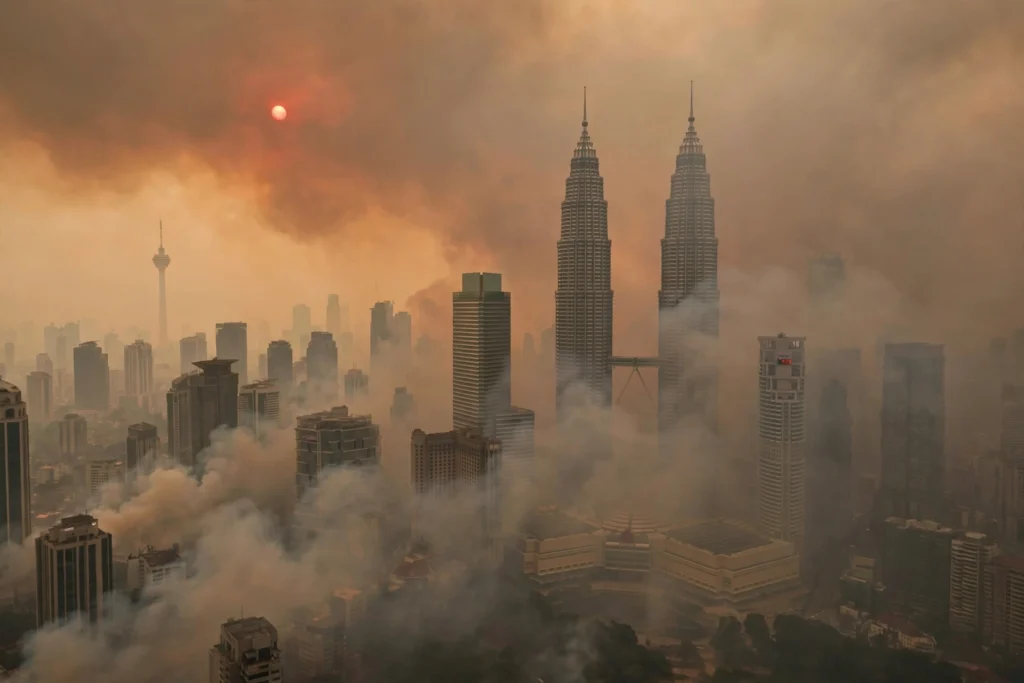
Imagine waking up, looking out your window, and not being able to see the city. Not because of fog. Not because of rain. Because the air itself has turned into a thick, orange-grey soup — and every breath stings a little.
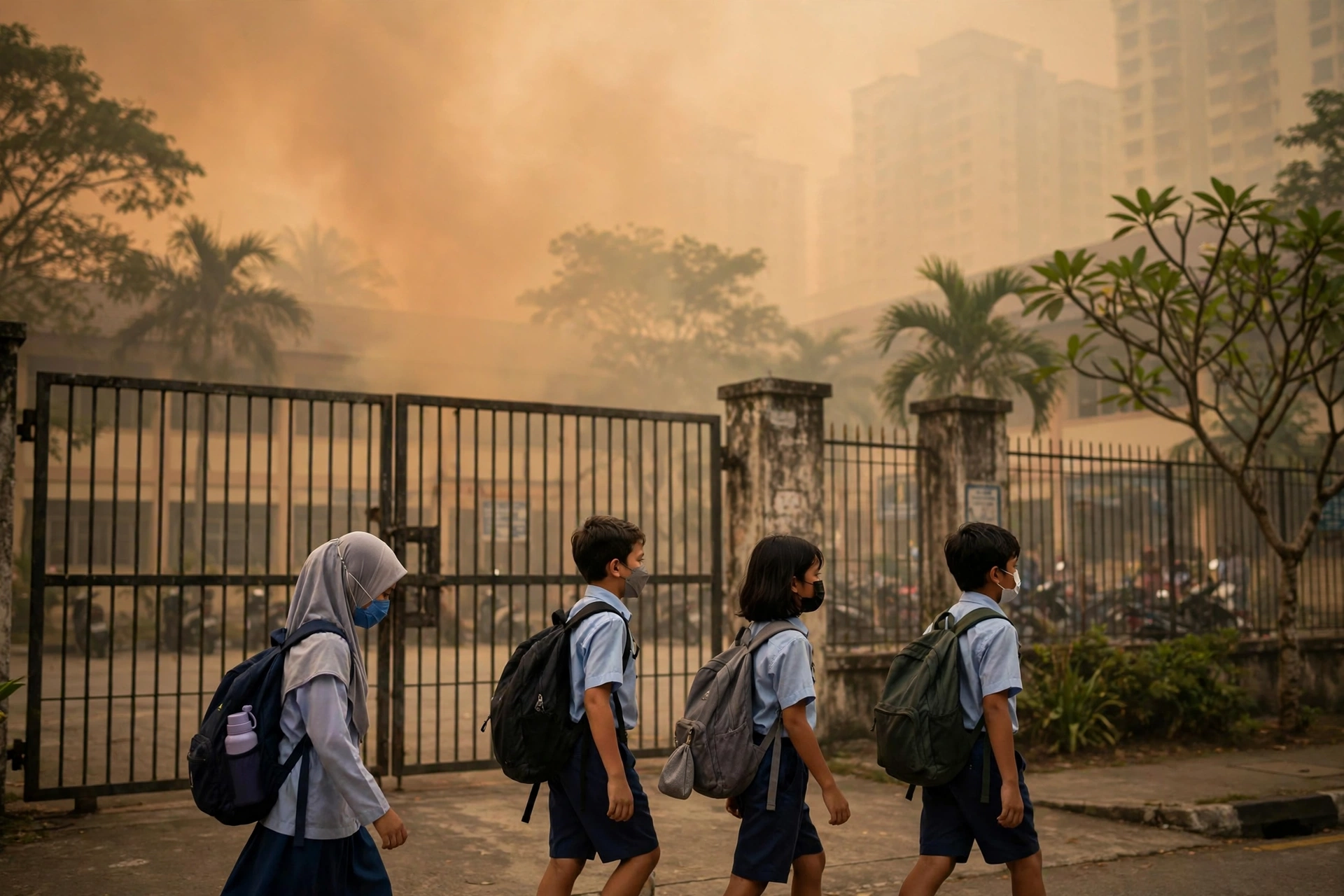
That was Friday morning in Malaysia. By sunrise, the country’s Education Ministry had ordered schools shut across Kuala Lumpur, Selangor, Johor, Melaka, Negeri Sembilan, Putrajaya, and parts of Pahang. More than two million students stayed home — not because of a holiday, but because the air outside had become dangerous to breathe.
The culprit? Wildfires burning hundreds of kilometers away in Indonesia. And this, officials say, is one of the worst haze seasons Southeast Asia has seen in more than a decade.
Two Million Students Sent Home
The school closures took effect on Friday, October 9, after Malaysia’s Department of Environment recorded unhealthy air quality in 38 monitoring areas nationwide on Thursday morning. Education Minister Fadhlina Sidek announced the order covering some of the country’s most populated states.
The numbers paint a grim picture. Segamat in Johor registered an Air Pollutant Index reading of 187. Nilai in Negeri Sembilan hit 183. Kuala Lumpur itself recorded around 170 — all firmly in the “unhealthy” range. In Batu Pahat, Johor, the API soared to 203, pushing into the “very unhealthy” category.
Johor, the southern state bordering Singapore, moved first. Around 300 schools in the Batu Pahat district were closed, and the state government then ordered all schools across Johor to shut for two days as a precaution. According to reports citing Bloomberg statistics, the nationwide closures affected more than two million students, with education authorities instructing schools to arrange home-based learning where possible.
Where the Smoke Is Coming From
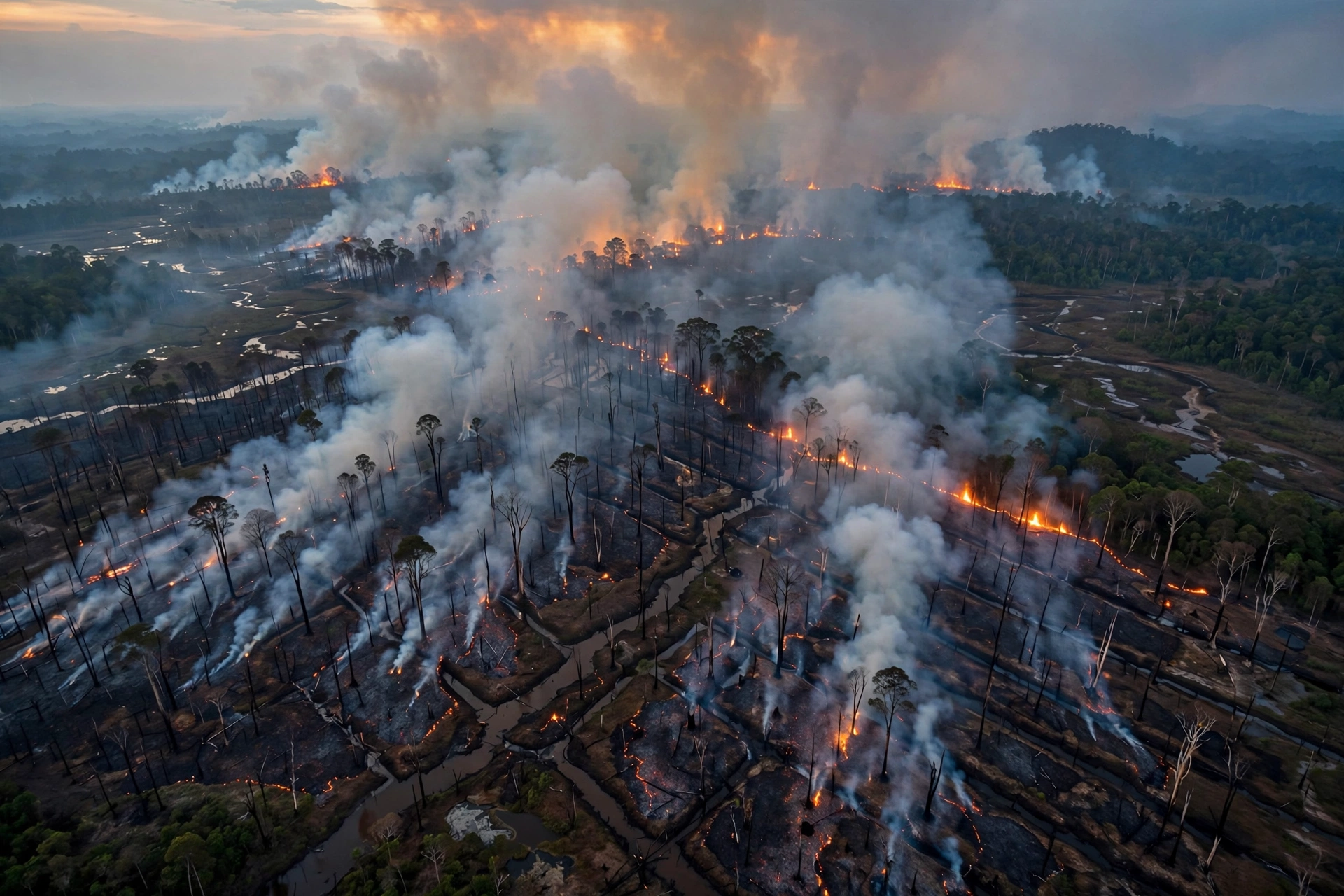
The haze is not Malaysia’s own making. The smoke originates from forest and peatland fires burning across Indonesia’s islands of Sumatra and Kalimantan, on the island of Borneo — which Indonesia shares with Malaysia and Brunei. Wind carries the smoke across national borders, and this season, there is a lot of smoke to carry.
Indonesia is experiencing what environmental groups describe as one of its most severe wildfire seasons in over a decade. Last month, satellite data showed Central Kalimantan remained the country’s wildfire hotspot, with 2,459 hot spots detected. The fires are fueled by unusually hot, dry conditions linked to the El Niño weather pattern, which has stretched the region’s dry season far beyond normal.
Peatland fires are the worst of the lot — and the hardest to stop. As environmental experts have warned, damaged peatlands can smolder underground for weeks, reigniting long after surface flames appear to have died down. That makes them a gift that keeps on giving, pumping smoke into the atmosphere day after day.
The Health Toll You Can’t See
Here’s what makes haze so insidious: it doesn’t look as dramatic as a fire or a flood, but the damage happens inside your lungs. The smoke carries fine particulate matter — PM2.5 and PM10 — that penetrates deep into the respiratory system. Prolonged exposure can trigger asthma attacks, worsen allergies, and increase the risk of cardiovascular disease.
Children are hit hardest, which is exactly why schools were closed first. Older people and anyone with a pre-existing respiratory condition are next in line. Malaysia’s health authorities have urged residents in affected areas to limit outdoor activity, wear masks, and drink plenty of water.
When public health emergencies escalate, governments tend to move fastest to protect the young and the vulnerable — the same instinct that drove emergency responses when a measles outbreak swept through Pennsylvania schools, putting thousands of students at risk. In a haze crisis, every schoolyard breath counts.
How Governments Are Fighting Back
Malaysian Prime Minister Anwar Ibrahim described the worsening situation as a major concern, particularly for public health. He revealed that his government was intensifying its response, including cloud-seeding operations designed to force rain from hazy skies.
Last month, Malaysia carried out a three-day cloud-seeding operation in the eastern state of Sarawak to replenish dam water levels and help ease the haze. Now Kuala Lumpur has sought approval from Jakarta to conduct cloud seeding using Indonesian airspace — a sign of how transboundary the problem has become.
Anwar said he had spoken directly with Indonesian President Prabowo Subianto about the crisis, with both leaders agreeing that Indonesia would receive support in tackling the fires. Emergency responders know that when extreme weather overwhelms local resources, coordinated action is everything — the same lesson seen when mass evacuations were ordered along the Gulf Coast during Hurricane Isaias.
Singapore’s Grand Prix Weekend Under the Smoke
The haze isn’t stopping at Malaysia’s borders. Singapore is choking too — and the timing couldn’t be more delicate. The city-state is preparing to host its annual Formula One Grand Prix at the Marina Bay Street Circuit, and race organizers and the FIA are now monitoring air quality closely.
Officials say the race itself is not currently expected to be affected, but some outdoor entertainment activities could face restrictions if conditions deteriorate. There is precedent for this: during the 2019 Singapore Grand Prix, when unhealthy haze also hung over the city, organizers had medical assistance on standby and handed out N95 masks to spectators who needed them.
Singapore’s National Environment Agency has advised residents to adjust their outdoor activities based on pollution levels and their individual health conditions.
This Isn’t New — But It Is Getting Worse
The Southeast Asian haze is a recurring nightmare. Every dry season brings the risk of forest fires and land-clearing burning sending smoke drifting across the region. But environmental groups warn the pattern is intensifying: hotter, drier seasons and degraded peatlands mean more fuel, longer burn times, and thicker smoke.
Johor’s Chief Minister, Datuk Onn Hafiz Ghazi, has had enough of national-level responses. He has urged ASEAN — the Association of Southeast Asian Nations — to convene an emergency meeting to address what he calls a regional problem requiring regional cooperation. He raised the issue directly with Indonesia’s consul general in Johor Bahru.
Asia has already endured a brutal stretch of extreme weather this year, from deadly flash floods in Nepal to the storms battering the Gulf Coast. The haze is different only in that it arrives silently, carried on the wind — and it refuses to respect any border.
FAQs: The Malaysia Haze Crisis Explained
Why does Malaysia get haze from Indonesia?
Smoke from forest and peatland fires in Indonesia’s Sumatra and Kalimantan regions drifts across borders on prevailing winds. Malaysia, Singapore, the Philippines, and Brunei all sit downwind of the burn zones, so they choke on smoke from fires they didn’t start.
How bad is the air quality right now?
Severely bad. Multiple areas recorded Air Pollutant Index readings between 170 and 203 — the “unhealthy” to “very unhealthy” range. At those levels, authorities recommend everyone limit outdoor exertion, and sensitive groups should stay indoors.
Are schools open in Malaysia now?
Schools in Kuala Lumpur, Putrajaya, Johor, Melaka, Negeri Sembilan, Selangor, and parts of Pahang were closed from Friday, October 9, with the closures expected to last through at least the weekend. Affected schools are arranging home-based learning where possible. Reopening depends on air quality readings improving.
What is cloud seeding, and does it work?
Cloud seeding involves dispersing particles (usually silver iodide or salt) into clouds to encourage rainfall. It can help wash particulates out of the air and dampen fire zones, but it only works when there are clouds to seed — and it treats the symptom, not the fires themselves.
The Bottom Line
Two million students home. Capital cities disappearing behind smoke. A Formula One race under a haze watch. This is what the region’s dry season has become: not just a weather pattern, but a public health emergency that crosses borders as easily as the wind.
The fires will be put out eventually — they always are. The harder question is whether Southeast Asia will finally treat the haze as the regional crisis it is, with the kind of coordinated, year-round action its leaders keep promising. Until then, millions of people will keep checking the air before they check the weather. And for now, in Malaysia, the sky is still orange.