
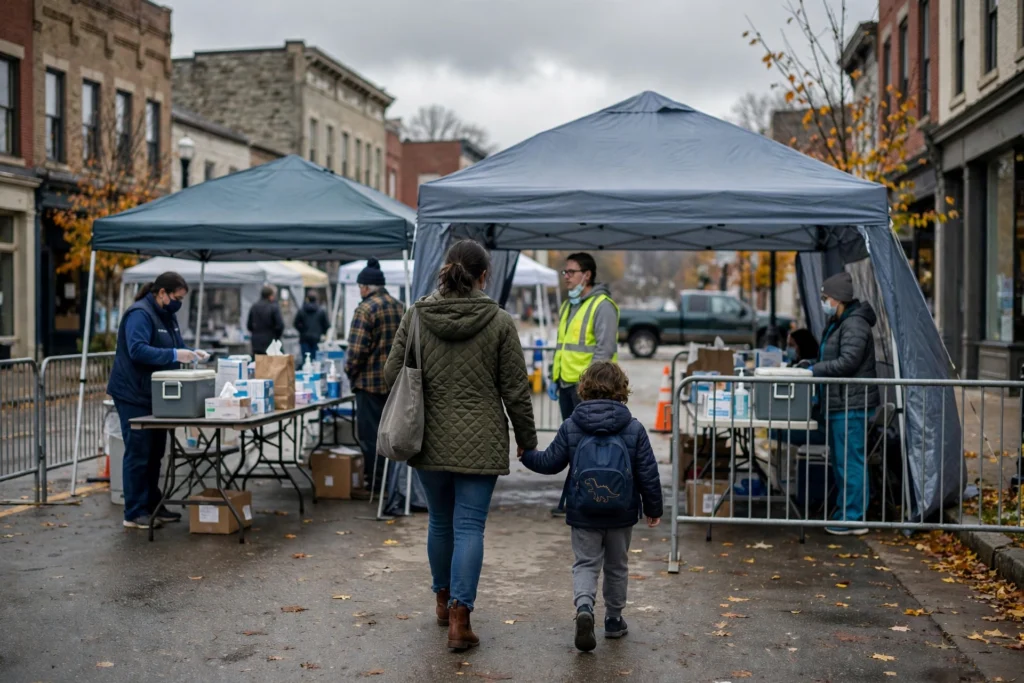
Pennsylvania Measles Outbreak Hits 1,136 Cases and 5 Deaths — America’s Largest in Three Decades
Five people are dead. More than a thousand are sick. And health officials in Pennsylvania now say they are dealing with the largest measles outbreak America has seen in more than three decades.
Let that sink in for a moment. A disease the United States declared eliminated in the year 2000 — a disease most doctors under forty had barely ever seen in real life — is now hospitalizing roughly one in five people it touches in one of America’s largest states. So how did we get here? And what happens next?
The numbers are staggering
The latest update from the Pennsylvania Department of Health, published Friday, paints a grim picture. According to the state health department, 1,136 measles cases have now been confirmed across 41 counties since the Pennsylvania measles outbreak began in late April — with 219 hospitalizations and five deaths.
The numbers keep climbing. The department reported 58 new cases in just the days since its October 7 update, and it cautioned that some of those represent people who were sick weeks ago but only just got confirmed. Either way, the curve is not bending downward.
One detail stands out: of all the cases confirmed this year, fewer than 1% occurred in people fully vaccinated against measles. The other 99-plus percent — including every single hospitalization and every single death — were in people who had not received the MMR vaccine. You don’t need an epidemiology degree to see the pattern there.
The five people who died
Behind the statistics are families grieving very real losses. According to reporting by Pulse News, which reviewed the details of each fatality, the five Pennsylvania measles deaths include:
- An 18-year-old unvaccinated young adult who died with severe brain inflammation — one of measles’ most feared complications.
- A 40-year-old woman with a history of asthma, also unvaccinated.
- Two infants who were simply too young to have received the measles, mumps, and rubella (MMR) shot.
- An unvaccinated Lancaster County resident, whose death was confirmed on September 30 — the third measles death tied to that county this year.
That newborn who died after arriving a month early is the detail that will stay with you. Measles in pregnancy is especially dangerous, and infants can’t be vaccinated until their first birthday — which is precisely why the people around them need to be protected.
Pennsylvania announced its first two measles deaths in August — the first measles deaths recorded in the state in 35 years. The state defines a measles-associated death as one occurring within 30 days of symptom onset in a person with confirmed measles, unless the death clearly came from something unrelated.
Why Lancaster County became the epicenter
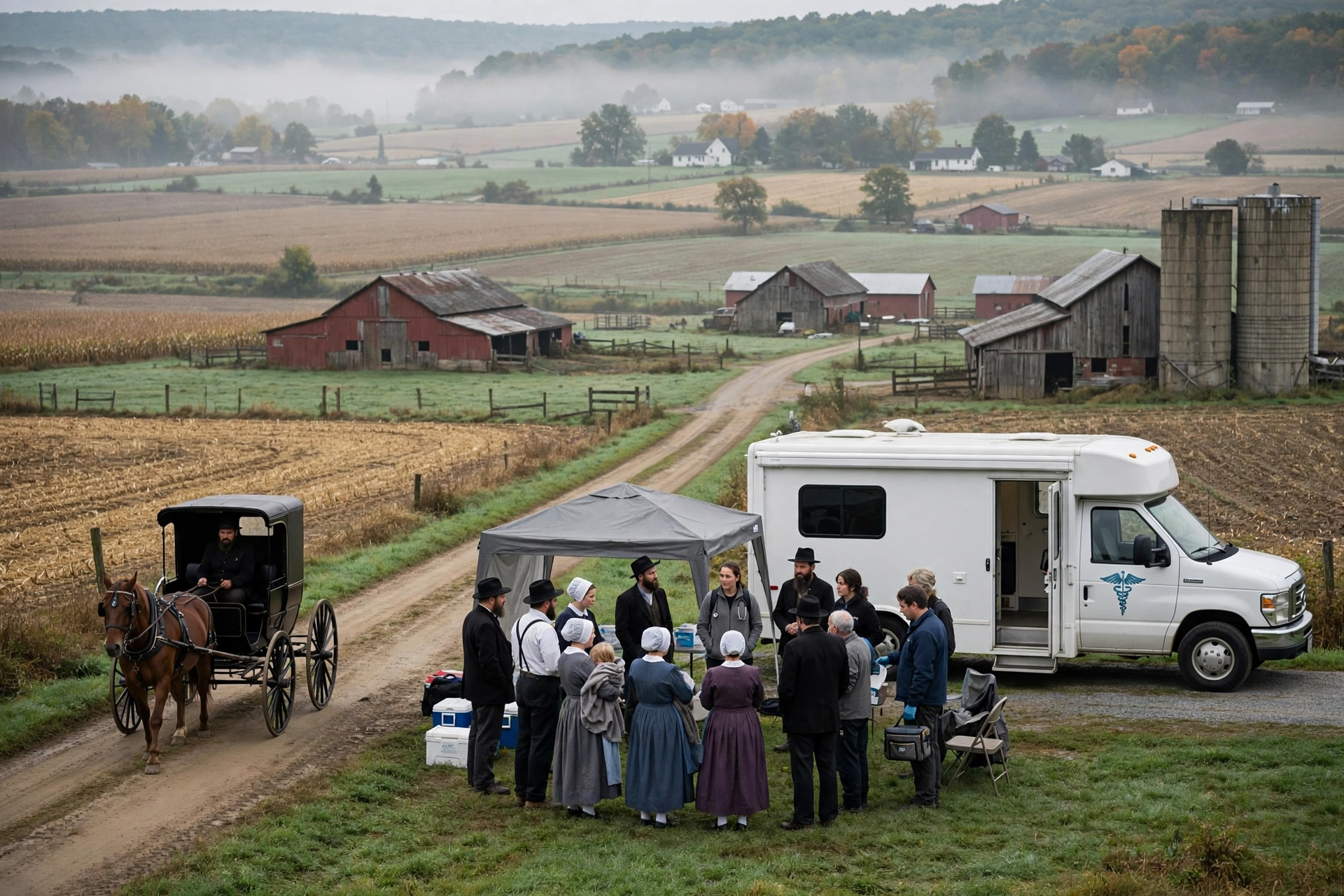
The outbreak began in the Lebanon County area in late April and spread outward, but Lancaster County quickly became its beating heart — with one local analysis putting its count at 391 cases. This is no coincidence. Neighboring Ohio has also reported more than 200 cases this year, and some of the hardest-hit communities in both states have significant Amish populations, where vaccination rates tend to be much lower.
Measles is arguably the most contagious virus doctors deal with. It travels through the air and can linger in a room for up to two hours after an infected person leaves. In a close-knit community where few people are immunized, it doesn’t need an invitation — it just needs a gathering.
The National Foundation for Infectious Diseases noted a troubling shift: early in the outbreak, 83% of cases were in young children, but two-thirds of current cases are now in adults. Many adults assume they’re protected and have never checked. If your vaccination records are hazy, this outbreak is your sign to find out.
Health officials are racing to catch up
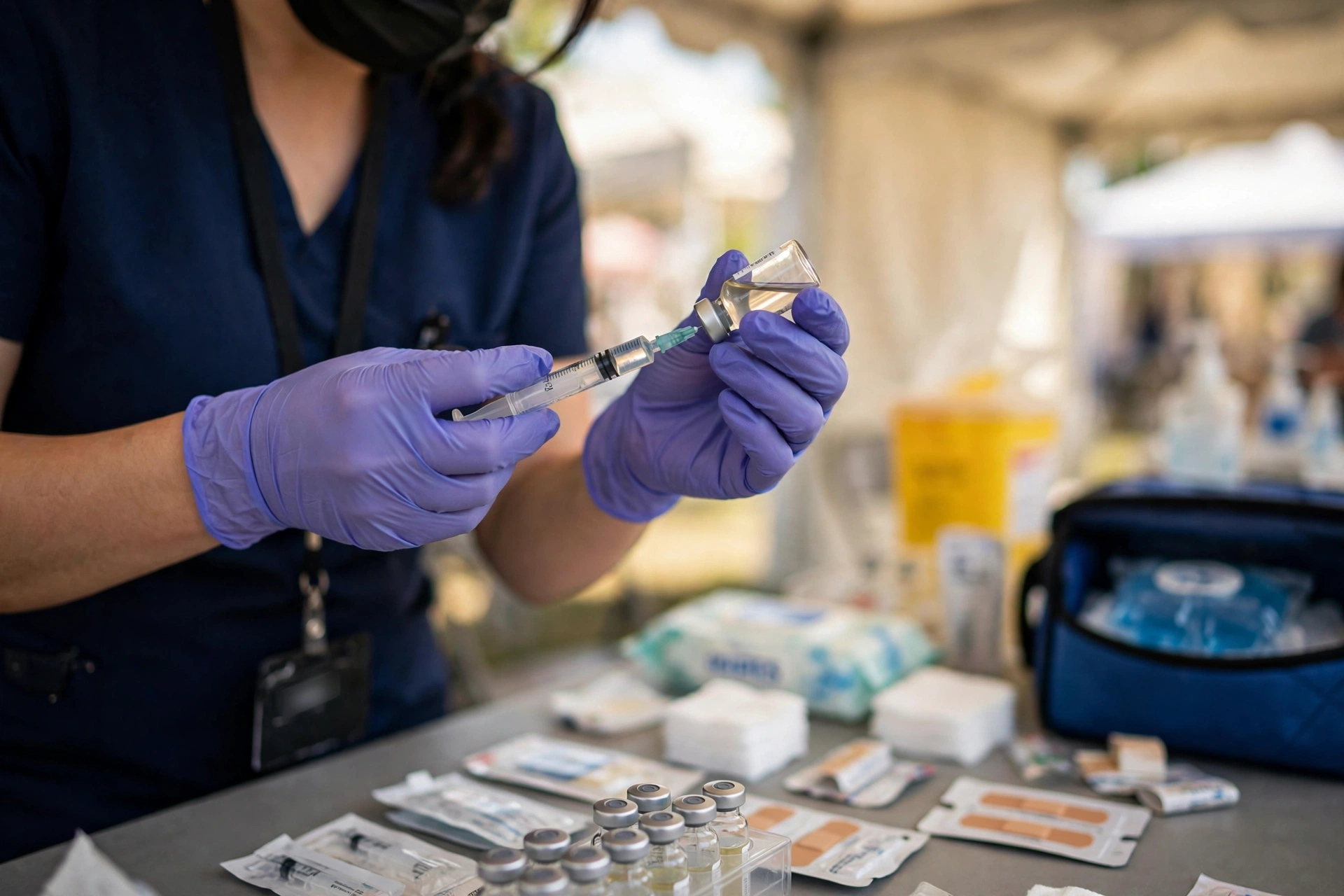
To its credit, the Pennsylvania Department of Health is not standing still. State health center staff have administered more than 5,900 MMR vaccinations at 201 pop-up clinics in affected communities since the outbreak began, and more than 9,000 total doses when pop-up clinics and state health centers are combined. Dozens of additional clinics are scheduled in the coming weeks.
And Pennsylvanians are responding — in part. In a typical month, the state’s providers administer about 25,000 MMR doses. In August that number jumped to more than 49,000; in September it exceeded 56,000. But will it be enough? Dr. John Goldman, an infectious disease expert at the University of Pittsburgh Medical Center, isn’t optimistic: “I would bet that this goes on for at least another three to six months,” he said. “We have seen an increase in vaccinations, but we aren’t seeing enough people get vaccinated to stop the epidemic.”
Health authorities generally say about 95% vaccination coverage is needed to maintain community protection against measles. Two doses of the MMR vaccine are about 97% effective — among the best numbers of any vaccine in medicine.
Part of a national resurgence
Pennsylvania isn’t an island. The CDC had confirmed 3,887 measles cases nationwide as of October 1 — already far above the 2,289 recorded in all of 2025, and the highest national total since 1991. Texas recorded about 990 cases earlier this year; South Carolina topped out at 997. Health officials link the national surge to declining childhood vaccination rates in communities across the country.
The timing matters beyond medicine. Measles outbreaks strain emergency rooms, close schools, and force costly contact-tracing operations — all for a disease that costs pennies to prevent per dose. When vaccination dips below the herd-immunity threshold in any community, measles finds it. Every time.
It’s worth noting that even as vaccine science delivers genuinely remarkable breakthroughs — from gene therapies restoring vision to experimental treatments targeting obesity — the old, boring, free-ish protection we already had is what would have stopped this outbreak cold.
FAQ: What you should know
How contagious is measles, really?
Extremely. On average, one person with measles infects 12 to 18 unvaccinated people. For comparison, a typical flu case infects about 1 to 2. The virus spreads through coughing and sneezing and stays infectious in the air for up to two hours.
I’m an adult — do I need to worry about my measles protection?
Possibly. If you were born after 1957 and have no record of measles vaccination or the disease itself, it’s worth checking with your doctor. People vaccinated with two MMR doses are considered protected for life, but documentation from decades ago is often missing.
What are the symptoms?
A high fever, cough, runny nose, and red, watery eyes — followed by the telltale blotchy red rash that spreads from the hairline down. Serious complications include pneumonia, brain inflammation (encephalitis), and death. Roughly 1 in 5 unvaccinated people who get measles ends up hospitalized, according to the CDC.
Is the MMR vaccine safe?
The MMR vaccine has been in use for more than 50 years and is among the most studied vaccines in history. Serious side effects are rare; the protection it provides — about 97% effectiveness with two doses — vastly outweighs the risks, which the Pennsylvania outbreak is demonstrating in real time.
The bottom line
This outbreak was not inevitable. It is not an act of nature that fell out of the sky. Every hospitalization and every death in Pennsylvania this year — except the heartbreakingly young ones — happened to someone who was unvaccinated against a disease we know exactly how to prevent. The vaccine exists. It works. It’s widely available. The only question is whether enough people will roll up their sleeves before this outbreak’s grim record grows even longer.
Storion News will continue following the Pennsylvania measles outbreak as new data is released by the state Department of Health.
Pingback: Malaysia Haze Crisis: Schools Shut as Indonesian Wildfire Smoke Chokes Southeast Asia - Storion News