
Experimental Drug CBL-514 Doesn’t Just Shrink Fat Cells — It Kills Them
Here’s a fact that will make anyone who’s ever dieted groan out loud: when you lose weight, your fat cells don’t go anywhere. They shrink — and then they sit there, waiting, primed to inflate again the moment you slip up. It’s one of the cruellest tricks biology plays on us.
Now imagine a drug that doesn’t negotiate with fat cells. It doesn’t shrink them. It eliminates them.
That drug may actually exist. It’s called CBL-514, and data presented at the annual meeting of the European Association for the Study of Diabetes (EASD) in Milan on October 1 has researchers buzzing. In two small clinical trials, injections of the experimental drug melted away not just surface fat — but visceral fat, the dangerous kind packed around your internal organs that diets and even liposuction struggle to touch.
What Makes This Drug Different From Every Diet Pill
Let’s get one thing straight: CBL-514 is not another appetite suppressant. Drugs like GLP-1 medicines (think Ozempic-style treatments) work by making you feel full so you eat less. They shrink your fat cells by emptying them out. But the cells survive — every single one of them — ready to refill the moment you stop the medication.
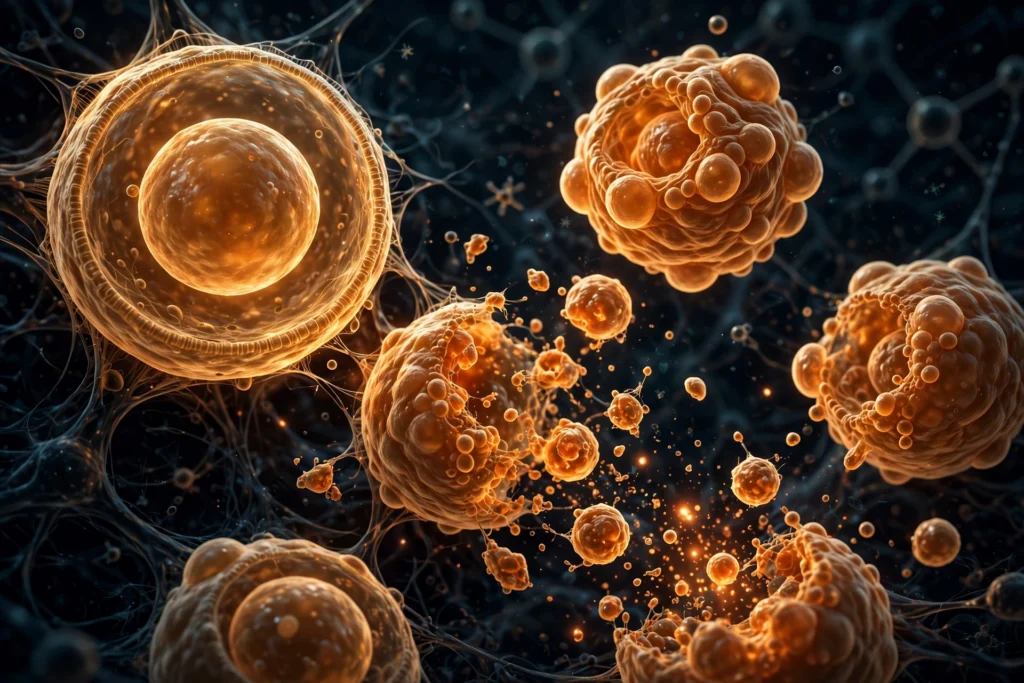
CBL-514 takes a completely different approach. It’s a first-in-class small-molecule injection that triggers apoptosis — programmed cell death — specifically in fat cells, while leaving neighboring cells untouched. The fat cell essentially receives a self-destruct order and dismantles itself.
The drug is being developed by Caliway Biopharmaceuticals, based in New Taipei City, Taiwan. Earlier phase 2 trials had already shown it could reduce subcutaneous fat — the pinchable layer beneath your skin. At an eight-week follow-up, 69.6% of treated participants had lost at least 150 milliliters of that fat, compared with 0% of those who received a placebo, as reported by MedicalXpress.
But the new analysis went deeper. Literally.
The Trial Results That Got Scientists Talking
Dr. W. Timothy Garvey of the University of Alabama at Birmingham and Yu-Fang Ling of Caliway examined MRI scans from a subset of participants in two phase 2 trials — CBL-0204 and CBL-0205 — to see what happened to fat hidden around the organs.
Participants, who ranged from healthy weights to overweight (BMI 22–30), received injections of CBL-514 or a placebo every three weeks for up to 12 weeks. Then researchers measured the change.
The numbers were striking. The CBL-514 group started with an average of 642.5 milliliters of visceral fat. Four weeks after treatment, they had dropped almost 71 milliliters — roughly a 12% decrease. The placebo group, meanwhile, gained about 31 milliliters of the dangerous fat, a nearly 6% increase. That’s an 18-percentage-point swing between the two groups.
As Dr. Garvey put it: “We expect that patients will be pleased by the cosmetic effects, such as the flatter stomach that can come with subcutaneous fat loss. But it is the reduction in body weight, loss of visceral fat, and the improvements in blood pressure, cholesterol, and the like that should be associated with this that will be important for health.”
A total of 46 patients were included in the final analysis (26 on the drug, 20 on placebo), with visceral fat volume quantified from MRI scans using AI-assisted segmentation, according to reporting by HCPLive.
Why Visceral Fat — Not Belly Flab — Is the Real Enemy
Time for a quick biology lesson, because this is the part most people get wrong. The fat you can pinch around your waist — subcutaneous fat — is mostly a cosmetic issue. The fat you can’t see is the one quietly working against you.
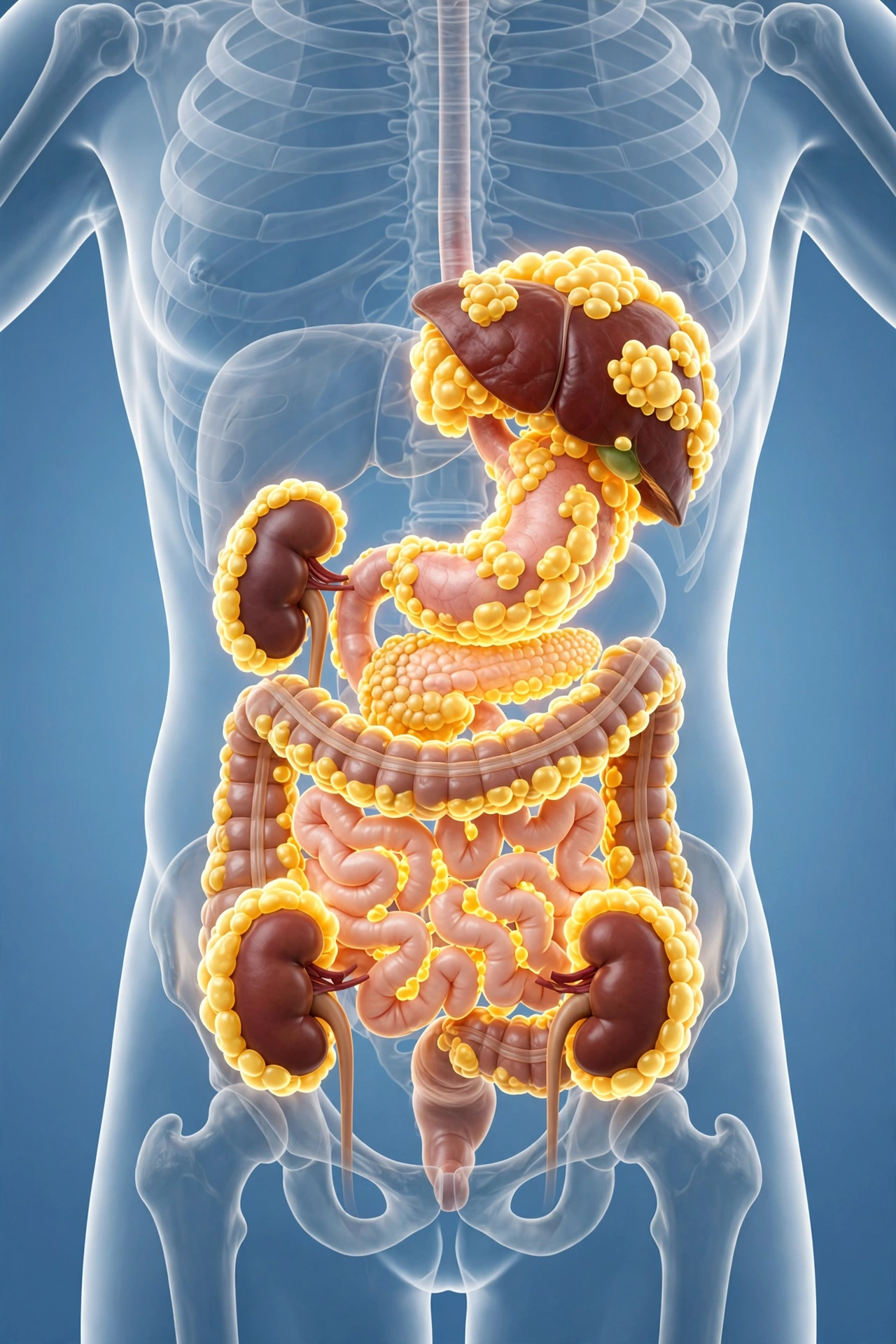
Visceral fat sits deep in the abdomen, wrapping around your liver, pancreas, and intestines. It’s metabolically active — meaning it doesn’t just sit there. It pumps out inflammatory molecules and hormones that interfere with insulin, drive up blood sugar, and strain your cardiovascular system.
This hidden fat is a key driver of insulin resistance, type 2 diabetes, heart attacks, and strokes. And here’s the kicker: you can’t remove it with liposuction. Cosmetic procedures only skim off the surface layer. Even many weight-loss programs shrink it temporarily, only for it to return.
That’s why researchers are so excited. A treatment that can selectively destroy visceral fat cells could address the metabolic root of some of the world’s deadliest chronic diseases — not just the number on the scale.
Could This Finally Solve the Weight-Regain Problem?
Here’s the part that might matter most. One of the biggest frustrations with GLP-1 drugs is what happens when people stop taking them: the weight creeps back. Often fast.
The working hypothesis behind CBL-514 is elegant in its logic. If you eliminate fat cells rather than merely shrinking them, there’s less capacity to reaccumulate fat later. The container is smaller, permanently.
Early evidence supports this idea. In preclinical studies, animals given CBL-514 alongside the GLP-1 drug tirzepatide regained less weight after the GLP-1 was stopped, compared with animals given tirzepatide alone. More weight was also lost with the combination than with either approach by itself.
“The hypothesis is that the reduction in fat cells limits the amount of fat that can be reaccumulated, slowing weight regain,” researchers noted in the MedicalXpress report. Still, they caution that more research is needed to prove this effect in humans.
It won’t surprise you to learn that combination therapy — GLP-1 to suppress appetite plus CBL-514 to eliminate fat cells — is already being explored as a potential one-two punch.

FAQ: What You Should Know About CBL-514
Is CBL-514 approved or available yet?
No. It is still in the experimental phase, with results coming from early phase 2 clinical trials. It is not approved by any regulatory authority and cannot be prescribed yet. Larger, longer trials will be needed before it could reach the market.
How does it actually kill fat cells?
CBL-514 selectively induces apoptosis — a natural programmed cell-death process — in adipocytes (fat cells), while sparing surrounding tissue. In plain terms, it flips a self-destruct switch that fat cells already carry, without damaging other cells.
Isn’t killing cells in your body dangerous?
It’s a fair question. Apoptosis is a normal, controlled process your body uses constantly to clear old or damaged cells. The claim from researchers is that CBL-514 triggers this process selectively in fat cells. Safety was monitored in the trials, but as with any experimental drug, long-term safety data will be essential before approval.
Will this replace diet and exercise or GLP-1 drugs?
Unlikely — and researchers aren’t framing it that way. The most promising near-term picture is a complementary role: CBL-514 may help people keep weight off after losing it, potentially alongside GLP-1 drugs. No injection replaces the broader health benefits of movement, sleep, and good nutrition.
The Bottom Line
CBL-514 is not a miracle cure — it is an early-stage experimental drug, tested so far in small trials, and it has a long road of larger studies and regulatory review ahead of it. But the idea behind it is genuinely new, and the early data on visceral fat is the kind of result that makes scientists lean forward in their chairs.
For decades, weight-loss medicine has been a story of shrinking fat cells and watching them refill. If a treatment can permanently remove the most dangerous fat in the body — the hidden kind wrapped around your organs — it wouldn’t just change waistlines. It could change how we treat diabetes, heart disease, and the slow-burn metabolic damage that affects hundreds of millions of people.
That trial in Milan was small. But it might be the start of something big. We’ll be watching.