
Nobel Prize in Economics 2026: How Two Americans Cracked the Code Behind Boom-and-Bust Economies
Two Americans just won the Nobel Prize for figuring out why your grocery bill, your mortgage rate, and your paycheck all move the way they do. And here’s the twist: their biggest discovery wasn’t really about money at all — it was about you.
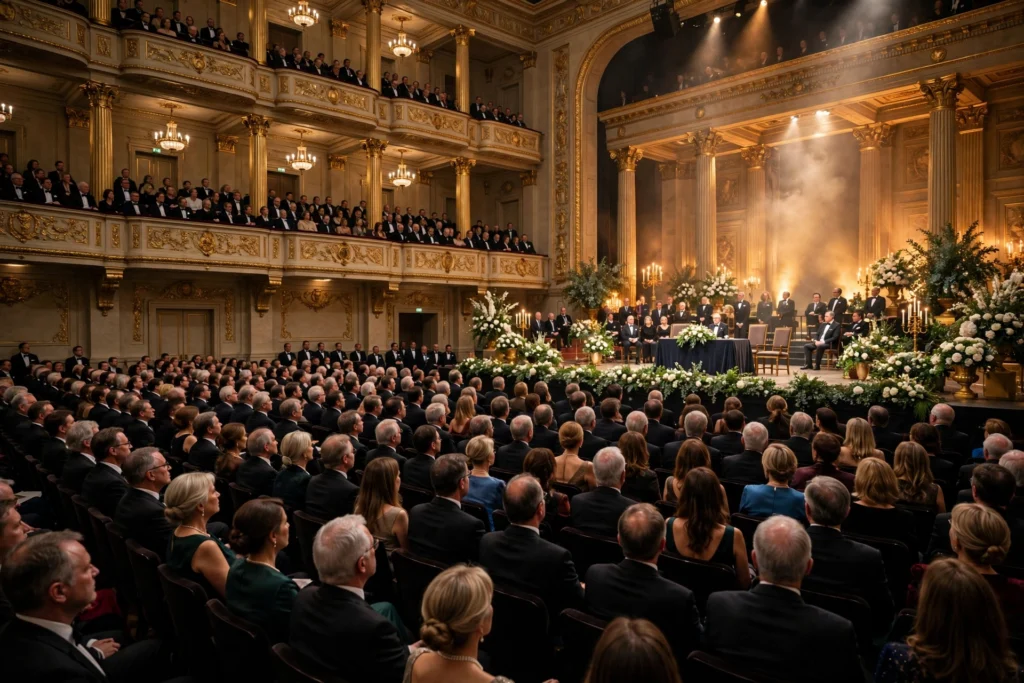
On Monday, the Royal Swedish Academy of Sciences in Stockholm announced that Robert E. Hall of Stanford University and Michael Woodford of Columbia University have won the 2026 Nobel Prize in Economics. The pair will share the 12 million-krona award — roughly $1.2 million — for decades of work that quietly reshaped how every major central bank on Earth fights inflation and recessions. It may sound abstract, but their ideas are probably influencing the interest rate on your next loan.
What the Nobel Prize in Economics 2026 Winners Actually Figured Out
Let’s be honest: “microeconomic foundations of macroeconomic stabilization” — the official reason they won — sounds like the kind of phrase designed to empty a room. But strip away the jargon and the idea is surprisingly human.
Before Hall and Woodford, the models central banks used treated the economy like a machine: pull this lever, and inflation drops; push that button, and jobs come back. The problem? An economy isn’t a machine. It’s millions of households and businesses, each making their own decisions — and those people are forward-looking. You don’t just spend based on today’s prices; you spend based on what you think prices and interest rates will be next year.
That one insight changes everything. It means a central bank’s words can be as powerful as its actions. If the Federal Reserve convinces you it will keep rates low for a long time, you behave differently right now — and that shifts the whole economy. Economists call this “forward guidance,” and Woodford was one of its intellectual fathers.
As Woodford himself put it at the announcement press conference: “Authorities shouldn’t view stabilization of the economy as an exercise that is simply conducted by people pulling levers to control the economy independently of what people in the economy understand about this.”
The 1970s Lesson Nobody Wanted to Learn
To understand why this matters, you have to go back to the decade when the old economic playbook broke in public.
After the Great Depression, John Maynard Keynes had convinced policymakers of a simple recipe: when the economy slumps, government should stimulate demand to curb unemployment; when it booms, tamp demand down to limit inflation. And for a while, the recipe worked beautifully.
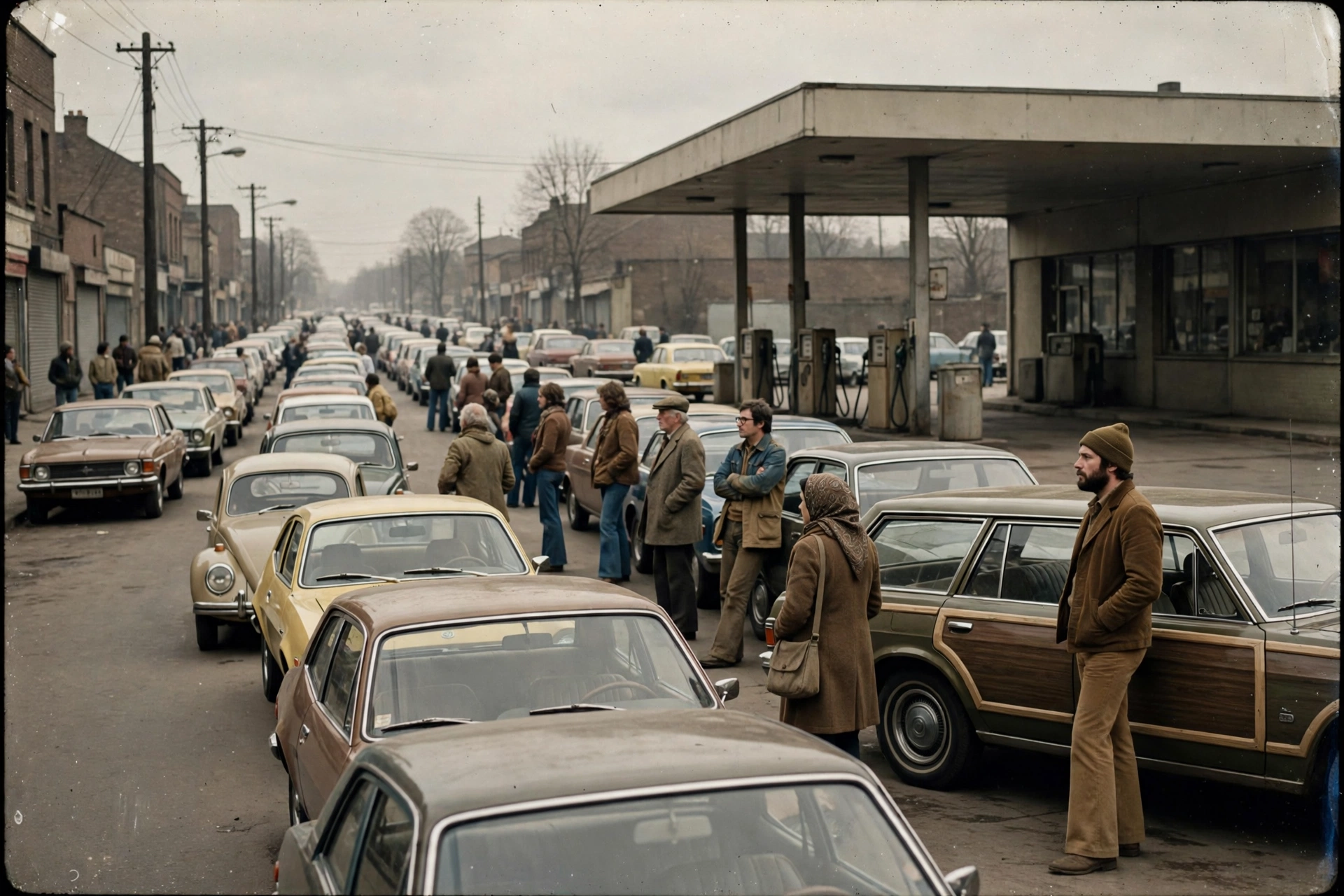
Then came the 1970s oil shocks, and the recipe fell apart. Inflation was sky-high and unemployment kept rising — a toxic combination called stagflation that the old models said shouldn’t even be possible. “The Keynesian recipe was shattered,” said Tim Boppart, a member of the prize committee.
That’s where Hall and Woodford came in. Hall’s landmark 1978 paper showed how consumers naturally prefer to keep their spending stable over time — a small-sounding finding with enormous implications for modeling. Woodford then built the so-called “New Keynesian” framework on top of micro-level behavior like this, and central banks around the world adopted it. During the global financial crisis of 2008–2009, Woodford noted, being explicit about the future path of interest rates — rather than just cutting rates and hoping — became “an important part of the policy response.”
Why This Matters Right Now
Here’s where the story gets urgent. These models aren’t dusty academic trophies — central banks are leaning on them today, harder than ever.

After the 2022 inflation surge that followed the COVID-19 pandemic, policymakers spent years trying to bring prices down without triggering a recession. Now they’re grappling with a fresh energy shock triggered by the Iran war — and with record diesel prices piling political pressure on governments in an election season.
John Hassler, chair of the Committee for the Prize in Economic Sciences, connected the dots in his statement: “With them, we are better equipped to deal with shocks in the economy, such as energy crises or sudden changes in how much households consume.”
And it’s not just central banks. Every corporate boardroom approving billion-dollar corporate deals is making the same bet: trying to read where the economy is heading before it gets there. The difference is that central banks now have a playbook built for exactly that.
Who Are Robert Hall and Michael Woodford?
Robert E. Hall, at Stanford University, has spent decades studying how ordinary people make economic choices — what economists call “consumption smoothing.” His insight that households plan spending over the long run sounds like common sense. It wasn’t, at least not to the models running in 1978.
Michael Woodford, 70, of Columbia University, took that behavioral foundation and rebuilt the machinery of macroeconomics around it. The result — the New Keynesian model — became the workhorse of modern central banking, cited in policy meetings from Frankfurt to Tokyo.
Reached by phone after the announcement, Woodford sounded genuinely stunned: “It’s a tremendous honour. It’s a surprise, but I’m feeling very good about it.” After four decades of quiet influence, the recognition is long overdue.
Nobel Prize Economics 2026: Your Questions Answered
Is the economics prize a “real” Nobel Prize?
Sort of — it’s complicated. The prize in economic sciences was established in 1968 by Sweden’s central bank, not by Alfred Nobel’s will, which is why its formal name is the Nobel Memorial Prize in Economic Sciences. It’s announced and awarded alongside the five original Nobel Prizes, and everyone treats it as the real thing.
What do these models actually do?
In the jury’s words, “well-timed fiscal and monetary policy measures can reduce the economy’s peaks and troughs.” Translation: fewer brutal recessions, inflation that doesn’t spiral out of control, and policies that account for how real people actually behave — not just how statistics say they should.
How does this affect my everyday life?
Directly. The models Hall and Woodford pioneered shape how central banks set interest rates — which determines your mortgage, your credit card rate, your car loan, and how fast your grocery prices climb. When your central bank says it expects to cut rates next year, that “expectation management” is Woodford’s idea at work.
Who won last year?
In 2025, the prize was shared by two US-based economists and one Europe-based peer for research on how innovation drives sustained economic growth. This year’s award marks a return to the bread-and-butter of central banking: keeping economies stable when shocks hit.
The Bottom Line
The 2026 Nobel Prize in Economics doesn’t celebrate a stock tip or a market prediction. It celebrates something more useful: a better understanding of us — how households and businesses actually think about the future, and how governments can work with that thinking instead of against it.
From the 1970s oil shocks to the 2008 financial crisis to today’s energy crunch, every generation of policymakers has learned the same lesson the hard way: the economy listens. Hall and Woodford just gave it a better script to follow.
The economics prize closes out a Nobel season that already made headlines — including this year’s Nobel Peace Prize, awarded to Navi Pillay, which we covered in our report on the 2026 Nobel Peace Prize. But while peace prizes make the front page, the economics prize might be the one quietly shaping your wallet for decades to come.