
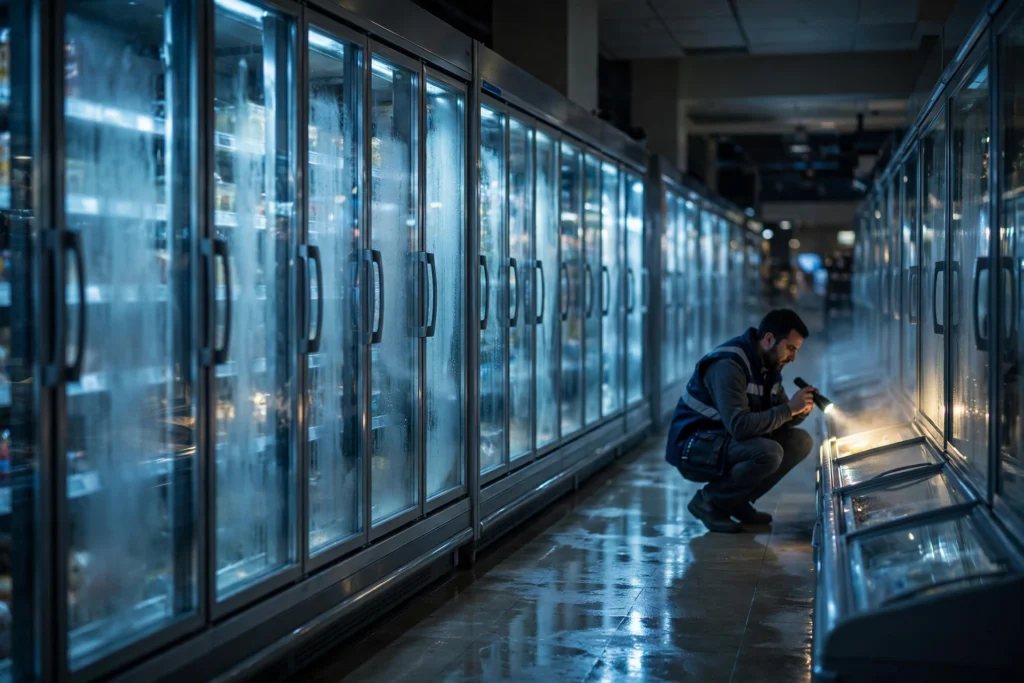
Supermarket Cyberattack Hits 700 European Stores as Hackers Turn Freezers Into Ovens
Imagine walking into your local supermarket on a Monday morning and discovering the freezers are blowing hot air. Not broken — hacked. That is exactly what happened across France this week, in what officials are calling an unprecedented supermarket cyberattack that hit around 700 stores and turned their refrigeration systems into 50-degree-Celsius ovens overnight.
This wasn’t a data breach. Nobody stole your credit card details or your loyalty points — at least, not that we know of. This was something stranger and, frankly, more unsettling: hackers remotely seized control of the fridges themselves, forced them into continuous defrost cycles, and cooked millions of euros’ worth of fresh and frozen food while everyone slept. France’s finance minister didn’t mince words when he addressed Parliament about it. He called it a strike at “the heart of our food security” and “a wake-up call for everyone.”
So what exactly happened, how did hackers break into supermarket refrigerators of all things, and should you be worried about your own groceries? Let’s dig in.
Supermarket Cyberattack: What Happened Overnight in France
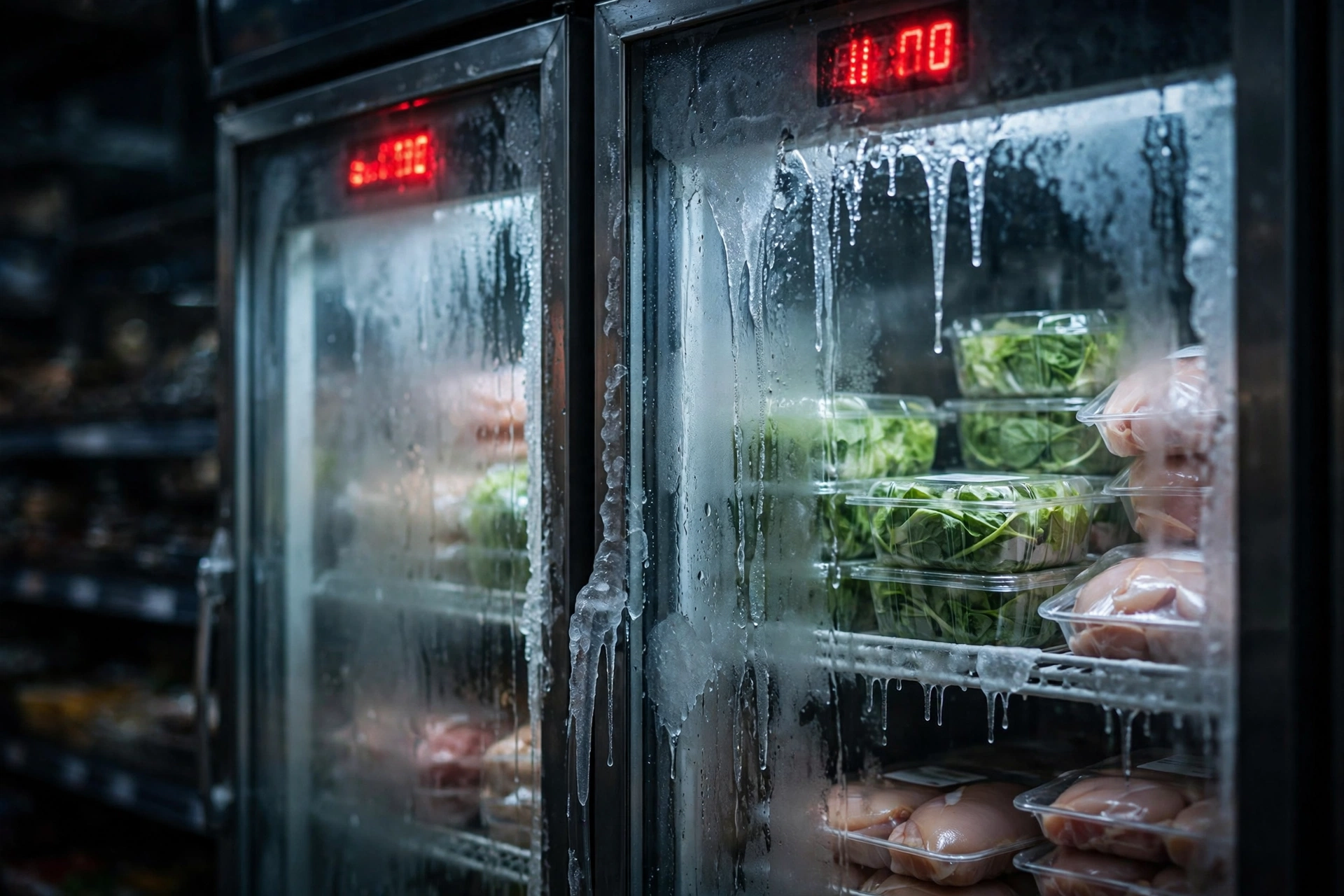
According to reporting from the Associated Press and AFP, the attack began during the night from Sunday into Monday. Intruders accessed the connected refrigeration systems used by several of France’s largest grocery chains and locked them into forced defrost mode — normally a brief, controlled part of a refrigeration cycle — pushing temperatures as high as 50°C (122°F), according to BFM-TV. Fresh food, dairy, meat, frozen goods: destroyed in a matter of hours.
The scale was staggering. Finance Minister Roland Lescure told Parliament on Tuesday that roughly 700 of France’s 10,000 supermarkets were affected. Groupement Mousquetaires — which runs more than 4,000 Intermarché and Netto stores across Europe — said 300 of its stores were hit. Cooperative U reported 80 of its 2,000 stores affected. Carrefour said 80 of its supermarkets were impacted. Monoprix said about 5 percent of its roughly 490 stores took a hit. E. Leclerc reported that several of its stores were targeted.
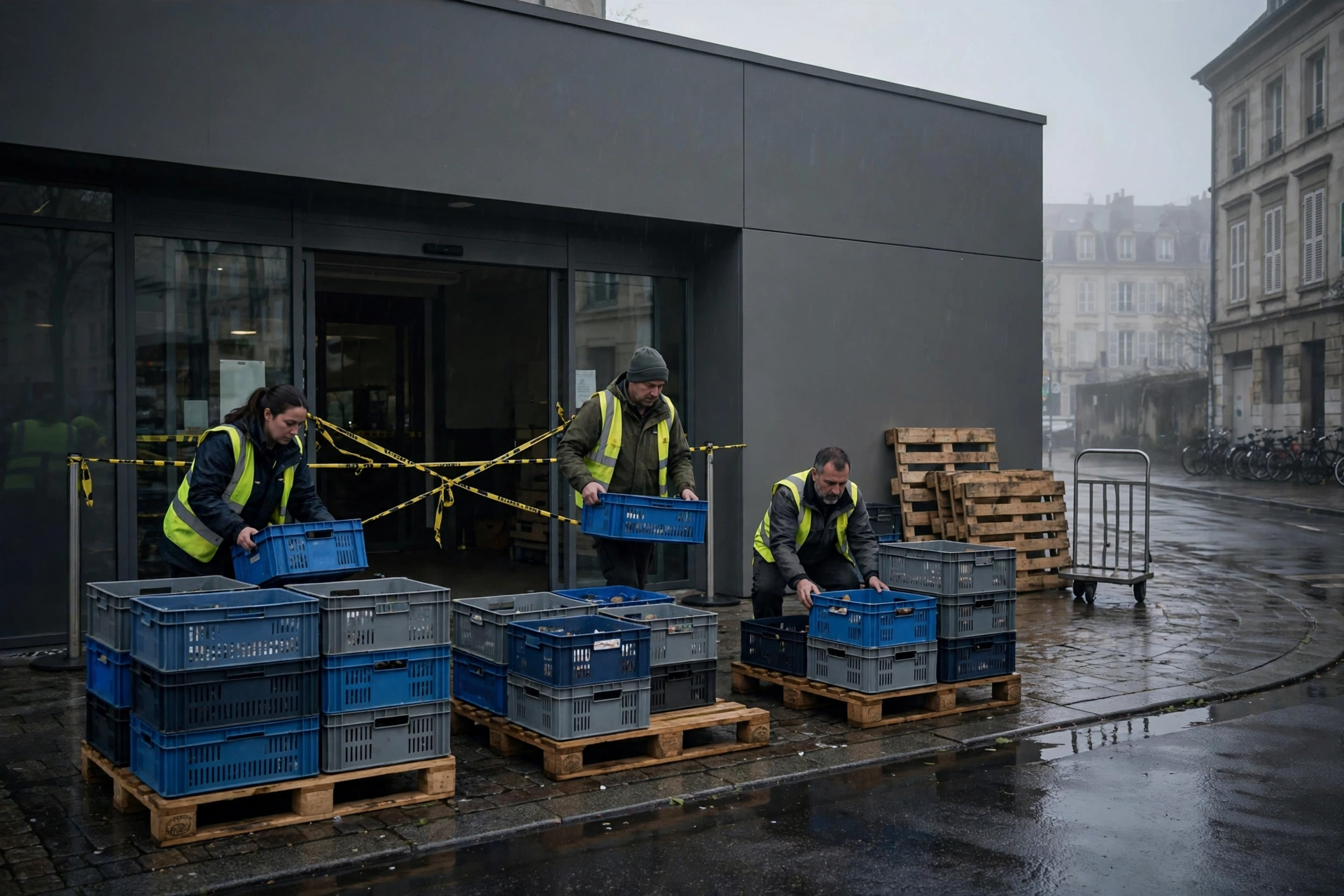
Some cases simply kept running hot through Tuesday, with refrigerated and frozen display cases remaining out of service. At many locations, store teams had no choice but to throw everything away — Intermarché told AFP that affected stores would have to “throw away all of the products” that were fresh or frozen.
The Stores Hit Hardest — and the Bill They’re Facing
Let’s be honest: “millions of euros in spoiled food” undersells it. Thierry Cotillard, the CEO of Intermarché, called the attack “unprecedented” and estimated losses amounting to “tens of millions of euros nationwide in a single day.” Dominique Schelcher, chief executive of Cooperative U, wrote on X that most of his company’s stores managed to prevent serious disruption, but some were forced to discard food.
And it wasn’t just spoiled groceries. The Paris prosecutor’s office said its cybercrime unit was investigating the “large-scale” attack, which also caused reported fires — yes, fires — at some locations. When a refrigeration unit meant to hold food at -18°C is suddenly running at oven temperatures, electrical components overheat. What happened next shouldn’t surprise anyone who’s ever left a space heater running too long.
So far, though, there is a genuine bright spot: Lescure told Parliament there was no risk to France’s overall food supplies. The country’s grocery network is big and redundant enough to absorb the loss — this week’s attack was a gut punch to the industry’s wallet, not to anyone’s dinner table.
Ahold Delhaize Shutdown Ripples Across the Atlantic
The France story might have stayed a French story if not for one of Europe’s biggest grocery giants getting dragged in separately. Ahold Delhaize — the Dutch multinational behind Albert Heijn in the Netherlands, Delhaize in Belgium, and Stop & Shop, Food Lion, and Giant in the United States — said Tuesday it was working to restore systems it had deliberately shut down after what it described as a “security issue.”
The stores themselves stayed open, but the company’s websites serving customers in both Europe and the United States were offline on Tuesday. The company said it had no evidence that customer or employee data had been stolen, but the timing — right as French chains were discovering their fridges had been cooked — could hardly have been worse for shoppers’ nerves.
How Do You Hack a Fridge? The Connected Everything Problem
Here’s the part that should make every one of us sit up: these weren’t laptops or phones that got hacked. They were commercial refrigeration units — physical machines in the back rooms and aisles of stores you’ve walked through a thousand times. They got hacked because, like everything else in 2026, they’re “smart.” Connected to store networks. Managed remotely. Updating their software over the internet.
Every connected device is a door, and modern retail has been installing new doors at a furious pace — from cloud-managed supply chains to AI chips running the smart infrastructure behind the scenes. Nobody sat down and decided to make French refrigerators hackable; they just kept adding connectivity because connectivity is cheaper, faster, and easier than sending a technician with a wrench. The attack worked precisely because that tradeoff is now baked into nearly every physical system we depend on.
Security researchers have warned for years that operational technology — the boring, unsexy systems that keep freezers cold, traffic lights green, and factory lines moving — is the soft underbelly of the digital economy. Attackers don’t need to crack a bank when they can just turn up the thermostat. This week, France found out the hard way that the prophecy was accurate.
France Calls It a Wake-Up Call — and Europe Is Listening
The political response was fast and unusually blunt. Prime Minister Sébastien Lecornu ordered France’s national cybersecurity agency, ANSSI, to investigate, according to a source who spoke to Reuters. French authorities are coordinating with European counterparts because other countries could be affected, and they’re assessing whether other French companies face similar risk.
That urgency mirrors a broader anxiety in governments about losing control of the connected systems society now runs on — the same anxiety driving proposals for an emergency “kill switch” on powerful AI systems and debates about how much of our physical world should be wired to the internet at all. Nobody wants to be the country that learns about a vulnerability by watching its food supply melt.
Your Questions, Answered
Was the food supply actually at risk?
No — at least not for shoppers. France’s finance minister was explicit that the country’s food supplies were not threatened. Roughly 700 of 10,000 supermarkets were hit, and the rest of the network kept running. If you bought groceries in France this week, anything on the shelf met the usual safety standards. Spoiled stock was destroyed, not sold.
Who did this?
As of now, nobody knows — and nobody has claimed responsibility. The Paris prosecutor’s cybercrime unit is investigating, and France’s national cybersecurity agency has been ordered in. Expect attribution to take weeks or months, if it comes at all. What officials have said is that the operation was large-scale, coordinated, and targeted specifically at connected refrigeration.
Was my personal data stolen?
There’s no evidence of that. The French attack targeted refrigeration control systems, not payment or customer databases. Ahold Delhaize likewise said it had no evidence customer or employee data was stolen. This appears to have been a sabotage-style attack on physical equipment, not a data heist.
Could this happen where I live?
Honest answer: the vulnerability class exists everywhere. Any retailer running connected refrigeration, building management, or industrial control systems over a network could, in principle, be targeted the same way. France’s experience is why cybersecurity agencies in Europe are now checking whether the same weakness affects stores in their own countries. If your local supermarket’s systems are properly segmented from the internet and patched, the risk is much lower — but “much lower” isn’t “zero.”
The Bottom Line
This supermarket cyberattack should change how you think about what a “cyberattack” even is. It’s no longer just a popup on your laptop or a phishing email. It’s someone, somewhere, quietly turning up the temperature on 700 stores’ freezers while the country sleeps — and causing fires, food waste measured in the tens of millions, and a government minister warning about food security on live television.
The scary part isn’t the sophistication. It’s the simplicity. Hackers didn’t break into a bank vault or a power grid; they broke into fridges. And they showed, in a single night, that in a world where everything is connected, everything is vulnerable. France called it a wake-up call. For the rest of us, it’s a preview.
Pingback: EasyJet Strike Italy: 200+ Flights Cancelled as 24-Hour Walkout Grounds Planes Today - Storion News