
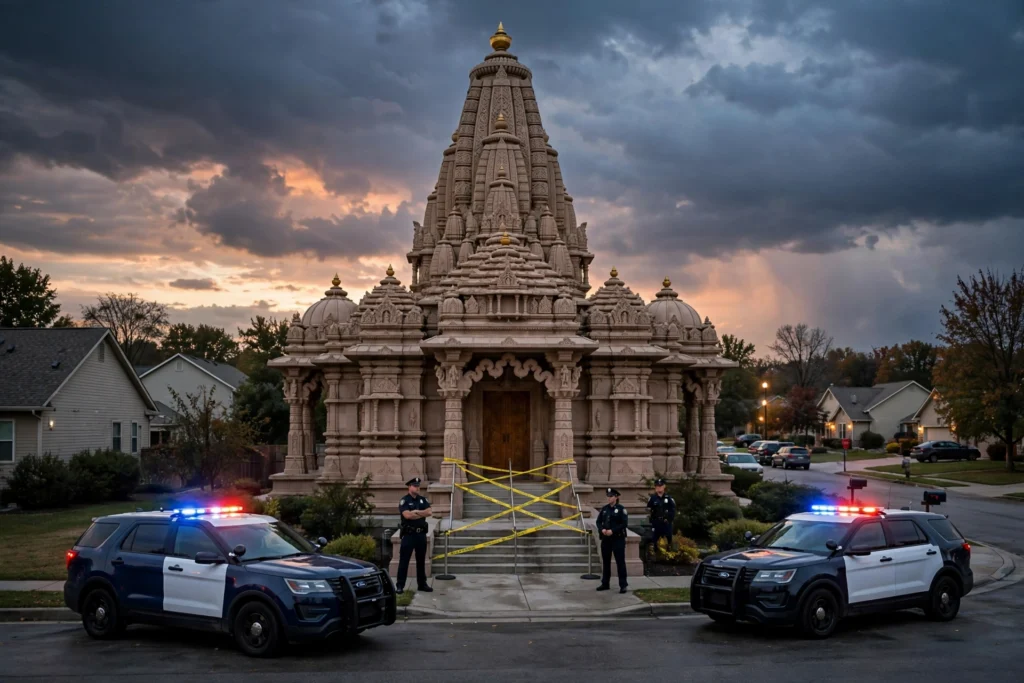
His Rifle Jammed Outside a Chicago-Area Hindu Temple. Then a Co-Worker Turned Him In.
One pull of the trigger. That is all that stood between Sunday worshippers at a Hindu temple in Aurora, Illinois, and a massacre. But the gun jammed — and within days, a 19-year-old’s alleged plan to crown himself the “Aurora Shooter” was in ruins. Police say this Aurora Hindu temple shooting plot was stopped not by a stroke of luck alone, but by a co-worker who refused to stay silent.
The Aurora Hindu Temple Shooting Plot: What Police Say Happened
According to court records and police statements reported by Chicago-area outlets and wire services, Alexandros Paporakis, 19, of Palatine, Illinois, drove from his mother’s home to a Hindu temple in Aurora on Sunday, October 11, with a modified AR-style rifle and roughly 300 rounds of ammunition.
Aurora sits about 65 kilometers southwest of Chicago, and the temple he allegedly targeted is one of the region’s major Hindu places of worship. Worshippers were gathered during the ongoing Navaratri celebrations — one of the holiest festivals on the Hindu calendar — when prosecutors say Paporakis tried to open fire.
The rifle jammed.
He fled the scene. What happened next is the part investigators say reveals just how long this had been planned. Court documents allege that instead of backing out, Paporakis went home and searched online for instructions on how to clear the malfunction — a search history that now sits at the center of the prosecution’s case.
The Tip That Cracked It Open
What undid the alleged plot was stunningly ordinary: a conversation at work.
Paporakis worked as a cashier at a Taco Bell outlet in Arlington Heights. According to prosecutors, he told co-workers that he had gone to the Aurora temple that Sunday with the intent of carrying out a mass shooting — and that he had fled after his weapon failed. He reportedly even sent a co-worker a photo of himself in tactical gear, along with an eight-page document he had written.
Two of his co-workers went to the police. That decision may have saved lives. Officers arrested Paporakis outside his home in Palatine the same Sunday — October 11 — before, investigators say, he had the chance to return to the temple.
“The seriousness of this alleged threat cannot be overstated,” Palatine Police Chief William Nord said after the arrest.
Inside the Eight-Page Manifesto
Detectives say the document Paporakis shared was titled “Why I Fought: A.K.A.: (Aurora Shooter’s Manifesto).” Court records describe it as a white-supremacist and neo-Nazi text filled with hatred toward people of Indian descent, Hindus, Jews, African Americans, and other non-white groups.
Authorities allege that in the writings, Paporakis referred to himself as the “Aurora Shooter,” expressed an intent to kill as many minorities as possible, and wrote that he expected to die after carrying out the attack. Investigators say the planning may have been underway for as long as two years — and that his co-workers had long noticed him openly identifying as a white supremacist and discussing Nazi ideology and armed violence.
Those details are what turned a failed attempt into a terrorism case.
What the Search Uncovered
After executing a search warrant at Paporakis’s residence, detectives reported recovering a rifle, multiple loaded rifle magazines, hundreds of rounds of additional rifle ammunition, and a tactical vest containing body armor with patches and imagery associated with white-supremacist extremism. Reports also mention swastikas and gasoline cans found at the home.
The FBI is assisting in the investigation, and local police have alerted other temples in the area to the threat. No injuries were reported at any point.
Charges and What’s Next
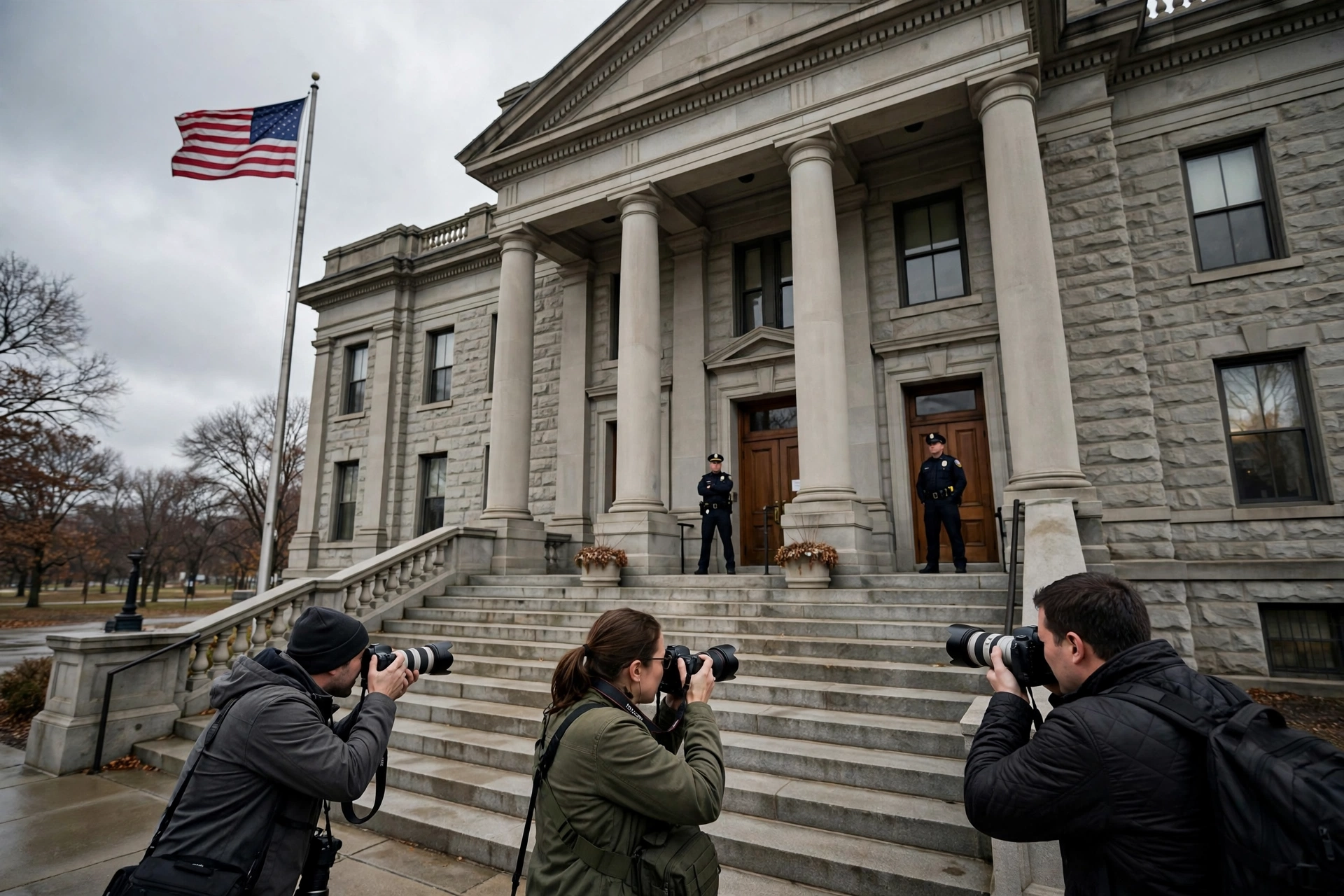
Paporakis faces felony charges of making a terrorist threat — a Class X felony — and unlawful possession of a rifle with a barrel shorter than 16 inches, a Class 3 felony.
He appeared for a detention hearing on Wednesday, October 14, where a Cook County judge ordered him detained. His next court appearance is scheduled for October 30. He has not entered a plea, and his public defender has cautioned that police and prosecutors’ accounts are allegations that may change as the investigation proceeds. The specific intended temple has not been formally confirmed and remains under investigation.
Community Responds: “We Urge Officials to Take This Seriously”
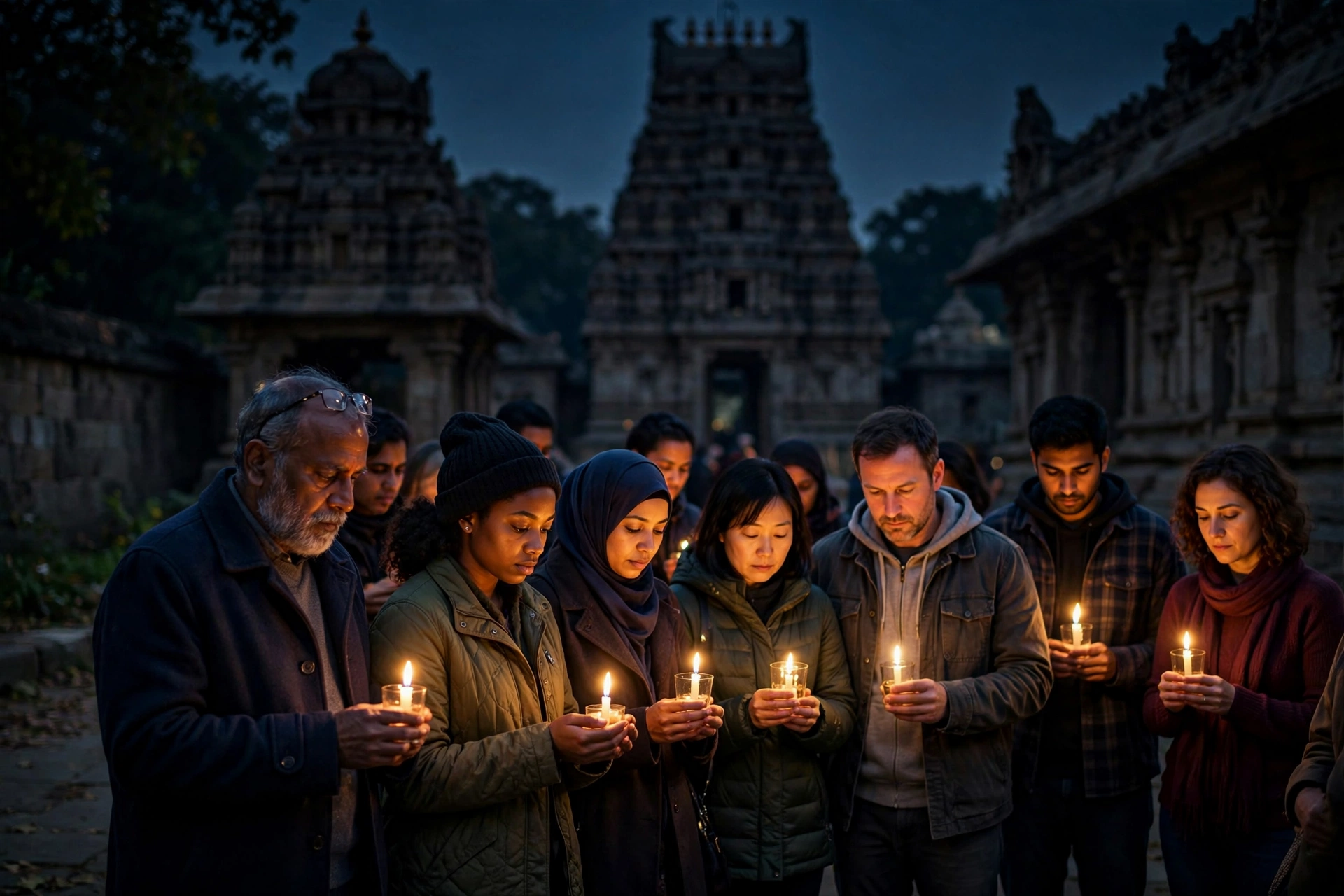
The reaction from Hindu and Indian-American organizations was swift. The Coalition of Hindus of North America (CoHNA) condemned the alleged plot and urged elected officials and law enforcement to treat threats against Hindu places of worship with the seriousness they deserve.
“We urge elected officials and law enforcement agencies to take the growing threats against Hindu places of worship seriously, strengthen protections, and unequivocally condemn Hinduphobia,” the organization said, also calling on temples and community groups to review security measures and report anything suspicious.
India’s Ministry of External Affairs also reacted to the case, underlining how closely New Delhi watches the safety of the Indian diaspora abroad.
Back in Aurora, the targeted temple’s chairman told reporters the temple maintains a substantial security presence and praised police for stopping the threat before anyone was hurt.
Why This Case Is Getting National Attention
It is not just the near-miss that has people talking. It is the pattern.
According to FBI data cited by Hindu-American advocacy groups, anti-Hindu hate crimes in the United States rose from 25 to 32 in a single year. Organizations like CoHNA say those numbers undercount the reality — many incidents, they argue, are never reported as bias crimes. The Aurora case, unfolding during Navaratri, has become the latest rallying point in a broader demand: that federal authorities treat anti-Hindu hate as a distinct, rising threat to American places of worship.
It also fits a grim template investigators know well: a young man, immersed in extremist ideology, fixated on a manifesto, stopped at the last possible moment. Earlier this week, a false hijack alarm diverted Air India flight AI2030 to Jaipur — a reminder of how quickly a single signal can trigger a full security crisis, and why authorities say every credible tip must be acted on immediately.
And then there is the suspect’s age. Nineteen. A teenager’s life, now potentially defined by a terrorism charge — the same age group at the center of another disturbing case making headlines this week, as eight US states sue OpenAI over the alleged role of AI chatbots in a teen’s death. Different stories, same unsettling question: what is pulling young people toward the edge, and who steps in before they cross it?
FAQ: The Aurora Hindu Temple Shooting Plot
Who is the suspect in the Aurora Hindu temple shooting plot?
Alexandros Paporakis, a 19-year-old resident of Palatine, Illinois, who worked as a cashier at a Taco Bell in Arlington Heights. Police describe him as a self-identified white supremacist and neo-Nazi. He has been charged with making a terrorist threat and unlawful weapons possession, but has not entered a plea, and the allegations against him remain unproven in court.
When did the alleged plot take place?
Police say Paporakis went to a Hindu temple in Aurora on Sunday, October 11, during Navaratri celebrations, attempted to open fire, fled when his rifle jammed, and was arrested later that day after co-workers tipped off police. His detention hearing was held Wednesday, October 14.
Why did the attack fail?
According to prosecutors, the modified AR-style rifle malfunctioned when Paporakis tried to fire it inside the temple. He fled, and court records say he later searched online for instructions on clearing the jam — evidence investigators now cite as proof of intent.
What happens next in the case?
A judge has ordered Paporakis detained. His next court appearance is scheduled for October 30. The FBI is assisting the investigation, and the specific intended target remains under investigation.
The Bottom Line
A rifle jammed on a Sunday in Aurora. Two co-workers spoke up. Between those two facts sits everything that could have been — and, for now, isn’t. But investigators say this was not a one-night impulse; it was a plan allegedly two years in the making, aimed at worshippers during one of their holiest festivals. If the charges hold, the Aurora Hindu temple shooting plot will be remembered not just as a near-miss, but as a warning about what extremist radicalization of teenagers now looks like — and how thin the line between a massacre and a miracle can be.
Sources: court records and police statements via Chicago-area outlets and wire services, including IANS; Palatine Police Department statements. All charges described are allegations; the suspect has not been convicted.