
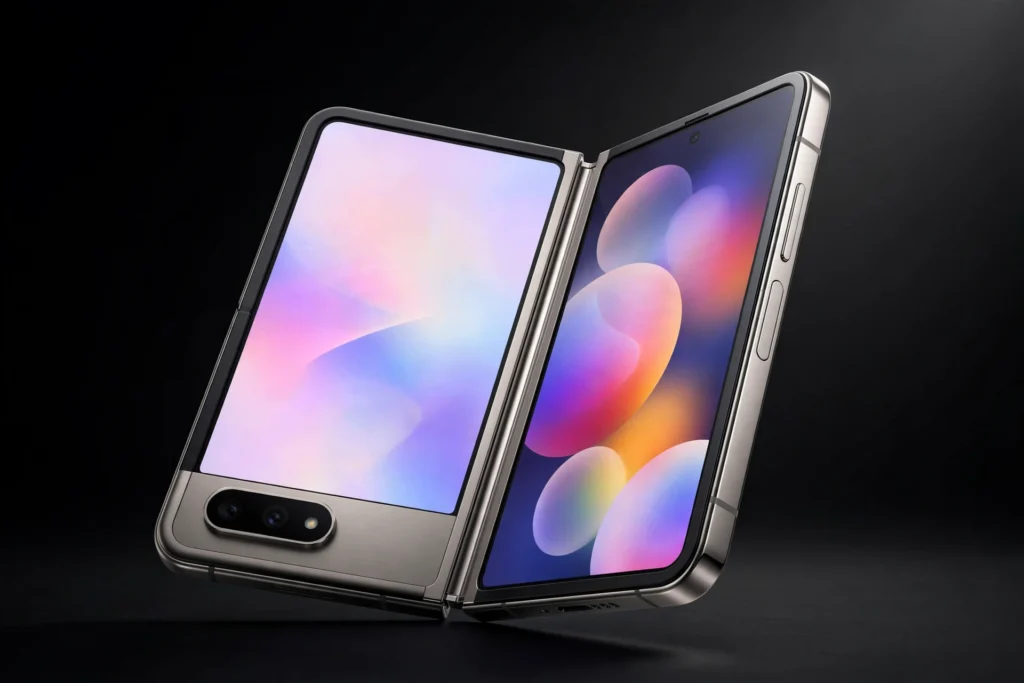
Apple’s $1,999 Foldable iPhone Is Finally Here: iPhone Duo Preorders Open Today, But Supply May Not Last
For seven years, Samsung has been selling you a phone that folds in half — and for seven years, Apple has said nothing. Well, today the silence ends. iPhone Duo preorders open this morning, and Apple’s very first foldable smartphone is officially up for grabs at a starting price of $1,999. The question isn’t whether it’s impressive. The question is whether you can actually get one.
Apple unveiled the iPhone Duo at its September 9 event, and the headline never changed: preorders begin October 16, with the phone hitting shelves October 23 in the United States and more than 70 other countries and regions. That day is today. If you want day-one stock, you’ll want to move fast — analysts are already warning this launch could sell out in hours.
A Foldable Eight Years in the Waiting
Let’s be honest: Apple is late to this party. Samsung launched the original Galaxy Fold back in 2019, and competitors from Google, Motorola, OnePlus, and Huawei have all shipped multiple generations since. So why did Apple wait until 2026?
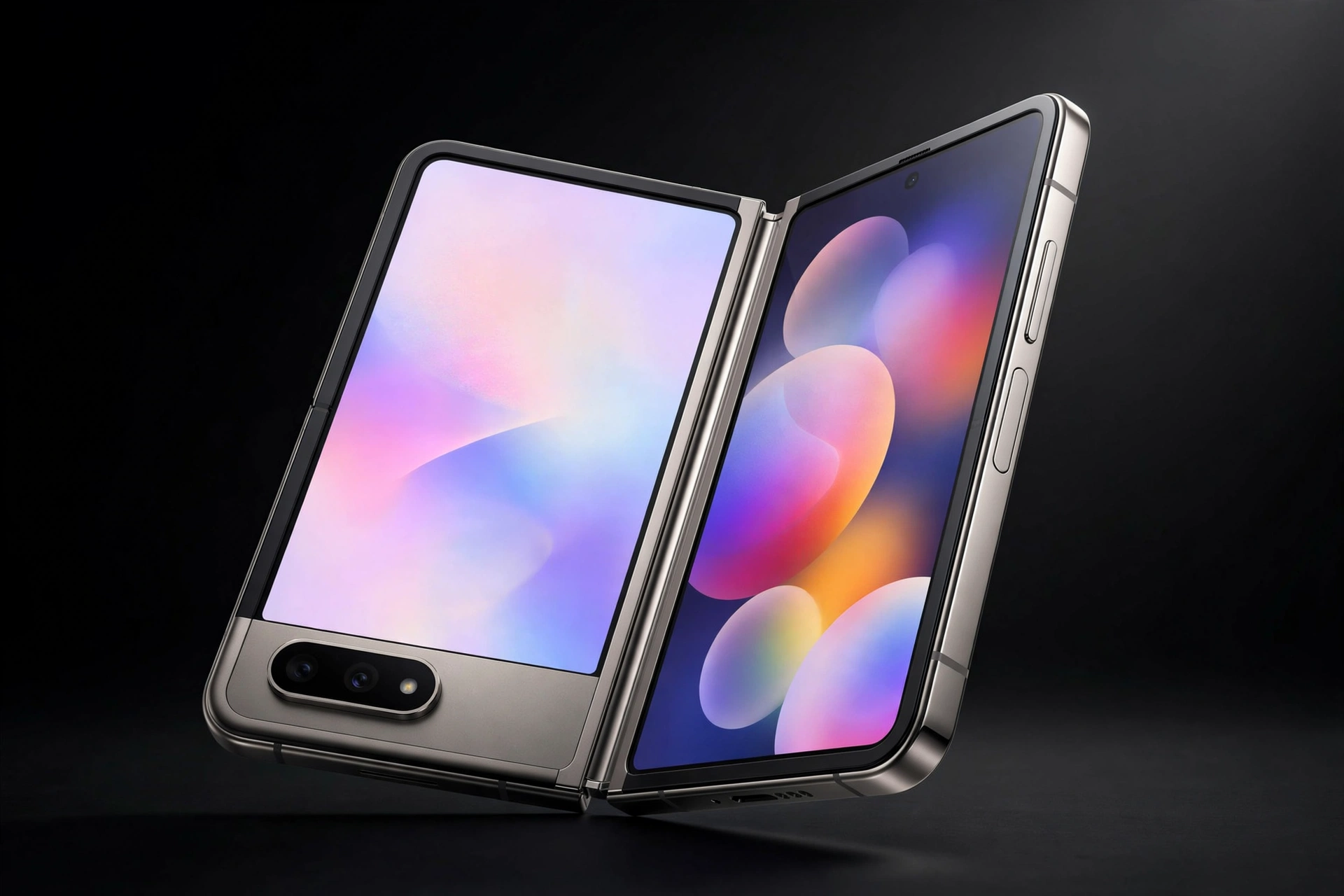
The short answer: the crease. Reporters who got their hands on the Duo at launch say Apple has done something genuinely better here — the fold is nearly undetectable. The inner 7.6-inch Super Retina XDR display uses a special nano-texture finish specifically designed to minimize crease visibility and glare, and launch attendees noted the crease looks smoother than anything Samsung has produced. If you’ve ever dismissed foldables because of that visible seam down the middle, Apple is betting this fixes your objection.
When closed, you use a compact 5.4-inch outer display — about 90% of the screen area of an iPhone 18 Pro, in a passport-like shape that slips into a pocket easily. Open it up, and you get the thinnest iPhone ever made, with both displays sharing the same aspect ratio so content scales seamlessly between them. It’s a book-style fold, not a clamshell flip — think tablet that shrinks to phone size.

The Spec Sheet That Actually Matters
Specs don’t sell phones — experiences do — but Apple’s foldable brings flagship firepower that would impress on any slab phone, let alone a folding one:
- Chip: The A20 Pro, built on TSMC’s 2nm process — the same silicon in the iPhone 18 Pro. Apple says it delivers up to 35% higher sustained performance than the iPhone 17 Pro, with a new display engine driving both screens simultaneously.
- Battery: There are two batteries, one in each half, working as one. Apple rates it at 31 hours of video playback on the inner display, 44 hours on the outer display, or 24 hours with mixed use. Five minutes of charging gets you five hours of video on the outer screen.
- Cameras: 48MP Fusion Main and 48MP Fusion Ultra Wide cameras (no telephoto — space is tight in a folding chassis), 4K 120fps Dolby Vision video, and a 12MP FaceTime camera hidden under the inner display.
- Connectivity: Apple’s new C2 modem — up to 50% faster than the previous C1X, with 5G mmWave support in the US — plus Wi-Fi 7, Bluetooth 6, and MagSafe. It’s eSIM-only worldwide.
- Build: Grade 5 titanium, IP68 dust and water resistance, in two colors: Star White and Night Sky.
One notable change: there’s no Face ID. The folding design forced Apple to put Touch ID back in the side button — a feature some longtime iPhone users have quietly missed for years. Split View multitasking, iPad-style, comes built in, and Apple says Apple Pencil support is arriving later this year. If that pans out, the unfolded Duo starts to look less like a phone and more like a pocketable mini-iPad with cellular.
That silicon story is part of a bigger industry shift. Apple isn’t the only tech giant redesigning its hardware stack from the silicon up — Microsoft’s in-house AI chip push shows the whole industry moving toward custom chips for AI workloads. The A20 Pro fits right into that race.
The $1,999 Question: Should You Preorder?
Here’s the honest breakdown. The pricing ladder is steep:
- 256GB — $1,999
- 512GB — $2,199
- 1TB — $2,599
- 2TB — $3,199
At $1,999, this is Apple’s costliest mainstream iPhone configuration at launch. For comparison, that’s roughly the price of a Galaxy Z Fold plus a new Apple Watch. So who is this for?
Three kinds of buyers make sense here. Early adopters who want the first of everything — they already know who they are. Productivity users who can genuinely use a pocketable tablet for Split View multitasking, document work, and video calls. And iPhone loyalists who’ve been eyeing Samsung’s folds for years but never wanted to leave Apple’s ecosystem. If you’re none of those three, your current phone is probably fine.
The real kicker is supply. Analyst Jeff Pu has already cut his 2026 iPhone Duo shipment estimate to about 6 million units, down from 7 million — and that doesn’t appear to be about soft demand. The problem is manufacturing: hinge bottlenecks, durability testing, inner-display flatness inspections, and production reportedly still measured in the hundreds of units per day. Multiple reports warn of fast sellouts, longer shipping windows, and spotty store availability.

Apple clearly knows this. The company opened its “Get Ready” program ahead of preorders, letting buyers pick color and storage, confirm carrier status, choose accessories and AppleCare+, set up trade-in, and save payment and shipping details in advance. Completing Get Ready enables one-tap ordering when preorders open at 5:00 a.m. Pacific — which is the practical way to compete for day-one stock if early supply is as tight as expected.
Apple vs. Samsung: The Foldable Crown Is Up for Grabs
Let’s not pretend Samsung isn’t watching nervously. The Korean giant built the foldable category from scratch and currently owns it. But analysts expect Apple to grab 20% to 25% of the foldable market with the Duo — in its very first year. That’s an extraordinary projection for a first-generation product, and it tells you everything about Apple’s brand power versus the category’s current state.
Why would Apple win? Ecosystem lock-in, mostly. Millions of iPhone users have considered a foldable but won’t switch to Android to get one. The Duo removes that barrier entirely. If Apple delivers a fold without the crease, the battery life it promises, and iOS software that genuinely takes advantage of two screens, Samsung’s head start stops mattering overnight.
But first-generation products carry first-generation risks. Foldables have hinges, and hinges wear out. Apple’s nano-texture display is unproven at scale. Durability testing and hinge bottlenecks are exactly what analysts flagged on the supply side — and durability is what buyers will judge on the demand side. The reviews arriving over the next week will matter enormously.
What This Launch Says About Apple’s Bigger Play
The Duo isn’t just a new phone — it’s a statement about where Apple thinks hardware goes next. The company has been pushing deeper into premium categories: services, wearables, and now entirely new form factors. Just this month, Apple’s smart home push at its “Welcome Home” event showed the same strategy — enter a crowded category late, then win on polish.
Apple remains a nearly $5.1 trillion company, and the market will watch how the Duo affects the broader iPhone upgrade cycle. Analysts currently forecast iPhone 18 Pro shipments at around 72 million units — roughly twelve times the Duo’s projected 6 million. So no, this isn’t replacing your regular iPhone. But it’s Apple’s most radical hardware evolution in years, and if it succeeds, expect the next Duo — and the next, and the next — to reshape what an iPhone is.
For now, the company is clearly enjoying its moment. Even its critics note the ambition: a $1,999 foldable in a year when consumers are stretching every dollar takes confidence — or stubbornness. Given the preorders open today, we’ll find out quickly which one it is.
Frequently Asked Questions
When do iPhone Duo preorders open, and when does it go on sale?
Preorders opened Friday, October 16, 2026 at 5:00 a.m. Pacific Time. The phone goes on sale October 23 in the United States and more than 70 other countries and regions.
How much does the iPhone Duo cost?
The iPhone Duo starts at $1,999 for 256GB of storage. Higher tiers are $2,199 (512GB), $2,599 (1TB), and $3,199 (2TB). It comes in Star White and Night Sky.
Does the iPhone Duo have Face ID?
No. Because of the folding design, Apple moved biometric authentication to a Touch ID sensor built into the side button. You can enroll multiple fingers, and Apple Watch unlock also works.
Is the iPhone Duo water resistant, and does it take a physical SIM?
Yes, it’s rated IP68 for dust and water resistance. And no — it’s eSIM-only worldwide, with no physical SIM tray, so check your carrier’s eSIM activation before buying.
The Bottom Line
Apple’s first foldable arrives fashionably late, charges a $1,999 cover, and expects you to be grateful for the privilege. The good news: the technology finally looks ready — a nearly invisible crease, genuine all-day battery life, and the A20 Pro chip under the hood. The bad news: supply looks genuinely tight, and first-generation durability is still an open question. If you’re an iPhone loyalist who has been foldable-curious for years, today’s preorder is the moment you’ve been waiting for — just don’t wait too long. And if you’re on the fence? Let the early reviews arrive, keep your $2,000, and watch how version one survives the real world. Apple will still be here next year.
Sources: MacRumors, 9to5Mac, Hypebeast, Electronics Weekly, Softonic, US Brief. Specs and dates verified against Apple’s product pages and reporting on October 16, 2026. Also see Apple’s $25 million ballroom pledge for the company’s other recent headlines.