
Tesla Unveils Flying Roadster With SpaceX Thrusters: 0–60 in 0.59 Seconds, Production Starts 2028
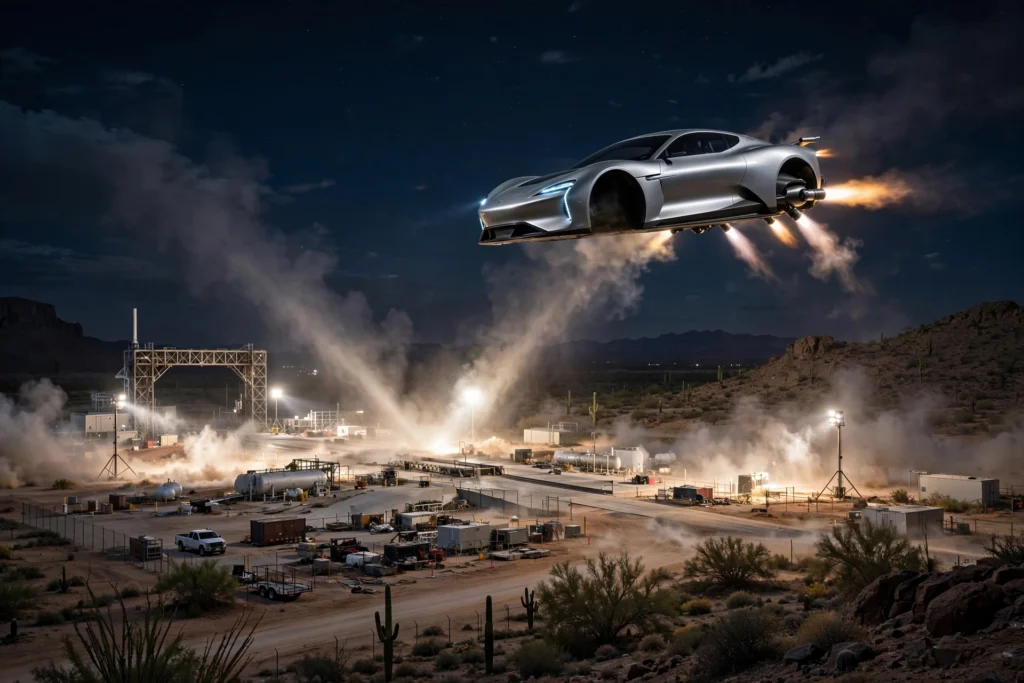
For nine years, it was the punchline of the EV world. The “flying Tesla Roadster” was something Elon Musk talked about on podcasts — a concept so wild that even diehard fans filed it under vaporware, right next to the Robotaxi timelines and the Mars city. Well, the joke is over. On the night of October 15, at a SpaceX test facility in Texas, Tesla finally unveiled its next-generation Roadster — and it actually flew.
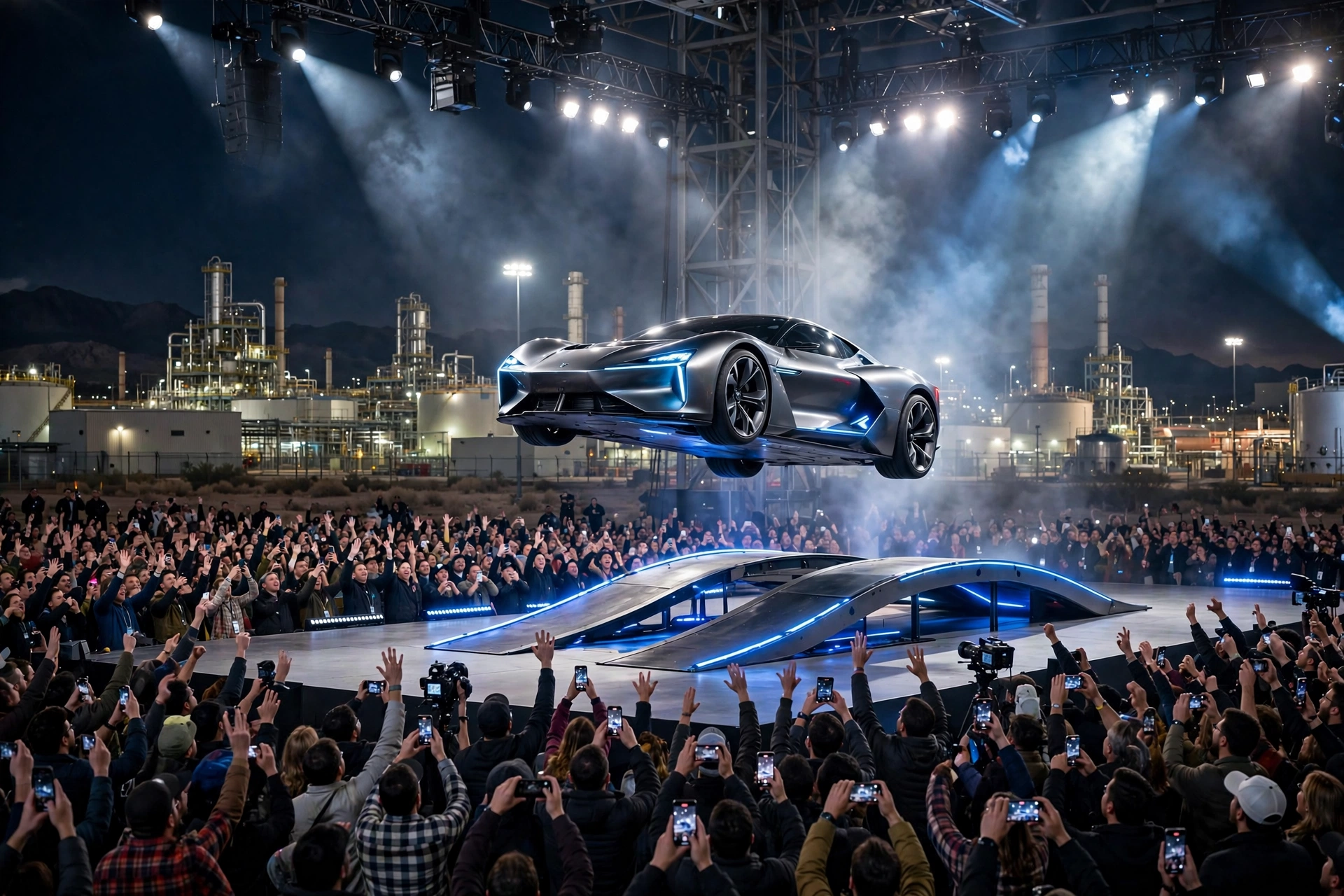
Not CGI. Not a render. A real car lifted off a ramp, executed a midair flip, and landed back on the ground while the crowd lost its mind. Musk stood on stage and said the words himself: “Flying cars are real.”
A Reveal Nine Years in the Making
Tesla first showed the second-generation Roadster back in 2017, promising a 1.9-second 0–60 time and a 620-mile range, with deliveries starting in 2020. Then came the delays — year after year — as Tesla redirected its energy into the Model Y, the Cybertruck, and the robotaxi program. The Roadster became a ghost, a beautiful memory of a promise that never arrived.
Last night’s event, streamed live and held at SpaceX’s McGregor facility near Waco, Texas — an unusual venue choice that hinted at exactly what was coming — closed that chapter. The car that rolled out looks nothing like the 2017 concept. It’s sharper, more aggressive, and hiding technology borrowed directly from rocket science.
One detail from the buildup now makes perfect sense: Tesla had pushed the reveal back two weeks from its original October 1 date, citing weather at the outdoor venue. You don’t reschedule a car reveal over weather — unless your car is going to fly.
Three Versions, One That Leaves the Ground
Tesla confirmed three Roadster configurations, and the lineup reads like something out of science fiction:
The Performance trim is the “base” model — a two-seater with active aerodynamics and a fan-based suction system that generates extra downforce. Tesla claims 0–60 mph in under 1.6 seconds. That alone would make it one of the fastest production cars on Earth.
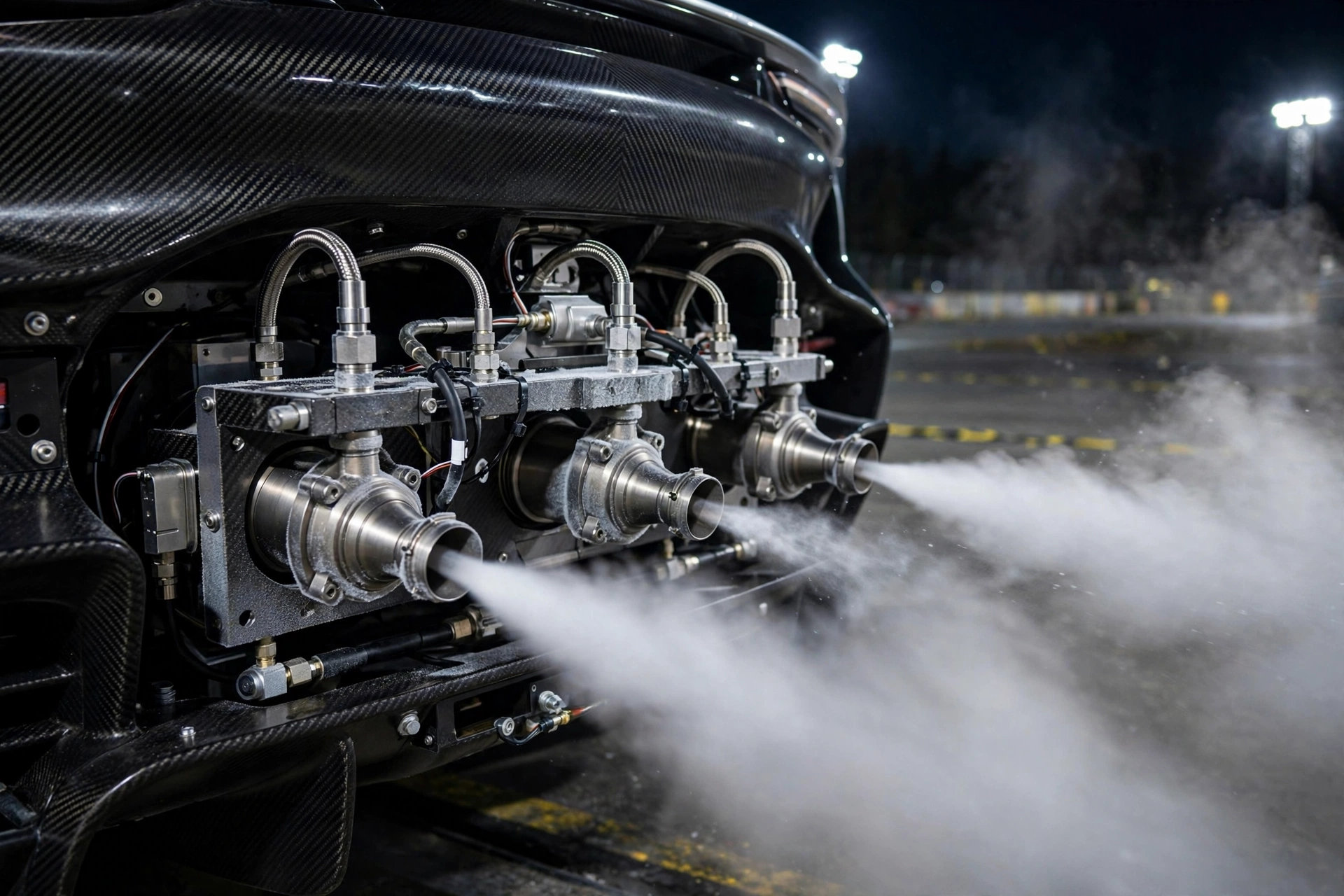
The Thrust trim adds rear-mounted cold-gas thrusters — compressed air stored in carbon-fibre pressure vessels, developed with SpaceX — cutting the sprint to under 0.9 seconds.
The Rocket trim is the one that flew. A single-seat configuration with additional thrusters capable of lifting the vehicle off the ground and controlling it in flight. Tesla claims a 0–60 mph time under 0.59 seconds and a top speed exceeding 230 mph (370 km/h). All versions are rated for more than 300 miles of range.
During the demonstration, the Roadster accelerated up a large curved ramp, its suction system holding it to the surface even while completely upside down. Then the cold-gas thrusters fired, and the car launched off the ramp, flipped in midair, and landed. In a separate stunt, it did a “kickflip” over the entire Tesla lineup — including the Semi truck — before touching down safely.
“Every Car on the Road Is Limited by One Thing: Tire Grip”
On X, Tesla explained the physics in one sentence that stuck with engineers across the internet: the thruster system generates four to five times the force that tires can transmit to the road. More force on the same mass means dramatically better acceleration — physics does the rest.
Musk also teased what’s next. He said an even bigger stunt is being planned: an attempt at Evel Knievel’s famous Snake River Canyon jump, using the Roadster. The rocket-car-as-stunt-vehicle era may have just begun.
It’s worth noting that this is a deepening of the Tesla–SpaceX crossover that’s been building all year. Just this week, Musk tightened his control over Starshield operations for Ukraine — another sign that the walls between his companies are dissolving, with SpaceX technology flowing into Tesla products in ways we’re only beginning to see. Earlier this week, we covered how Musk’s Starshield satellite restrictions are reshaping drone warfare in Ukraine — the same kind of SpaceX-grade engineering is now sitting in a sports car.
How Much Does a Flying Car Cost?
Here’s where reality comes back down to Earth. After the event, Tesla’s reservation page listed a US$50,000 reservation payment for the Performance version and US$250,000 for the Thrust version — and those are just reservation deposits, not the final price. The final sticker is still unannounced.
The Rocket trim — the flying one — is invitation-only, with no deposit amount listed. And there’s a catch that matters: it’s not approved for public road use. So if you were planning to commute over traffic, not yet. Think of it more like a track toy for billionaires — for now.
Production is scheduled to begin in 2028, according to Musk — with a knowing “for real this time” attached, given the decade of missed dates. Tesla has previously said the next-gen Roadster will be built at Giga Texas, and it will be interesting to see whether the company can keep this promise when the AI hardware race is soaking up so much of the industry’s attention and capital.
Why This Actually Matters
It’s easy to dismiss this as a billionaire’s toy — and in one sense, that’s exactly what it is. A single-seat, invitation-only, non-road-legal flying car is not going to change how anyone gets to work tomorrow.
But zoom out. Tesla took rocket-grade cold-gas thruster technology, packaged it into a production vehicle, and demonstrated it live. The physics Tesla is commercializing here — thrust-vectored performance beyond tire grip — will trickle down. The same engineering culture that made reusable rockets routine is now aimed at the fundamental limits of cars. First it shows up as a stunt. Then it shows up as a safety feature. Then it shows up in your driveway.
And there’s a competitive angle that analysts aren’t missing. While Apple is launching smart home displays and Microsoft is racing Nvidia in AI chips, Tesla just reminded everyone it can still do the one thing no other automaker can credibly attempt: turn science fiction into a product demo.
FAQ: The Tesla Flying Roadster
Did the Tesla Roadster actually fly?
Yes — during the October 15 reveal event in Texas, the top-tier Rocket configuration lifted off a ramp using cold-gas thrusters, performed a midair flip, and landed safely. A second demo showed it jumping over a lineup of Tesla vehicles including the Semi.
How fast is the new Tesla Roadster?
Tesla claims 0–60 mph in under 0.59 seconds for the top-tier Rocket trim, under 0.9 seconds for the Thrust trim, and under 1.6 seconds for the base Performance trim. Top speed exceeds 230 mph for the Rocket.
When can you buy the Tesla Roadster?
Production is slated to begin in 2028. Reservations are open now: $50,000 for Performance and $250,000 for Thrust in the US. The flying Rocket trim is invitation-only and not approved for road use.
How much will the Roadster cost?
Tesla hasn’t announced final prices — only reservation deposits so far. The company quoted a $200,000 base price for the original 2017 concept, so expect the real numbers to be substantially higher, especially for the thruster-equipped versions.
The Bottom Line
Nine years of delays, one rescheduled date, and a venue switch to a rocket test site — it all makes sense now. Tesla didn’t just reveal a new sports car; it revealed the first car that can leave the ground on command. Is the Rocket trim a toy for the ultra-rich? Absolutely. But so was the original Tesla Roadster in 2008, and that “toy” started the electric revolution. History has a habit of repeating itself — this time, 50 feet in the air.
Pingback: GTA VI Launch Trailer Is Here: Rockstar Reveals November 19 Release, Justice Soundtrack, and a Final Look at Vice City - Storion News