
Bangladesh Battles the World’s Worst Measles Outbreak: Over 200,000 Cases and 1,147 Dead — A “Real Warning” to Every Nation
What happens when a country’s vaccination system — once the envy of the region — collapses almost overnight? Bangladesh is finding out in the most devastating way possible.
The country is now battling the world’s worst measles outbreak of 2026, with more than 202,000 suspected cases reported since mid-March and a death toll that has climbed past 1,147. An overwhelming 94 percent of those who died were children under five, according to the World Health Organization — kids whose lives could have been saved by a vaccine that costs pennies a dose.
Health experts are not mincing words. Mark Jit, a WHO vaccine adviser and professor at NYU’s School of Global Public Health, told Reuters that Bangladesh’s ordeal is “a real warning to every country” about what happens when immunization rates slip. Because measles is one of the most contagious diseases known to science, even a small dip in coverage can ignite a fire that is extraordinarily hard to put out.
From vaccination success story to global warning
Until very recently, Bangladesh had been one of the developing world’s great public-health success stories. In 2024, the WHO and UNICEF estimated the country had achieved 96 percent coverage for the first measles dose and 93 percent for the second — numbers most wealthy nations would envy.
Then the bottom fell out. In 2024, mass protests ended fifteen years of rule by Prime Minister Sheikh Hasina, and in the political turmoil that followed, health workers went on strike, vaccine orders were delayed, and follow-up vaccination drives that usually accompany routine programs were disrupted. An interim government took over and replaced the country’s long-standing procurement of WHO-approved vaccines through UNICEF’s international supply chain with an open-tender process. UNICEF repeatedly warned the government of a looming vaccine shortage — in five to six formal letters and around ten meetings between 2024 and 2026, according to a report by the Canada-based Global Centre for Democratic Governance.
The result was a nationwide stock-out of the measles-rubella vaccine during 2024 and 2025. Citing Bangladesh’s Expanded Programme on Immunisation data, the report noted that measles vaccination coverage crashed to 56.2 percent in 2025 — the lowest level recorded between 2017 and 2025. That is catastrophically below the 95 percent threshold the WHO says is needed to stop measles from spreading.
An emergency response that missed millions of children
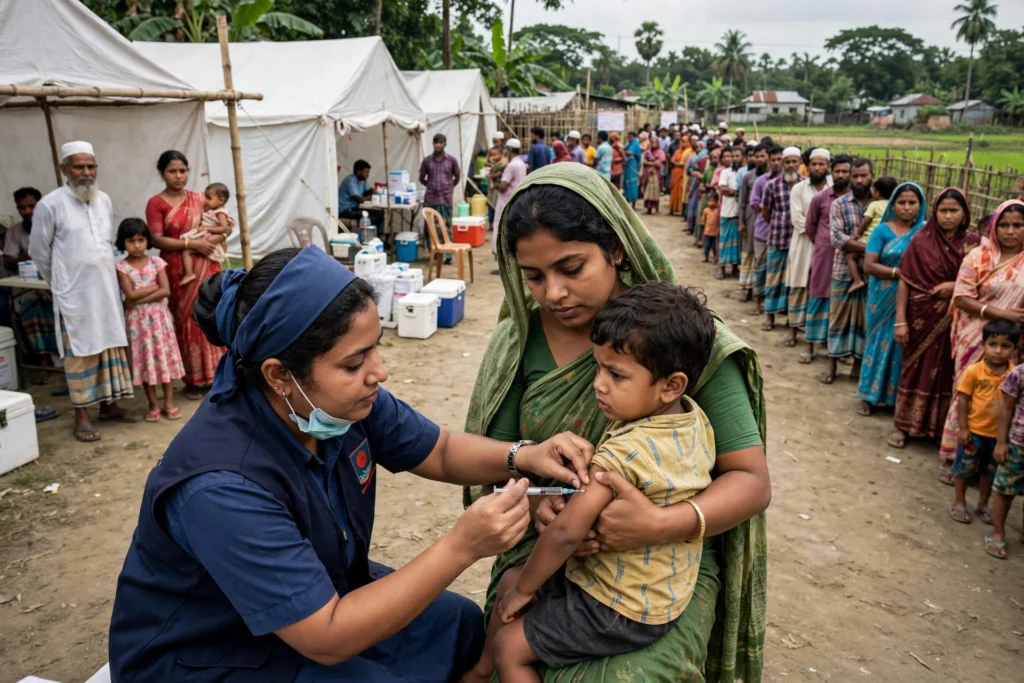
When the outbreak erupted in March, the authorities did not stand still. An emergency vaccination program in April and May reportedly reached almost 20 million children aged six months to five years — and new cases initially slowed. The government declared it had covered every child in the target group.
But that claim has not survived scrutiny. When another routine health intervention ran in June with the same age target, its target list contained four million more children than the measles campaign. “There is a gap,” prime ministerial adviser Hyder conceded to Reuters in September, pointing to vaccine hesitancy among parents and children who missed out because of illness.
The numbers tell their own grim story. A WHO-coordinated emergency campaign launched in April 2026 aimed to reach more than 1.2 million children in the hardest-hit districts — and emergency teams remain on the ground. Yet the Reuters investigation found the response was hampered by data that left millions of children out entirely, chronic under-preparation, and a failure to reach enough parents. Prevention, as Professor Jit put it, is easier, cheaper and safer than responding to an emergency — and Bangladesh learned that lesson the hardest way.
Why measles is so ruthlessly unforgiving
To understand why the outbreak exploded so violently, it helps to understand the disease itself. Measles is not a mild childhood illness of the past — it is one of the most infectious viruses on Earth. A single case in an unprotected population can infect up to 18 others. The virus can linger in the air of a room for two hours after an infected person leaves.
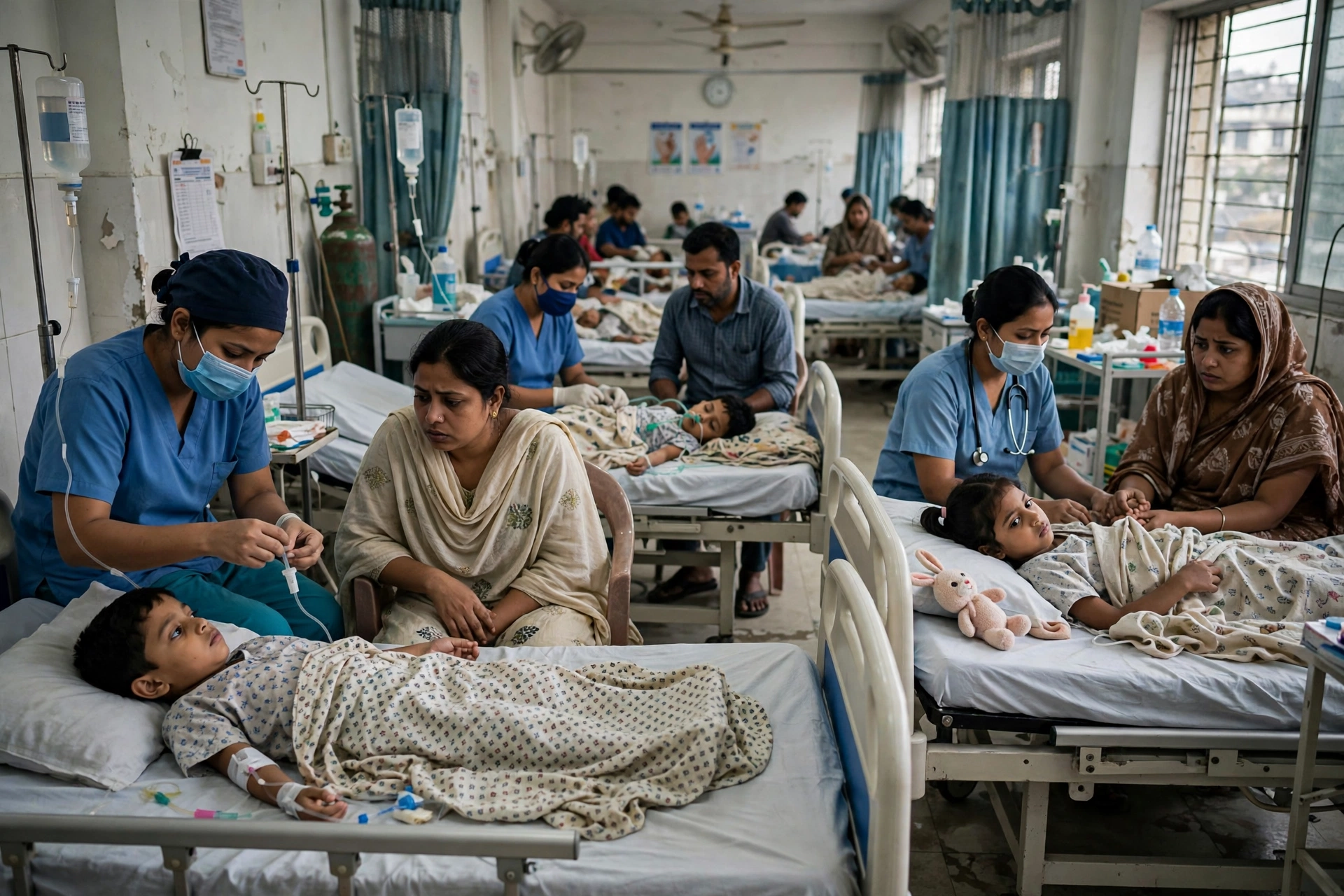
For most children it brings fever, cough and a spreading rash. But in malnourished or very young children — exactly the population this outbreak is hitting — complications like pneumonia, brain inflammation and blindness are common, and fatality rates climb sharply. That is why 94 percent of the deaths in Bangladesh have been children under five.
It is also why herd immunity matters so much. At 95 percent coverage, measles has nowhere to go; the virus’s chains of transmission break. At 56 percent, it moves through a population like fire through dry grass. Bangladesh had nearly achieved elimination; now it is the cautionary tale.
A global pattern, not a local accident
Bangladesh’s catastrophe did not emerge in isolation. It is part of a broader global resurgence of measles wherever immunity gaps have been allowed to accumulate. The Immunization Agenda 2030 mid-point review found that global recovery of vaccination after the COVID-19 pandemic remains incomplete, with first- and second-dose measles coverage still below the 95 percent threshold needed to interrupt sustained transmission. In South-East Asia, reported measles cases in 2025 rose 42 percent above the previous five-year average.
Protecting children from preventable harm is becoming a defining public-health test of this decade — governments everywhere are being forced to confront it, from vaccination policy to the digital arena, where eight US states are suing OpenAI over alleged teen self-harm harms linked to ChatGPT. And the measles emergency arrives alongside other health stories dominating global headlines — including the Vatican’s announcement of Pope Leo XIV’s lung cancer diagnosis — a reminder of how suddenly a health crisis can become the whole world’s business.
What happens next?
The fight is far from over. Health observers warn the outbreak may not have peaked yet, with new cases continuing to mount. Bangladesh’s Directorate General of Health Services has reported the combined toll alongside suspected cases still awaiting confirmation, and emergency vaccination teams supported by WHO and UNICEF remain active in affected districts.
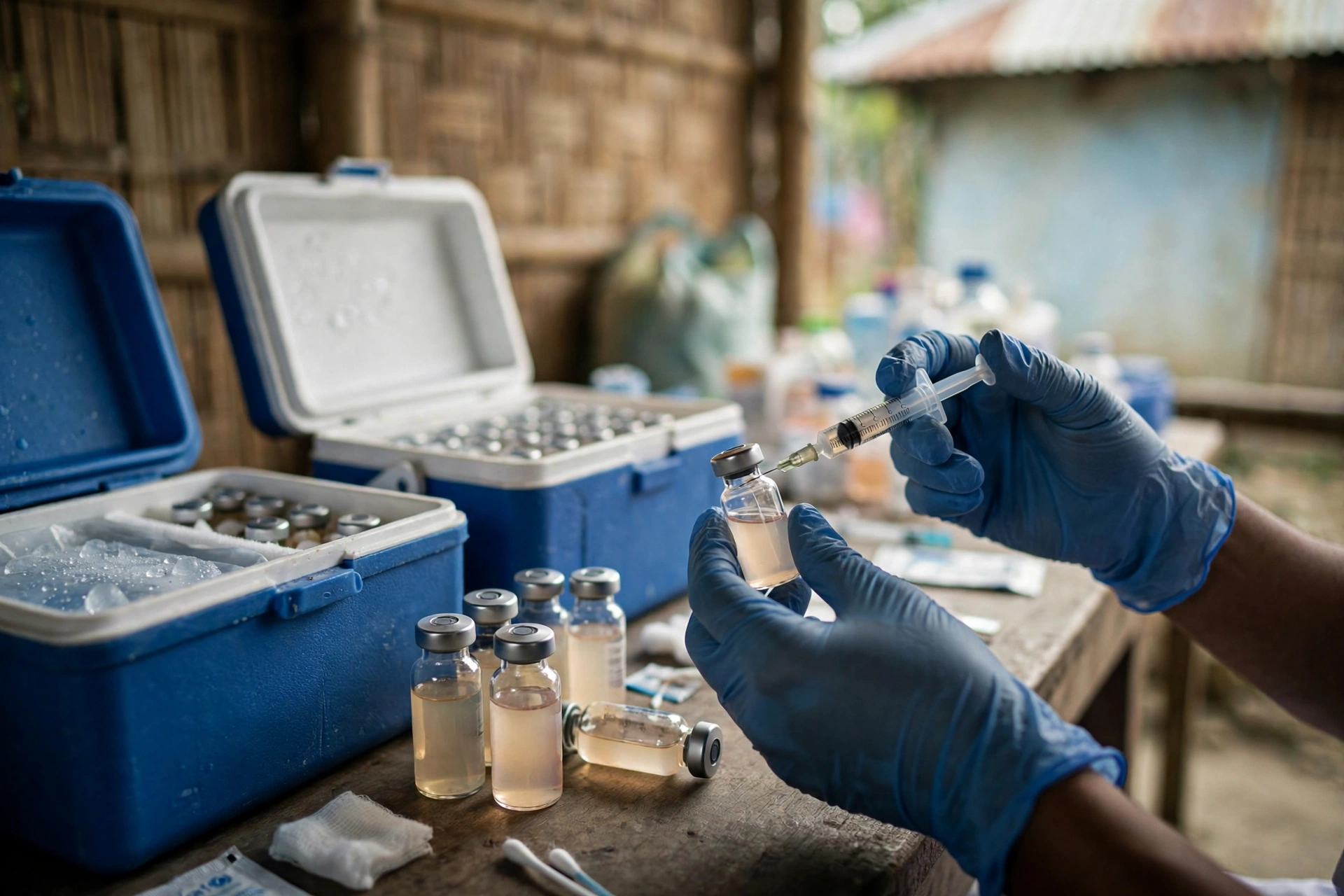
The prescription going forward is well known: restore stable vaccine procurement, rebuild robust surveillance, fix the data systems that left millions of children invisible to the health service, and run sustained catch-up campaigns — especially with mobile vaccination units that can reach communities outside routine health registries. WHO also recommends Vitamin A supplementation for children with measles, which sharply reduces the risk of severe complications like pneumonia and eye damage in malnourished children.
Bangladesh is not the only nation whose emergency services have been pushed to the limit this year — Mauritius recently imposed a curfew amid its worst riots in decades — but few crises have been as plainly preventable as this one.
FAQ
How bad is the measles outbreak in Bangladesh?
It is the worst in the world this year: over 202,000 suspected cases (22,000 laboratory-confirmed) since mid-March 2026, with 1,147 deaths — 94 percent of them children under five, according to the WHO.
Why did vaccination coverage collapse?
A combination of political turmoil after the fall of the Hasina government, a switch away from UNICEF’s vaccine procurement system that caused a nationwide measles-rubella vaccine stock-out in 2024–2025, health worker strikes, and cancelled supplementary immunisation campaigns. Coverage fell to 56.2 percent in 2025.
Why do experts call it a warning to other nations?
Because it proves how quickly decades of immunisation gains can unravel when coverage drops below the 95 percent herd-immunity threshold. WHO vaccine adviser Mark Jit said preventing an outbreak through vaccination is easier, cheaper and safer than responding to one — and that every country should take note.
Is the outbreak under control?
Not yet. Emergency campaigns reached millions of children but missed millions more, and cases continued rising through September. Observers warn the peak may not have been reached.
The bottom line
Bangladesh built one of the finest vaccination systems in the developing world — and then watched it fail in roughly two years. The cost: more than a thousand dead children and the world’s worst measles outbreak. The warning it offers every nation is brutally simple: immunity is not a one-time achievement. It is a standing contract with every child, renewed with every vaccine order, every clinic shift, every data entry. Break that contract, and measles will come to collect.