
Limoges Town Hall Burns as France Riots Explode Over the Cost of Living
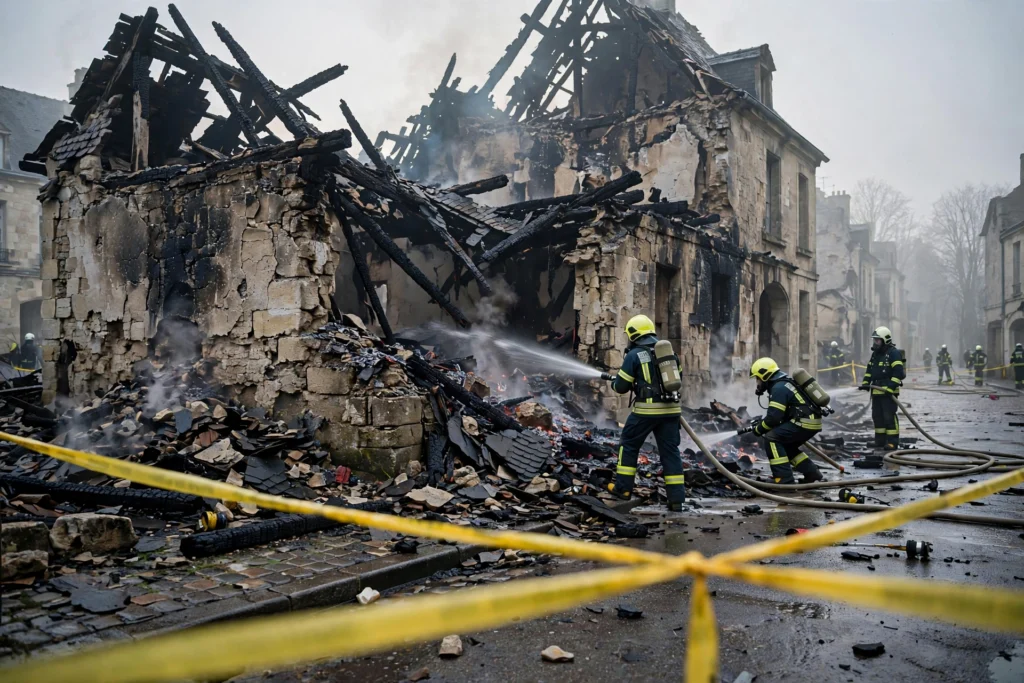
Limoges, France — Picture a 143-year-old landmark, the grand neo-Renaissance town hall of a proud central French city, standing through two world wars and more than a century of republics. Now picture it on fire — flames pouring from its windows, its belfry collapsing into the inferno, its roof crashing down onto the lower floors. That is what France woke up to this morning.
The burning of the Limoges town hall on Saturday evening was the single most shocking image of a day when France riots erupted across the country, turning what had been a largely peaceful day of cost-of-living marches into the worst night of street violence France has seen in years. By Sunday morning, the numbers told the story: roughly 550,000 people had marched nationwide, some 1,200 had been arrested, and 150 police officers and gendarmes were injured — two of them hospitalized unconscious.
How did a protest about groceries, fuel and school buildings end here? That’s the question France is asking itself today.
A “catastrophe for heritage”: the Limoges town hall is “largely lost”
The fire broke out around 6 p.m. on Saturday, according to French media. Witnesses described a group of masked demonstrators who first torched a police car parked outside the Hôtel de Ville, then smashed the building’s windows and slipped inside to start the fire. Flames raced upward; within hours the roof gave way.
“The roof has collapsed onto lower floors, except the west wing, and two-thirds of the exterior has already disappeared,” the local prefect, Maurice Barate, told AFP. He called the loss of the building — which opened in 1883, was designed as a homage to Paris’s own Hôtel de Ville, and has been listed as a historic monument since 1975 — a “catastrophe for heritage.” The blaze, he added, was a “deliberate act by hooligans.”
Interior Minister Laurent Nuñez confirmed there had been a break-in and arson inside the building. Firefighters fought the flames late into the night as hundreds of stunned onlookers gathered in the square. The Limoges-based newspaper Le Populaire du Centre reported, citing a city hall source, that the rioters had entered through a cellar door beneath the council chamber — and that they threatened to kill the people still inside the building.
More than 15 people have been arrested in connection with the Limoges fire and rioting, local prosecutor Emilie Abrantes said, as six police cars burned and shops across the city centre were looted. Standing amid the ashes on Sunday, Limoges mayor Guillaume Guérin held up a charred French flag rescued from the building: “What happened is unacceptable, shameful; there are no words to condemn it, it’s so despicable.”
From schoolyards to the streets: how a student movement became a national revolt
Saturday’s France riots did not come from nowhere. The movement began back in mid-September, when students started blockading their lycées to protest what they called shabby, crumbling school conditions. The call spread on social media — around fuel prices and living costs — and then drew in heavyweight trade unions, including the Confédération Générale du Travail, one of France’s largest, along with student unions.
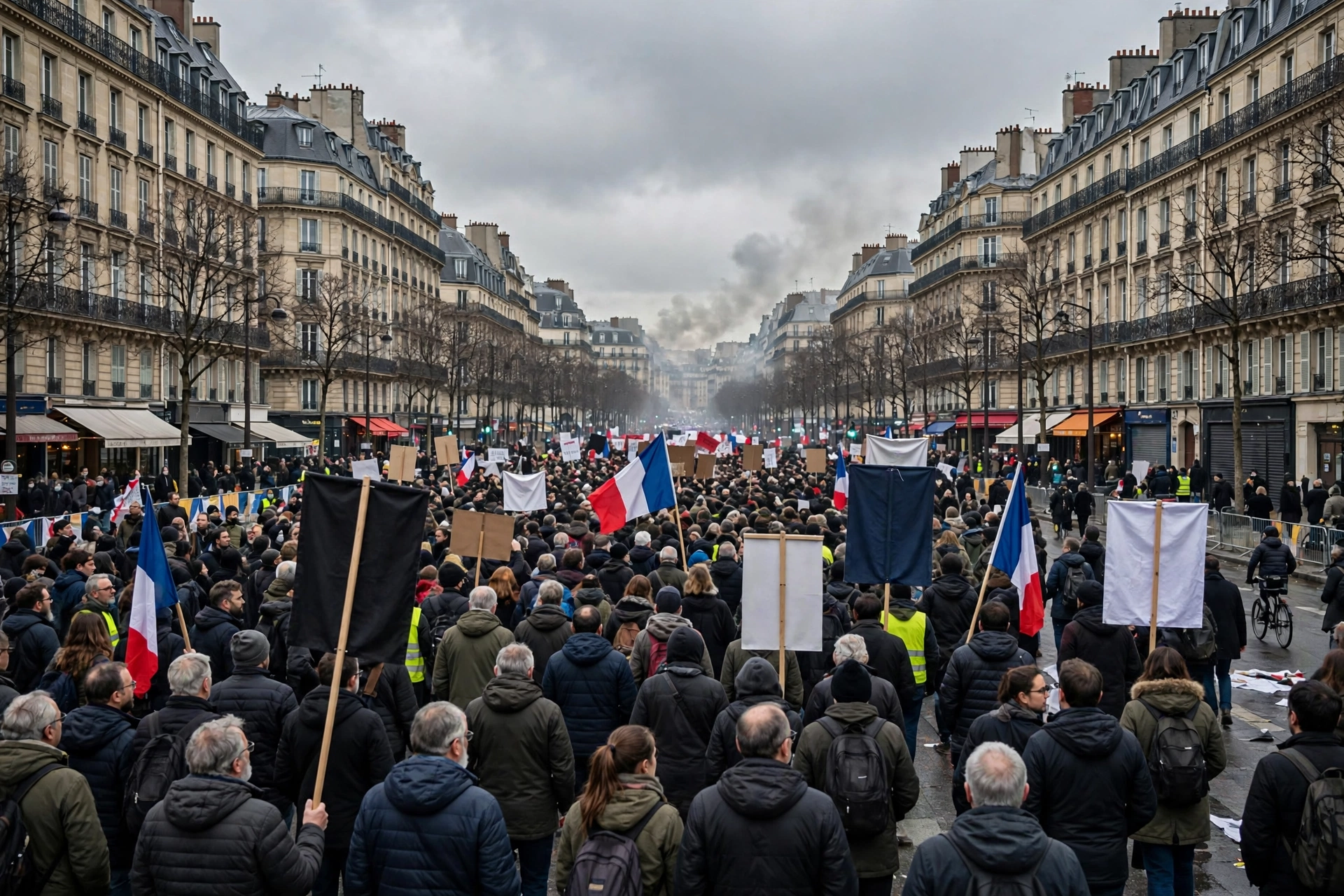
Saturday, October 17 was the movement’s biggest day yet, and the day it turned destructive. An estimated 550,000 people marched across France, including about 110,000 in Paris, according to Interior Minister Nuñez; organisers put the national turnout closer to 800,000. For most of the day the processions were peaceful. Then, on the margins of the marches in more than twenty cities, hooded groups formed and the violence began.
Nuñez blamed what he called “opportunistic delinquents who had seen a chance to pillage and loot.” In the starkest official language of the night, he added: “we will find them and deal with them firmly.”
The night before the marches, the Interior Ministry had authorised officers to use the full range of their less-lethal weapons — including stun grenades — against serious urban violence. The decision is already under scrutiny: in Saint-Étienne, a 17-year-old protester had his hand torn off by a police grenade.
A night of targets: Marseille, Lyon, Lille and beyond
Limoges was the most dramatic scene of the France riots, but far from the only one. In Marseille, black-clad rioters stormed the city hall, overturned furniture, and toppled a bust of Marianne — the female personification of the French Republic herself. In Lyon, militants set the city’s tourist office on the Place Bellecour ablaze. Municipal buildings were attacked in Lille, and the prefect’s official residence was vandalised in Bordeaux. Dozens of shops were looted in Paris, Bordeaux, Marseille and Lille.
Even the press became a target. At around 7 a.m. on Saturday, some 100 masked individuals attacked the shared headquarters of three conservative outlets — CNews, Europe 1 and Le Journal du Dimanche — blocking the building’s parking entrance, hurling projectiles and smashing windows before police intervened. Twenty-one suspects were arrested. Europe 1’s director-general, Donat Vidal Revel, condemned the assault as unacceptable intimidation of journalists.
The government attributes the violence to the ultra-left. Prime Minister Sébastien Lecornu said groups of the ultra-left had organised the violence, calling the day “an escalation in violence” and noting, “it’s a miracle the toll wasn’t higher.” President Emmanuel Macron promised that those responsible would be prosecuted and punished, while Justice Minister Gérald Darmanin instructed prosecutors nationwide to seek pre-trial detention for anyone who had attacked police, firefighters, public buildings or shops.
The cost-of-living roots nobody can ignore
Strip away the burning buildings and the arrest tallies, and the France riots of October 2026 are, at their core, about what millions of French families talk about at the kitchen table: the price of everything. School conditions, fuel prices, grocery bills, wages that don’t stretch far enough — the same pressures grinding households from Paris to Marseille.
This is not only a French story. When Mauritius erupted in its worst riots in decades over water shortages, the island’s government faced the same collision of street anger and state power — a reminder that economic pressure on ordinary people can boil over anywhere. And the inflation debate is global: America’s own battle with rising prices and Federal Reserve rate decisions shows how the same cost-of-living squeeze is straining households on both sides of the Atlantic.
What made Saturday different was the speed of the escalation — and the symbolism of the targets. Town halls are where France keeps its marriage registers and birth certificates; they are the brick-and-mortar of the Republic. Burning one is not a protest tactic. It is a message. Whether the message survives the condemnation — and the coming court cases — is the question now hanging over the movement.
FAQ: France’s October 17 protests and the Limoges fire
What happened to the Limoges town hall?
On the evening of October 17, 2026, masked rioters broke into the 143-year-old Limoges town hall, set it on fire, and left the building “largely lost,” according to local prefect Maurice Barate. The roof collapsed onto the lower floors and two-thirds of the exterior was destroyed. More than 15 people have been arrested in connection with the arson.
Why were people protesting in France?
The marches began with student protests over crumbling school conditions in mid-September and grew into a nationwide movement against the high cost of living — fuel prices, groceries, and public services. Unions including the CGT joined the October 17 marches, which drew an estimated 550,000 to 800,000 people.
How many people were arrested during the France riots?
Prime Minister Sébastien Lecornu said more than 1,200 people were arrested across the country, and 150 police officers and gendarmes were injured. An early afternoon count had put arrests at around 400 before the number surged overnight.
Has the French government responded?
President Emmanuel Macron promised prosecution and punishment for those responsible, while Justice Minister Gérald Darmanin instructed prosecutors to seek pre-trial detention for anyone who attacked police, firefighters, public buildings or shops. Interior Minister Laurent Nuñez ruled out a state of emergency but vowed looters would be tracked down.
The bottom line
The Limoges town hall survived two world wars. It did not survive the night of October 17, 2026 — and in that sentence lies the whole story of France’s weekend. A legitimate grievance about the cost of living produced one of the largest protest days in recent French history, and a violent fringe turned it into a national crisis. The government has chosen firmness; the courts will decide on punishment. But the deeper question — whether the anger in the streets gets heard, not just policed — is still unanswered. France will be watching October’s next marches very closely.