
Rubio Lands in Central Asia: Why America Is Suddenly Betting Big on the Silk Road
While the rest of Washington’s foreign policy team is putting out fires in Ukraine, Iran, and Gaza, America’s top diplomat just got on a plane to somewhere almost nobody in the news cycle is talking about. And that, it turns out, is exactly the point.
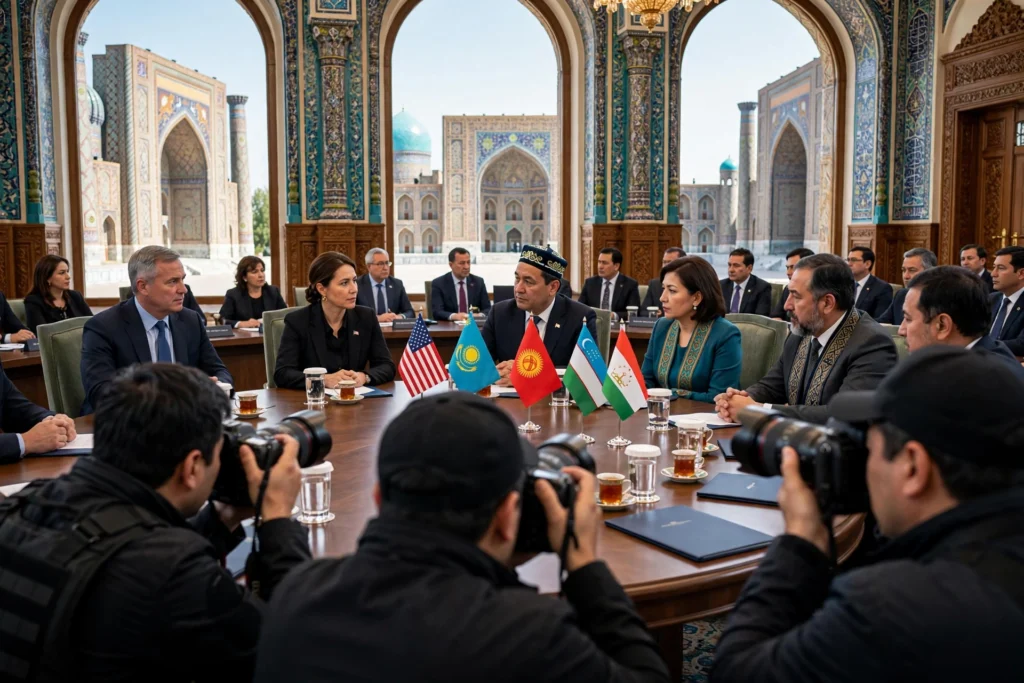
US Secretary of State Marco Rubio travels to Uzbekistan on Sunday, landing in the ancient Silk Road city of Samarkand for a high-stakes meeting with the foreign ministers of all five Central Asian republics — Uzbekistan, Kazakhstan, Kyrgyzstan, Tajikistan, and Turkmenistan. He is not going alone. More than 200 American business executives are traveling with him, in what officials describe as the most commercially ambitious US diplomatic push into the region in years, Reuters reported.
So why is Marco Rubio going to Central Asia right now — and why should you care? Because the answer has less to do with diplomacy-as-usual and everything to do with the metals inside your phone, your car, and the weapons systems guarding entire continents.
A region as big as Europe, and Washington has barely shown up
Let’s start with some geography. Central Asia is roughly as large as the European Union but home to only about 80 million people. It sits wedged between China, Russia, and Iran — three countries the United States currently has complicated relationships with, to put it mildly.
And yet, as one senior US official put it, the trip is “an incredible opportunity to bring the United States into a region of the world that is vitally important.” Translation: Washington knows it has been neglecting this part of the map, and it is done apologizing for it.
The format of Monday’s meeting is called the C5+1 — the five Central Asian states plus the United States. It was launched in 2015, and the first-ever ministerial was held in Samarkand, so the choice of venue is deliberate symbolism. US officials have framed the agenda around three words: economic connectivity, energy security, and shared regional priorities.
But strip away the diplomatic language and the real agenda is obvious. As OilPrice.com noted ahead of the summit, the United States wants to convert years of political handshakes into financed, shovel-ready projects — and the currency of this relationship is buried underground.
The real prize: rare earths, uranium, and everything Beijing controls
Here is the part that matters most. Central Asia holds enormous deposits of the minerals the modern world runs on: rare earths, tungsten, uranium, copper, and other strategic resources. Kazakhstan sits on some of the world’s largest uranium reserves. Chinese firms are already pursuing natural gas in Turkmenistan, uranium in Kazakhstan, and rare earths in Tajikistan.
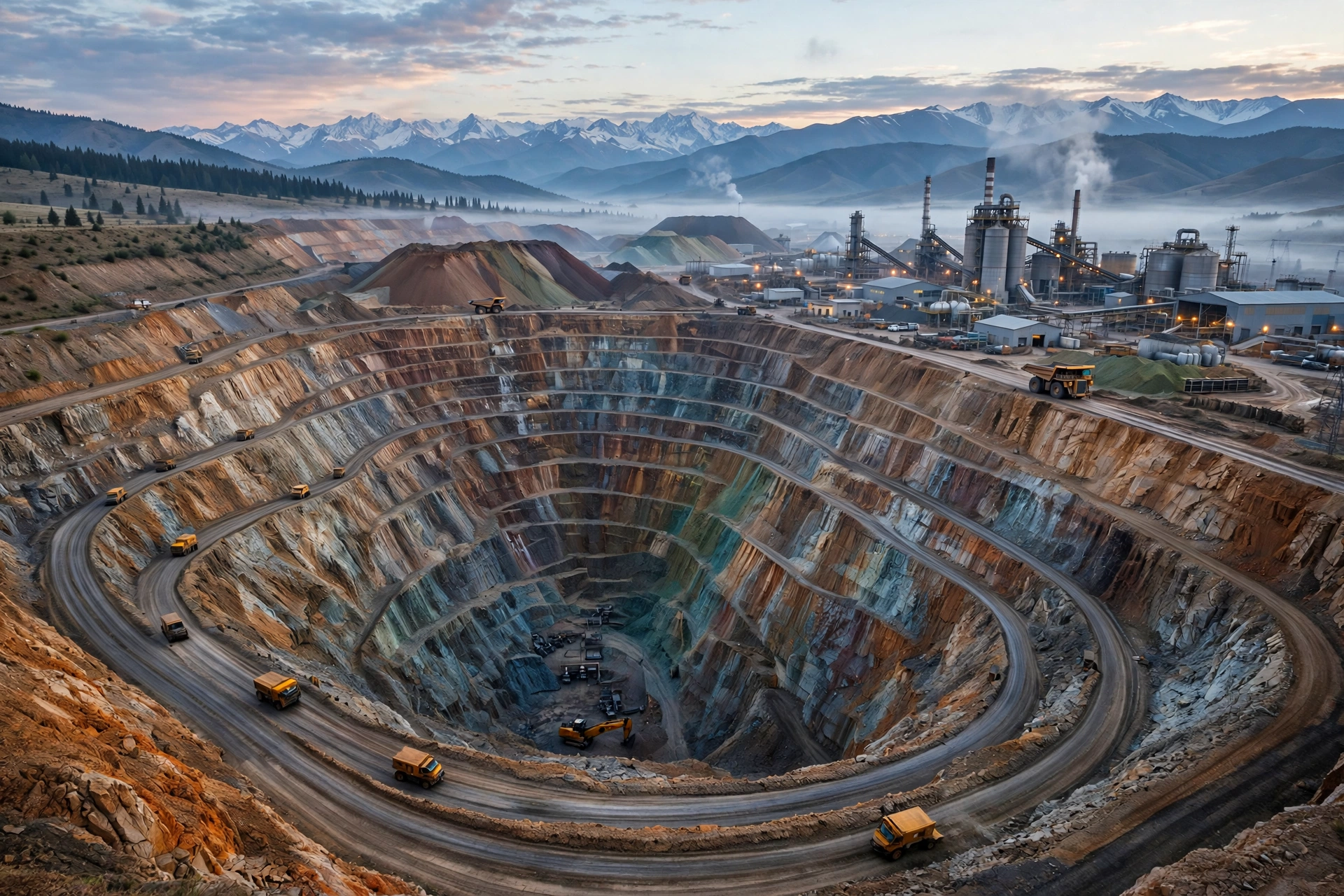
Why does Washington care so urgently? Because securing rare earths and improving its energy mix have become explicit foreign policy priorities for the Trump administration. A Central Asian diplomat told Reuters that the administration’s commercial efforts in the region are focused squarely on expanding American access to rare earth mineral resources.
This is not happening in a vacuum. Beijing has spent years tightening its grip on critical supply chains — and just this month China’s sweeping new export curbs on AI, solar and biotech technologies showed exactly how willing it is to use trade as a weapon. For Washington, every ton of Central Asian rare earths that flows to American factories instead of Chinese ones is a small victory in a much larger contest.
The Central Asian republics, for their part, are not passive bystanders. They want value-added production at home, not just raw-ore exports — Uzbekistan has said this explicitly. The practical questions on the table in Samarkand: which projects are actually bankable, who provides the geological data and financing, and how much processing happens in the region rather than abroad.
Russia is fading, China is winning — and Washington sees an opening
The timing is no accident. Russian influence across Central Asia has eroded significantly since the war in Ukraine began, even though the former Soviet republics remain tied to Moscow through pipelines, security arrangements, and migration networks. China has been the main beneficiary: Beijing is now the top trade partner of all five countries.
The United States wants in before the door closes. Trump hosted all five Central Asian leaders at the White House last November, when Kazakhstan agreed to join the Abraham Accords — the agreements normalizing relations with Israel. Reuters has also reported that Washington has talked to additional Central Asian nations about joining the accords, conversations that could quietly continue on the sidelines in Samarkand.
Rubio personally laid the groundwork months ago: the Central Asian foreign ministers visited Washington last November, when he told them he intended to visit the region in 2026. He met Uzbek President Shavkat Mirziyoyev at the UN General Assembly last September. The trip was largely organized by Sergio Gor — the US ambassador to India, who was born in Uzbekistan, is a friend of Rubio, and also serves as the special envoy for South and Central Asian affairs.
After Samarkand: India, Ambani, and a trade deal that is “pretty much done”
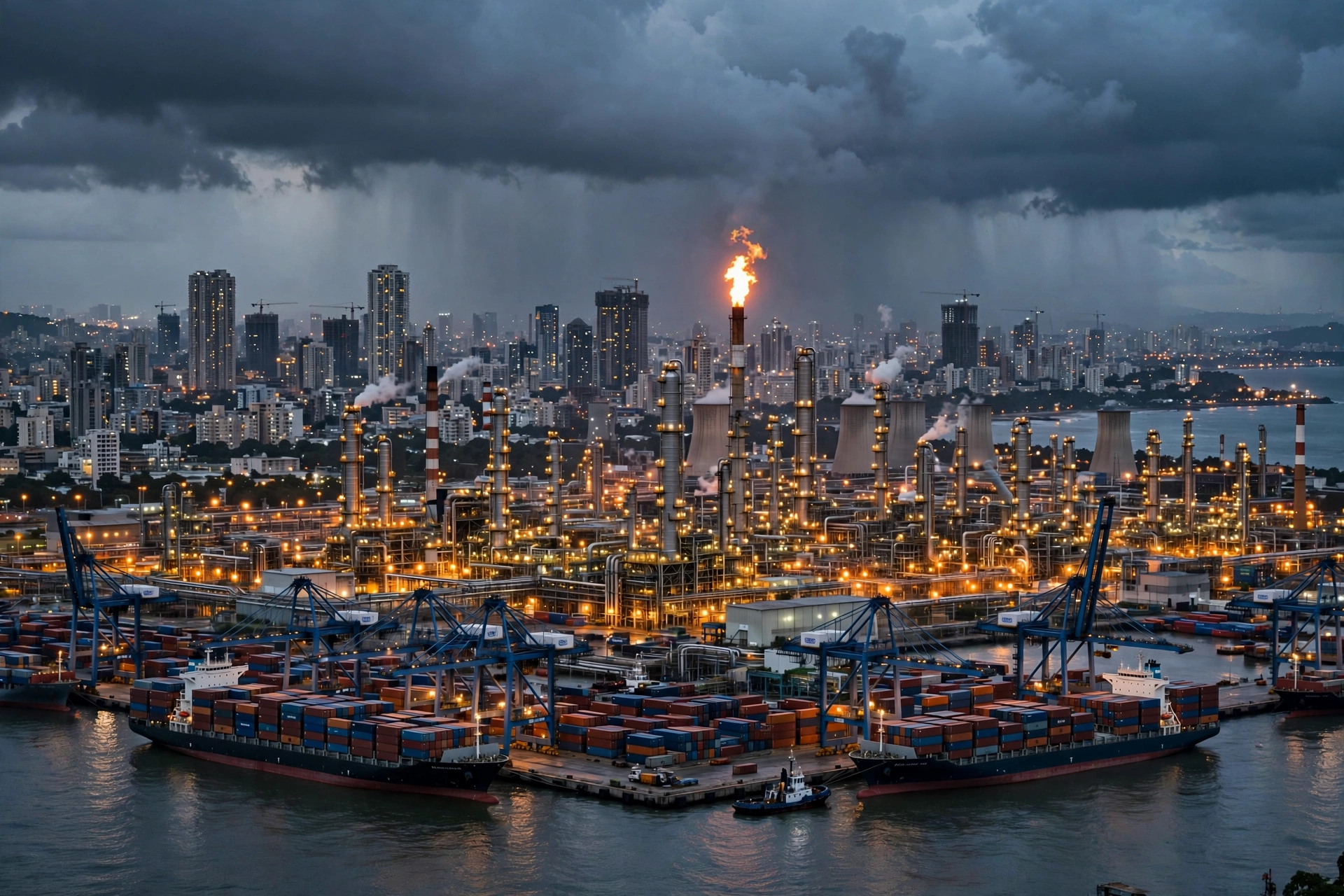
Rubio is not flying home after the summit. His next stops are Mumbai and Jamnagar in Gujarat — industrial hubs and major port cities — where he will meet Indian business leaders, including Reliance Industries Chairman Mukesh Ambani. Ambani earned the Trump administration’s favor earlier this year by backing a new refinery in Texas, and his conglomerate has been at the center of Starlink’s rocky road into India.
This will be Rubio’s second official visit to India this year, after a May trip to New Delhi and Kolkata. And there may be fireworks: a US official, speaking anonymously, described the long-negotiated US-India trade deal as “pretty much done,” raising the possibility that an agreement could be announced during the trip. Washington and New Delhi reached a provisional deal in February aimed at reducing US tariffs on Indian products — but days later, the US Supreme Court struck down many of Trump’s tariffs, throwing the timeline into chaos. The two sides have been locked in negotiations ever since.
The trip is due to wrap up on Thursday. Five days, two countries, one massive bet.
A new playbook: Rubio does deals while others douse fires
Perhaps the most revealing part of this story is what Rubio is not doing. He has not visited Kyiv or Moscow since becoming secretary of state. He was absent from US-Ukraine talks in Florida earlier this month, where American officials pressed Ukraine to stop hitting Russian refineries. He was not the face of the Iran negotiations either — that fell to Vice President JD Vance, who represented the US in Pakistan during peace talks with Iran in April.
Instead, the sensitive diplomacy on Iran, Ukraine, and Gaza has been left to Trump’s special envoys Steve Witkoff and Jared Kushner. Rubio, meanwhile, keeps showing up in places far from the headlines — Greece, Portugal, Iceland earlier this month, and now Samarkand.
Regional experts say this reflects a deliberate shift in how Washington does business. The old playbook linked investment and recognition to political reforms and human rights — a stance Central Asian leaders experienced as moralizing, which pushed them closer to Moscow and Beijing. The new approach, as one regional analyst described it, is “just business and nothing more.”
It is transactional diplomacy, stripped of lectures. Whether it works — whether 200 executives and a stack of mineral deals can buy America real influence in Russia and China’s backyard — is the question hanging over Samarkand. And it comes just as the administration is recalibrating on other fronts, from Trump’s 60-day delay of major Russia sanctions to the renewed rift in US-Ukraine relations.
Frequently asked questions
What is the C5+1 meeting?
The C5+1 is a diplomatic format bringing together the United States and the five Central Asian republics: Uzbekistan, Kazakhstan, Kyrgyzstan, Tajikistan, and Turkmenistan. Launched in 2015, it organizes US engagement with the region around economics, energy, and security. A separate Critical Minerals Dialogue runs in parallel.
Why is Marco Rubio visiting Central Asia now?
Washington is racing to secure access to Central Asia’s critical minerals and energy resources — rare earths, uranium, tungsten, copper — as part of a strategy to reduce dependence on China, which dominates these supply chains. The trip also aims to fill a vacuum left by Russia’s declining influence in the region since the Ukraine war began.
Will the US announce a trade deal with India during the trip?
Possibly. A senior US official described the US-India trade deal as “pretty much done,” and an announcement during Rubio’s stops in Mumbai and Jamnagar — where he meets business leaders including Mukesh Ambani — has not been ruled out. Negotiations have dragged on for months after the US Supreme Court struck down many of Trump’s tariffs.
Who is organizing the Central Asia trip?
The visit was largely organized by Sergio Gor, the US ambassador to India, who also serves as the special envoy for South and Central Asian affairs. Gor was born in Uzbekistan and is a friend of Secretary of State Rubio. More than 200 American business executives are accompanying the delegation.
The bottom line
Rubio’s Silk Road tour is the clearest signal yet of how this administration sees the world: influence is not won with speeches about values, it is won with contracts, minerals, and refineries. Central Asia spent years watching Washington lecture and Beijing invest. Now the United States is finally showing up with its checkbook — 200 executives deep. Whether the region’s leaders believe the check will clear is the real story to watch this week.