
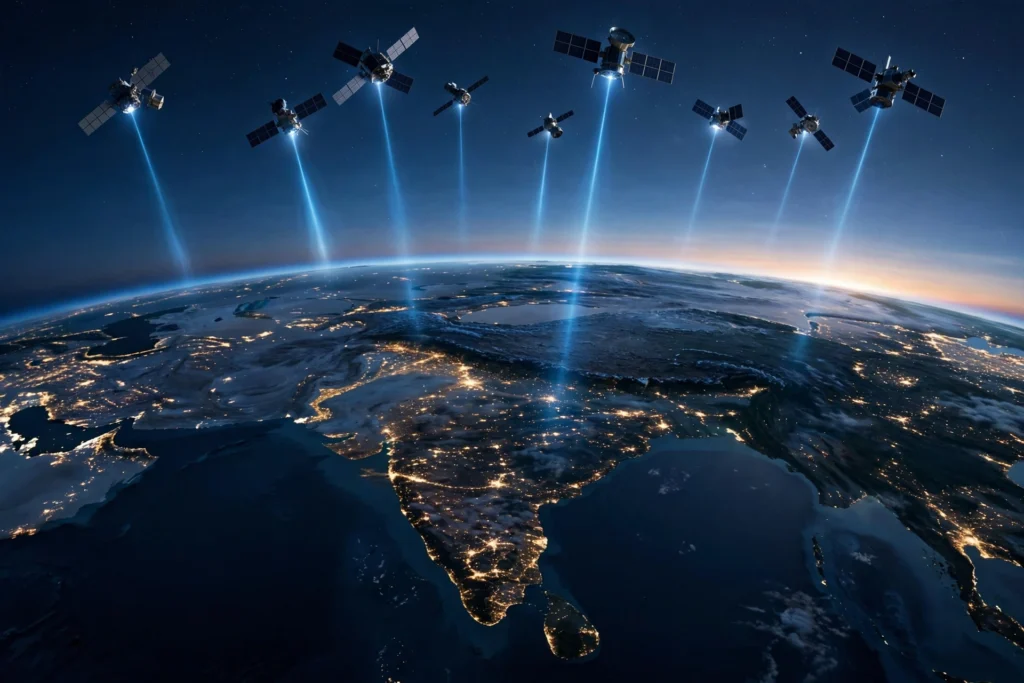
Starlink India Row: Musk Says “Ready to Connect India” as Battle With Reliance Explodes
It started with a two-word reply and turned into the biggest telecom showdown India has seen in a decade. Elon Musk’s Starlink has declared itself “ready to connect India with high-speed internet” — a direct answer to Reliance Industries’ demand that every player in the satellite race, SpaceX’s behemoth included, must play by the same Indian rules. And just like that, the cold war between Musk and Mukesh Ambani went gloriously public.
Let’s rewind, because this did not come out of nowhere. Just last week, Musk took to X and mocked Reliance chairman Mukesh Ambani, calling him “Dear Prime Minister Ambani” and accusing him of trying to preserve a monopoly while questioning whether Starlink would ever be allowed to compete fairly in India. Now the gloves are well and truly off — and the whole thing is playing out in public statements, dueling X posts, and pointed corporate politeness.
“Starlink is ready to connect India with high-speed internet”
The latest volley came from Starlink itself. In a post on X on Friday, the company responded to a statement from Reliance Industries and dropped a line that is now echoing across Indian tech circles:
“We have worked closely with regulators, industry and operators in India for 5+ years, and built a network of dedicated systems, gateways, and other infrastructure all in-country to exclusively serve Indian traffic safely and securely – and all with the requisite government approvals. Starlink is ready to connect India with high-speed internet.”
Translation? Starlink is done waiting around. The company is signaling to New Delhi — and to a billion-plus potential customers — that the satellites are in orbit, the groundwork is laid, and the only thing standing between India and Starlink broadband is the final wave of clearances.
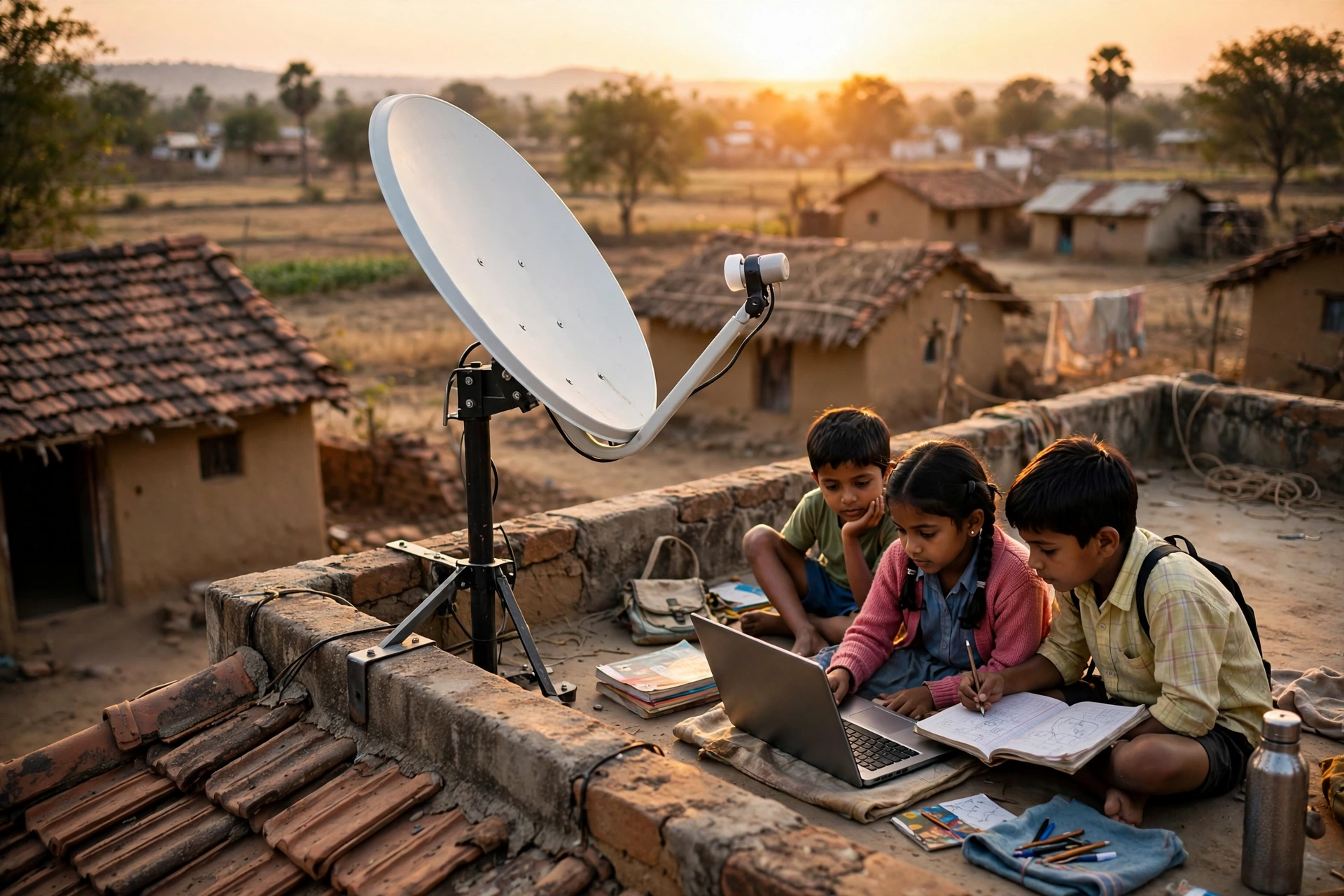
Five years in the making: what Starlink claims it has built
That “5+ years” line is doing a lot of heavy lifting. Starlink’s statement insists it has spent half a decade working with Indian regulators, industry players, and telecom operators — quietly building dedicated systems, gateways, and infrastructure inside the country so that Indian user traffic is served safely and securely within Indian borders.
Why does that matter? Because data sovereignty and national security have been at the heart of the Starlink-India saga from day one. New Delhi has been firm: anyone beaming internet from space into India must route traffic through local infrastructure, meet stringent security requirements, and wait for spectrum allocation. The government has repeatedly rejected Musk’s claims that “certain oligarchs” were blocking Starlink’s entry — an accusation that, per multiple reports, Musk eventually directed at Ambani himself.
Reliance’s answer: competition yes, shortcuts no
Reliance Industries isn’t backing down an inch. In its Friday statement, the conglomerate welcomed competition in satellite communications — including from Starlink — but stressed that every operator must follow the country’s laws and existing national regulations.
The statement pulled no punches in its subtext:
“Like every Indian enterprise, Reliance has grown in an India that welcomes investment and innovation, homegrown or international, that improve the lives of the people. That openness rests on the rule of law. As the Government of India has stated, it applies the same process to every applicant, Indian or foreign. Jio’s own satellite services await clearances.”
Read between the lines: Reliance is saying, fine, come compete — but don’t expect a red carpet. The company pointedly noted that Jio’s own satellite services are still waiting for clearances, effectively asking why Starlink should expect to leapfrog the queue.
Reliance also reminded everyone of its scorecard. “We have never feared competition. We see it as the truest test of who serves the customer best,” the company said, recalling how Jio entered a crowded telecom market in 2016 with zero customers and has since grown to more than 530 million subscribers with some of the cheapest data plans on Earth.
Musk’s two-word reply: “Much appreciated”
And then — the moment the internet loved. Musk himself replied to Reliance’s statement on X with two words: “Much appreciated.”
Was it sarcasm? Diplomacy? A little of both? The internet hasn’t stopped debating. What it tells us is that this fight is no longer happening behind closed doors in ministry offices. It’s a public spectacle between the world’s richest man and India’s most powerful industrialist, unfolding in real time on the very platform Musk owns.
What actually stands in Starlink’s way
Cut through the drama and the picture is clearer. Starlink, Reliance Jio, and Eutelsat OneWeb have all received licences to provide satellite communication services in India. But a licence is not a launch. The two big gates still standing:
Spectrum allocation. Union communications minister Jyotiraditya Scindia has said satellite spectrum will be assigned once the government finalises the revenue-sharing framework. This has been the great Indian stalemate — how to price spectrum for players that beamed their signals from space while terrestrial giants paid billions at auction.
Security clearances. Companies must meet India’s security requirements, including local gateways and lawful interception capabilities, before commercial services can go live. Starlink says it has built this infrastructure; the government gets the final say.
Until both boxes are ticked, Starlink’s “ready” is a statement of intent, not a service you can buy.
Why this fight matters far beyond India
India is the world’s most populous nation and one of its biggest connectivity prizes. Hundreds of millions of Indians still lack reliable high-speed internet, especially in rural and mountainous regions where laying fiber is brutally expensive. Satellite broadband could leapfrog all of that — which is exactly why everyone wants in.
But the Musk-Ambani clash is also a preview of a global argument: who controls the internet’s next frontier? Musk’s satellite ventures have repeatedly collided with politics before, including restrictions on Starshield services in Ukraine that drew the ire of governments and allies. And SpaceX keeps expanding Starlink’s footprint aggressively, including a recent spectrum deal for its mobile services in the United States.
Now the same playbook — move fast, beam from space, ask forgiveness later — is meeting the one market that refuses to bend: India, where telecom regulation is a contact sport and the local champion has 530 million reasons to fight back.
Frequently asked questions
Is Starlink available in India right now?
Not yet as a commercial service. Starlink says it has the infrastructure and approvals lined up, but the commercial launch still depends on spectrum assignment and final security clearances from the Indian government.
What is the fight between Elon Musk and Reliance about?
Musk has accused certain Indian business interests of blocking Starlink’s entry — reportedly naming Reliance chairman Mukesh Ambani. Reliance says it welcomes competition but insists every operator, including Jio, must follow the same laws and wait for the same clearances.
Who else is competing for satellite internet in India?
Besides Starlink and Reliance Jio’s satellite services, Eutelsat OneWeb has also received a licence to operate satellite communications in India. All three are waiting on the same outstanding regulatory steps, including spectrum allocation.
What did Starlink actually say on Friday?
In a post on X, Starlink said it has worked with Indian regulators, industry, and operators for more than five years, built dedicated in-country infrastructure for Indian traffic with the requisite government approvals, and declared: “Starlink is ready to connect India with high-speed internet.”
The bottom line
Strip away the memes and the “Much appreciated,” and this is really a story about patience meeting power. Starlink has the satellites and, by its own telling, the groundwork. Reliance has the home-field advantage and a regulator that insists on equal rules for everyone. The winner isn’t decided by who has the louder X account — it’s decided by whoever clears New Delhi’s bar first. For hundreds of millions of Indians waiting on real broadband, let’s hope the wait isn’t as long as the feud.