
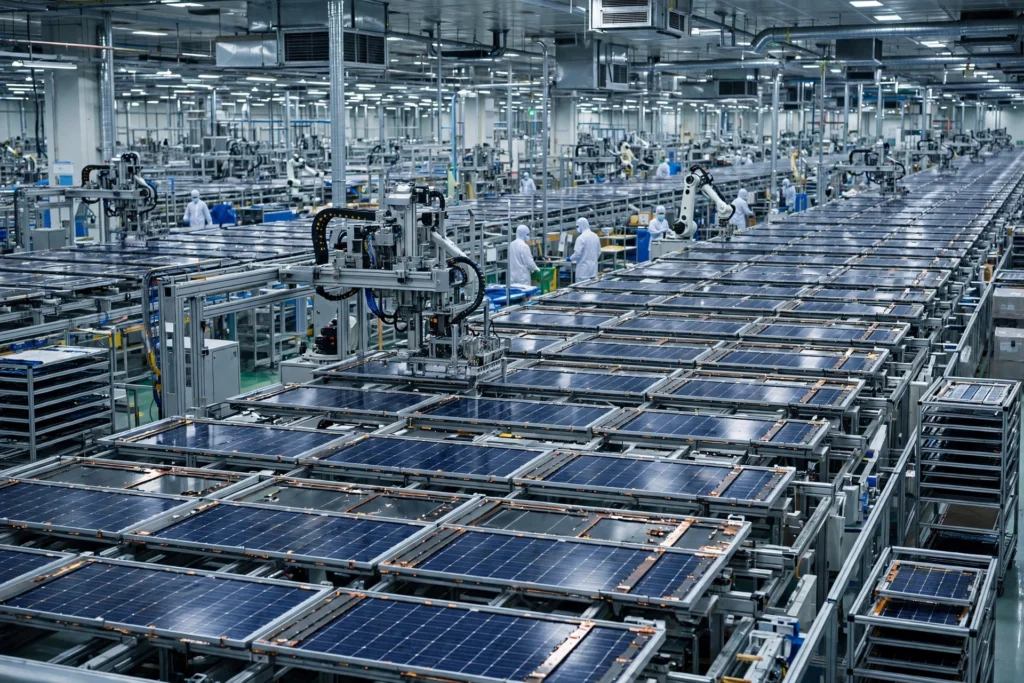
China’s New Export Curbs Target 40 AI, Solar and Biotech Technologies — Here’s What’s on the List
Beijing just published a list — and if you work in AI, solar, or biotech anywhere in the world, you need to read it.
On Friday, China’s Ministry of Commerce and Ministry of Science and Technology unveiled a sweeping draft plan that would ban the export of 14 cutting-edge technologies outright and place another 26 under strict licensing. The document, titled “Announcement No. 48,” covers 40 key technologies across artificial intelligence, biomedicine, and photovoltaics — the building blocks of the next decade.
It is, in short, China’s most aggressive move yet in the global technology cold war. And the ripple effects will reach far beyond its borders.
What “Announcement No. 48” actually says
The draft catalogue, published October 16, sorts the 40 technologies into two buckets. Fourteen would face a complete prohibition on export — no licences, no exceptions. The remaining 26 would require government approval before they could leave the country, with exporters required to register their transfers.
The draft is open for public comment until November 15, which means the final list could still shift. But the direction of travel is unmistakable: Beijing is drawing a hard line around the technologies it considers strategic.
Explaining the move, a spokesperson for China’s Ministry of Commerce said that “in recent years, AI, biomedicine and photovoltaic technologies have seen expanding applications in sensitive fields” — and that “drawing on international practice, China is implementing necessary controls in accordance with the law to prevent risks arising from loss of control over technologies.”
The AI list: 23 technologies, and a 2-trillion-parameter tripwire
More than half the catalogue — 23 of the 40 entries — covers artificial intelligence. The details, reported by The Hindu BusinessLine’s Ananth Krishnan, read like a map of where the AI arms race is heading.
On the banned side: the core technology of large AI models trained on sensitive national data, AI agents built for sensitive settings such as national defence and critical infrastructure, and AI systems capable of generating and mutating malicious code on their own. Some platforms related to cell and gene therapy are also on the prohibition list.
On the restricted side: foundation models, intelligent agents, computing clusters, and — notably — any AI model with 2 trillion parameters or more. Two of China’s own flagship models, Moonshot’s Kimi K3 and Alibaba’s Qwen 3.8-Max, sit above that line, though the draft names no model directly. Some chip design technology, including designs for AI processors and memory chips, is listed as well.
The message to the industry is blunt: the era of freely moving frontier AI technology across borders is ending — and China intends to control the tap, just as Washington has tried to do with its own chip export rules.
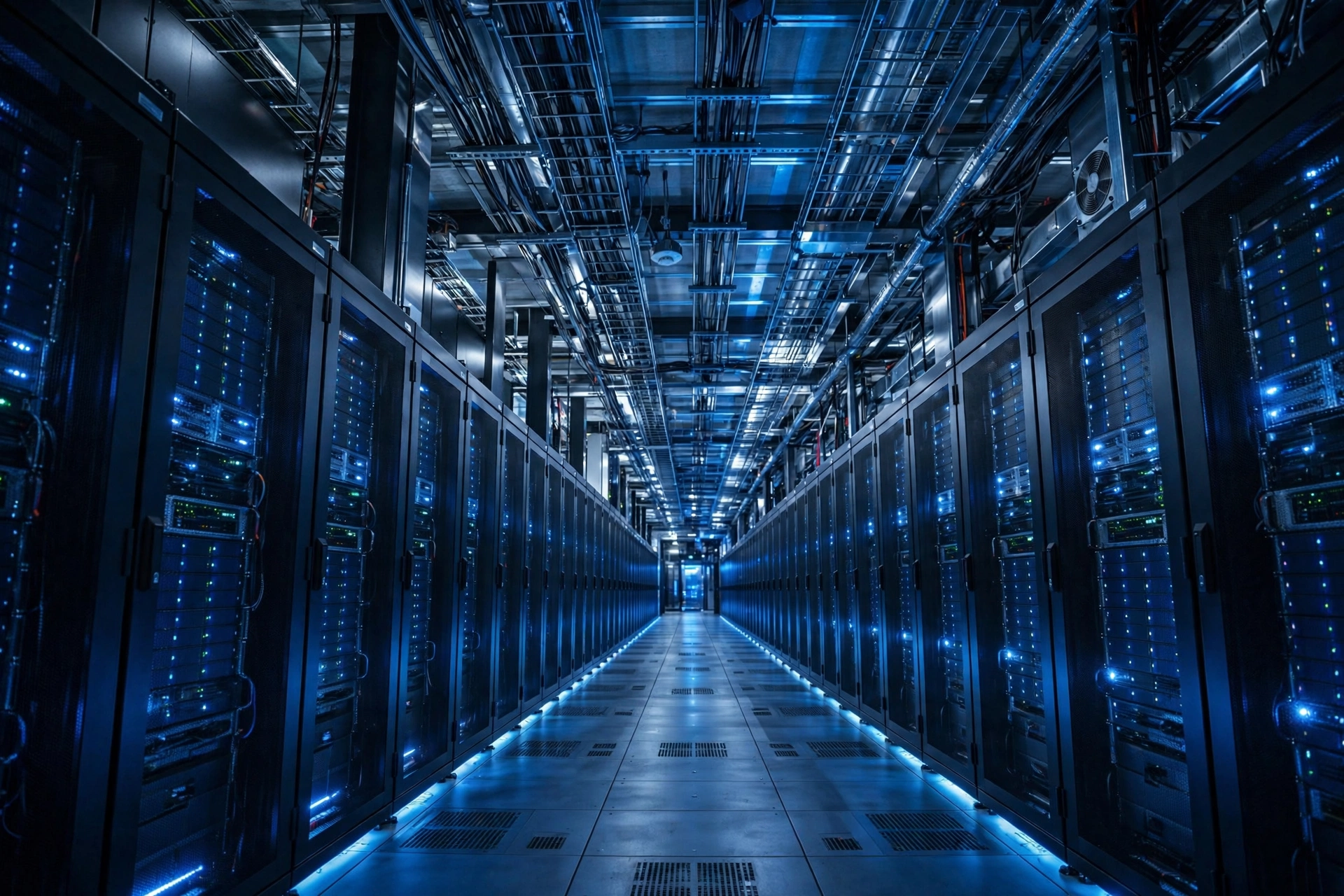
The solar shock: perovskite and the polysilicon line
If the AI list rattled Silicon Valley, the solar list rattled everyone trying to build a solar industry outside China — which is to say, nearly everyone.
Twelve of the 40 entries cover photovoltaic technology: polysilicon production, wafer manufacturing, and solar-cell manufacturing. The crown jewels of next-generation solar — perovskite and tandem solar-cell module manufacturing technologies — are proposed for a complete export ban. Polysilicon engineering technologies would be restricted if they involve production lines with annual output capacities of at least 30,000 tonnes.
Beijing’s justification leans on national security. The Commerce Ministry said “photovoltaic technologies are increasingly being used in aerospace, defence, unmanned systems and other sensitive sectors,” and that “as a result, the national-security implications of technology exports have increased.” It stressed that “only a limited set of technologies would be regulated” and that “other photovoltaic technologies would remain freely exportable.”
That reassurance may not comfort the countries racing to localise their solar supply chains. China dominates every link of the photovoltaic chain — from polysilicon to finished panels — and the technologies on this list are exactly the ones its rivals need to catch up.
Why India is watching nervously
No country illustrates the stakes better than India. New Delhi has been pushing hard to reduce its dependence on Chinese solar imports and move up the value chain into cell and module manufacturing.
Santosh Pai, an honorary fellow at the Institute of Chinese Studies and a cross-border lawyer, told The Hindu BusinessLine that Indian manufacturers could face licensing delays under the new rules — and that the country’s localisation timetable could slip. “The timetable for localisation is set to launch when domestic capacity from three independent domestic manufacturers exceeds 15 GW,” he said, adding that “this initial set of domestic manufacturers might experience delays in commencing production due to Announcement 48.”
For a country betting its clean-energy future on manufacturing independence, a licensing queue in Beijing is the last thing it needs.
The bigger game: decoupling, tit for tat
Step back, and Announcement No. 48 looks like the latest move in a years-long exchange of export controls. Washington has spent the last several years tightening the screws on advanced chips and chipmaking equipment bound for China — a campaign that sent chip stocks tumbling when China’s CXMT revealed a memory breakthrough and has pushed giants like Microsoft to pour billions into its own Maia AI chips to secure supply.
Beijing is now playing the same game in reverse — and it holds strong cards. China refines the overwhelming majority of the world’s polysilicon, builds most of its solar wafers, and is home to some of the largest open AI models on the planet. TSMC’s record profits on AI chip demand show just how hungry the world is for compute; China’s list is a reminder of who else feeds that hunger.
The Commerce Ministry insists the controls are routine — “major economies around the world have implemented varying degrees of export controls in these areas,” the spokesperson said, adding that Beijing wants to “safeguard normal international technological cooperation.” Critics will read that as diplomatic varnish over leverage. The truth, as usual in the tech war, is probably both.
What happens next
The draft is out for comment until November 15, and the final catalogue could look different — items could be added, softened, or dropped. But few analysts expect Beijing to walk this back in any meaningful way. Export-control lists, once published, tend to grow, not shrink.
For companies, the homework starts now: map your supply chains against the 40 entries, prepare for licensing timelines, and assume that the technologies on this list are the first wave, not the last. For governments, the homework is harder — building domestic capacity in AI, solar, and biotech just got more urgent, and more expensive.
Forty technologies. One draft announcement. And a clear signal that in the race for the future, the borders are going back up.
Frequently asked questions
Q: What is China’s “Announcement No. 48”?
A: A draft catalogue published October 16 by China’s Ministry of Commerce and Ministry of Science and Technology, proposing export bans on 14 technologies and licensing requirements on 26 more, across AI, biomedicine, and photovoltaics. Public comment runs until November 15.
Q: Which AI technologies would be banned from export?
A: The core technology of large AI models trained on sensitive national data, AI agents built for national defence or critical infrastructure, and AI systems that can generate and mutate malicious code — plus some cell and gene therapy platforms.
Q: What’s the 2-trillion-parameter rule?
A: Under the draft, AI models with 2 trillion parameters or more could face export restrictions. Two leading Chinese models — Moonshot’s Kimi K3 and Alibaba’s Qwen 3.8-Max — sit above that threshold.
Q: How does this affect the solar industry?
A: Perovskite and tandem solar-cell manufacturing tech face a proposed total export ban, while large-scale polysilicon production tech would need licences. Countries like India trying to build domestic solar industries could face delays.
The bottom line
China just told the world that its best AI models, its next-generation solar technology, and its cutting-edge biotech platforms are no longer freely for sale abroad. Whether you call it national security or economic leverage, the effect is the same: the global technology map is being redrawn, one export licence at a time — and everyone from New Delhi to Silicon Valley will feel the shift.
Pingback: Rubio Lands in Central Asia: Why America Is Suddenly Betting Big on the Silk Road - Storion News