
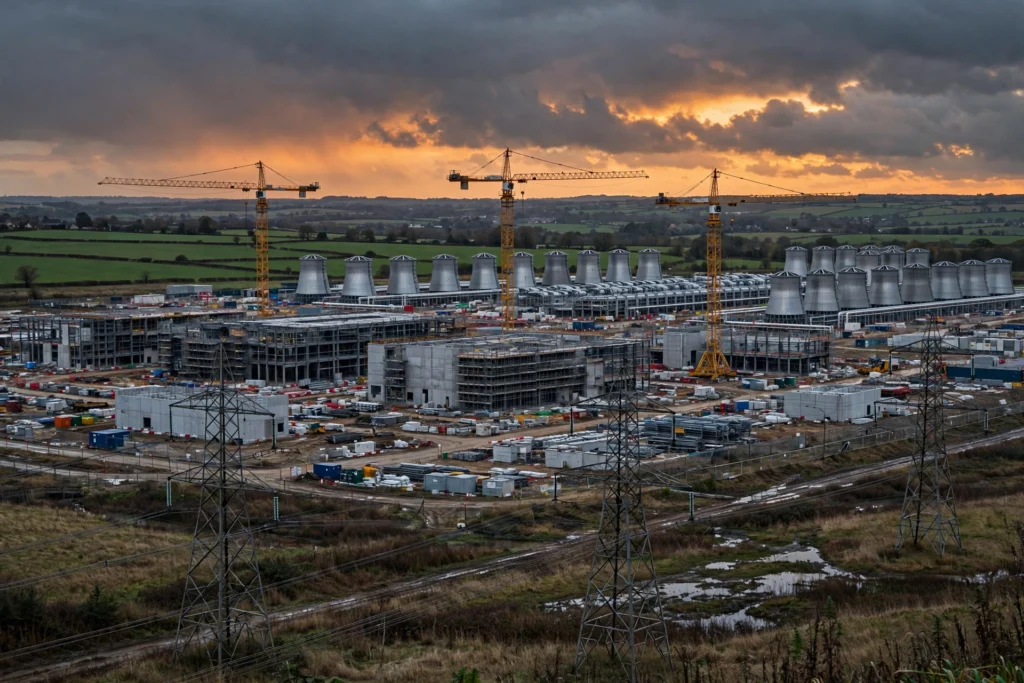
Microsoft Walks Away From Britain’s Biggest AI Data Centre — Because the Power Grid Can’t Keep Up
London — Here is a sentence you could not have written five years ago: a £2 billion artificial intelligence supercomputer was just cancelled, not because the chips were too expensive or the money ran out, but because there is no plug to plug it into. Microsoft has walked away from Nscale’s planned data centre in Loughton, Essex — the site Britain’s ministers had trumpeted as the country’s largest sovereign AI data centre — after the grid operator admitted it could not deliver enough electricity to the 90-megawatt facility until the early-to-mid 2030s.
The withdrawal was first reported by The Telegraph on Sunday, October 18, and has since been confirmed by the BBC and The Guardian. Microsoft declined to comment. The company had been the anchor tenant — in fact, the only publicly announced customer — for the Loughton project, which was unveiled in 2025 and slated to open next year. When Microsoft called it off, the project effectively lost its reason to exist.
What happened: Microsoft terminates the Essex deal
Nscale, the London-founded “neocloud” backed by Nvidia and other tech heavyweights, had promised to build and operate a £2 billion flagship data centre in Loughton, Essex — a town better known for Epping Forest walks than for hyperscale computing. The government loved it. Former prime minister Sir Keir Starmer spotlighted the project within the UK’s AI strategy in 2025, and the UK’s AI Opportunities Action Plan cited Loughton by name as proof that Britain intended to be a global AI leader. As part of a sweeping 2025 US–UK technology package, the optics were perfect: a homegrown British company, American capital, and a supercomputer to match the country’s ambitions.
Then the ground started shifting. In March, The Guardian revealed that the proposed Loughton site was still operating as a scaffolding yard — hardly the humming construction zone you’d expect for a facility meant to open in 2027. Behind the scenes, the real problem was electrical, not architectural. UK Power Networks, which runs the grid across London and south-east England, informed Nscale it would not be able to supply adequate power until the 2030s. A data centre without power is just an expensive shed — and Microsoft, which had committed to funding a supercomputer at the site as anchor tenant, terminated its agreement.
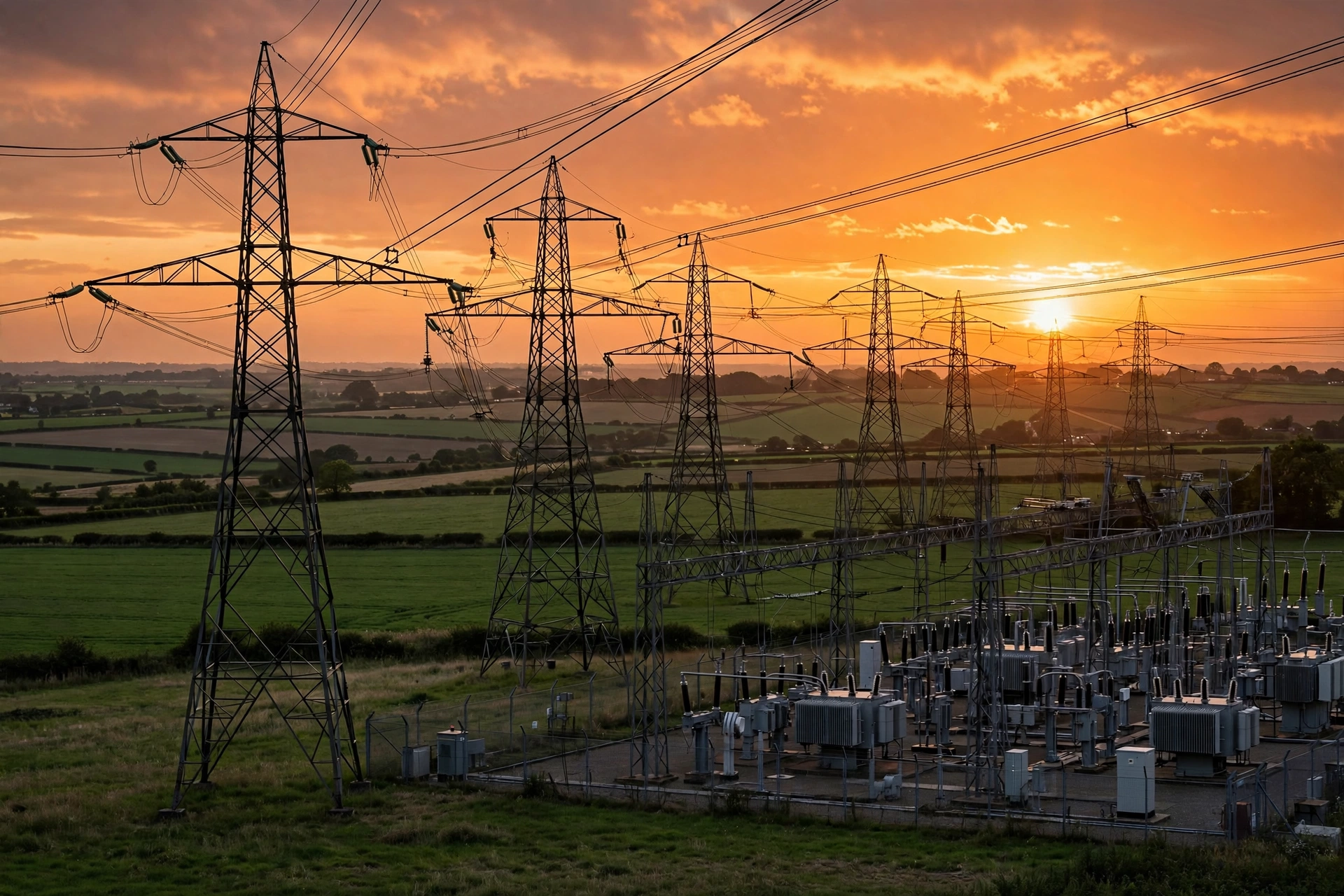
To be clear: Microsoft did not accuse anyone of wrongdoing. Nscale’s spokesperson told Reuters that “our relationship with Microsoft remains strong and is maintained for the long term,” framing the collapse as a London-wide grid issue that does not affect other contracts. Nscale says it remains committed to Loughton and is exploring alternative power sources for the site.
But spare a thought for the scale of the loss. Nscale’s contract book reportedly surged from $100 million to over $103 billion in just two and a half years since its launch — and more than 40 per cent of that revenue comes from Microsoft, its largest customer. The Telegraph noted that Microsoft was the only client that had agreed to lease the Loughton facility. When your anchor tenant is also your biggest customer, losing the site stings twice.
What this does to Nscale’s $35 billion IPO dream
Timing is everything here, and Nscale’s timing could hardly be worse. The company is preparing a high-profile listing on the New York Stock Exchange — reports suggest a target valuation of up to $35 billion — and public markets price growth stories on execution. A flagship project with no tenant, no power, and a scaffolding yard where the supercomputer should be is not the story you want floating around a prospectus.
The financials are already under scrutiny: a net loss of $1 billion against revenues of $141 million in the first half of the year. Not unusual for a fast-growing infrastructure startup — but investors will read it with fresh skepticism now that the flagship has stumbled.
Nor is Loughton Nscale’s only headache. Reports also point to construction problems at the company’s facility in Norway — cooling system leaks, regulatory hurdles, and even a fire — while its other projects in Texas, Portugal and a second Norwegian site are believed to be on track. Nscale is competing in a brutal race against the likes of CoreWeave, Nebius, Crusoe and Lambda to supply the AI industry’s insatiable demand for compute. This weekend, it took a public hit it cannot afford to repeat.
The real story: AI’s bottleneck is no longer chips — it’s electricity
Zoom out from Essex, and this episode captures something much bigger. For three years, the AI infrastructure debate has been about silicon: who has the GPUs, who can build the most chips. TSMC just posted record profits on AI chip demand — that part of the machine works fine. What nobody solved is the other end of the cable. A 90-megawatt AI training cluster consumes roughly as much electricity as a small city. You can print all the chips you want; if the substation down the road can’t handle the load until the 2030s, you don’t have a data centre — you have a monument.
Politicians keep announcing gigawatt-scale “AI zones” as though electrons were as easy to conjure as press releases. Loughton is proof that the announcement gap is real: political endorsement, planning approval and actual kilowatts are three entirely different things. The UK government cited this very site as evidence of its sovereign AI ambitions. It turns out you can’t legislate a grid connection into existence.

There’s also a geopolitical subplot. China has been tightening export curbs on AI-related technologies, and the Western AI build-out is effectively a race for sovereign computing capacity. When a project as symbolically important as Loughton collapses over grid delays, it hands a propaganda gift to everyone arguing that Western infrastructure can’t keep pace. The substance matters more than the optics — but the optics were the whole point of the project.
So what happens next? Nscale says it is hunting for alternative power sources — on-site generation, private grid connections — but each adds cost, complexity and years. Microsoft still works with Nscale in Norway, Portugal and the US, so the door between the two companies isn’t shut. The question for Britain: will the next “largest AI data centre” announcement come with a confirmed electricity delivery date? If not, investors have learned to read the small print.
FAQ: Microsoft, Nscale and the cancelled UK AI data centre
Why did Microsoft pull out of the Nscale data centre deal?
Microsoft terminated its anchor tenant agreement for Nscale’s planned £2 billion AI data centre in Loughton, Essex, after UK Power Networks said adequate grid power for the 90-megawatt site would not arrive until the early-to-mid 2030s — a decade later than planned. The facility was due to open in 2027. First reported by The Telegraph on October 18, 2026, and confirmed by the BBC and The Guardian; Microsoft declined to comment.
What is Nscale?
Nscale is a London-founded “neocloud” backed by Nvidia that provides AI infrastructure — computing power, data centres and software for training and running AI models. It competes with CoreWeave, Nebius, Crusoe and Lambda, says its contract book grew from $100 million to over $103 billion in two and a half years, and is reportedly planning a US listing targeting a $35 billion valuation.
Does Microsoft’s exit affect its other projects with Nscale?
According to Nscale, no. The company’s spokesperson said its relationship with Microsoft “remains strong and long-term” and that the London grid issue has no impact on other contracts. The two companies continue to work together on projects in Norway, Portugal and the United States, which are believed to be on track.
What does this mean for the UK’s AI ambitions?
It’s a setback. Loughton was championed by ministers and cited in the UK’s 2025 AI Opportunities Action Plan. The collapse shows that political backing and planning approval mean little without confirmed grid capacity — a warning for every other “AI zone” announcement lacking a guaranteed electricity date.
The bottom line
Microsoft’s exit from Loughton is not a story about one cancelled supercomputer. It’s the moment the AI boom’s hidden constraint walked onto the stage: power. For years we obsessed over who could get enough chips, and the industry solved that — TSMC is thriving, contracts are multiplying. But nobody solved the electrons, and you cannot train a frontier model on a press release. Britain learned this weekend that you can announce a £2 billion sovereign AI data centre and still lose it to a grid connection a decade late. The next time a government promises you the future, check the substation first.