
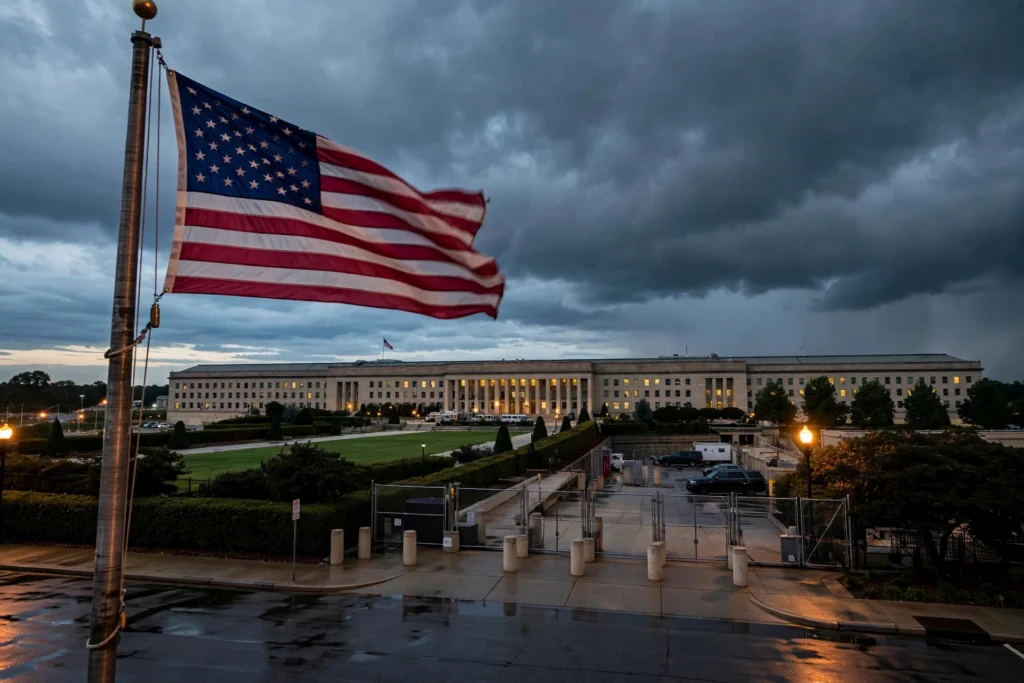
72 Retired Generals Call Pentagon’s Plan to Livestream Fort Hood Shooter’s Execution ‘Barbaric’
The letter that stopped Washington
It is the kind of story that stops you mid-scroll. The Pentagon wants to point a camera at a firing squad — and broadcast the killing of Nidal Hasan, the Fort Hood shooter, live to the world on 3 December. Now, 72 of America’s most senior retired military leaders have put their names on an open letter saying, in effect: absolutely not.
The signatories are not anti-war activists or celebrity pundits. They are 45 retired generals, 12 admirals, and several former judge advocates general — men and women who commanded troops in Iraq and Afghanistan, including officers who retired during President Donald Trump’s first term. Among them are a former NASA administrator and the first woman to earn a third star in the United States Army. When people like this speak with one voice, Washington listens.
And they did not mince words. The letter, released on Wednesday, calls the Pentagon’s plan a “barbaric abuse of authority” and warns that a public broadcast would turn Hasan into a martyr.
The Nidal Hasan execution livestream controversy has become one of the most heated military debates of the year — and it is forcing America to ask an uncomfortable question: where is the line between justice and spectacle?
“A carnival for voyeurs”
To be clear about one thing: these officers are not trying to save Hasan’s life. The letter states explicitly that the signatories do not object to the death penalty being carried out. Their objection is to the camera.
Hasan, a former Army psychiatrist, was convicted of killing 13 unarmed soldiers and wounding more than 30 others in the 2009 Fort Hood mass shooting — the deadliest non-combat attack ever carried out on an American military installation. He was sentenced to death in 2013. After more than a decade of appeals, the Pentagon announced last week that his execution by firing squad would be publicly shown.
The retired leaders argue that broadcasting it would violate the US Constitution’s protections against cruel and unusual punishment, transforming what should be a “solemn and grave punishment” into, in their words, a “carnival for the enjoyment of voyeurs and spectators.”
“This type of exploitative broadcasting — that debases human dignity — will taint the honor of the military that employs it, and a nation that allows it,” the letter reads.
The concern goes beyond symbolism. The officers warn that footage of an American execution would be seized upon by adversaries, used to stir hatred against the United States, and put American troops and civilians at greater risk abroad. Instead of closing a dark chapter, they argue, the broadcast could ensure Hasan is remembered as a martyr.
Trump said yes — then the mood shifted
The plan did not come out of nowhere. Last week, President Trump said he “absolutely” approved of showing the execution publicly, and Defense Secretary Pete Hegseth backed the proposal as a way of demonstrating the consequences of attacks on American service members.
But the reaction was swift — and it crossed every political line. Lawmakers from both parties, religious leaders, legal experts, and military veterans all condemned the idea. Then came the generals’ letter.
According to CBS News, some administration officials are now leaning the other way, and Trump had not reached a final decision on the livestream as of Tuesday. The fierce military backlash appears to have given the White House pause.
The episode is the latest controversial military call from an administration that has been making aggressive headlines — from its hardline posture toward Iran to its sweeping personnel shake-ups at the White House.
The world is watching — and the UN has weighed in
It is not just Americans arguing about this. The United Nations human rights office said livestreaming the execution would be “tantamount to a public execution” and would breach the “absolute prohibition of torture” under international law.
Public opinion is firmly on the generals’ side. A YouGov poll found that 71 percent of Americans oppose broadcasting executions live, with only 18 percent in favor and 13 percent unsure. That is a rare consensus in an otherwise divided country.
If it goes ahead, the broadcast would be the first public execution in the United States in nearly a century — a line America crossed away from generations ago, when public hangings drew crowds of gawking spectators.
Why this case still haunts America
To understand why this story cuts so deep, you have to remember what Hasan did. On 5 November 2009, the Army psychiatrist opened fire at Fort Hood, Texas, killing 13 people — most of them unarmed soldiers — and wounding more than 30. It remains one of the most shocking attacks on American soil in modern history, a wound that never fully healed for the military community.
That is precisely why the generals’ letter carries such weight. These are people who lost colleagues in Iraq and Afghanistan. They are not squeamish about violence, and they are not defending Hasan. They are defending the institution they served — and they believe a livestreamed killing would stain it.
It is worth noting that mass-violence cases keep testing American justice. Just this week, a shooting plot targeting a Hindu temple in Aurora was foiled by authorities — a reminder of how often the country confronts this kind of threat, and how carefully its responses are scrutinized.
Frequently asked questions
Who is Nidal Hasan?
A former US Army psychiatrist convicted of the 2009 Fort Hood mass shooting in Texas, in which 13 unarmed soldiers were killed and more than 30 wounded. He was sentenced to death in 2013.
When is the execution scheduled?
The Pentagon has set the execution by firing squad for 3 December 2026. Whether it will actually be livestreamed remains undecided.
Do the retired generals oppose the death penalty?
No. Their open letter explicitly states they do not object to the sentence being carried out — only to broadcasting it publicly.
Will the livestream actually happen?
Unclear. President Trump initially approved the plan, but CBS News reports that some administration officials are reconsidering, and no final decision had been made as of Tuesday.
The bottom line
Strip away the politics, and the generals’ argument is simple: justice does not need an audience. An execution is the gravest act a state can perform, and performing it for the cameras — for clicks, for ratings, for spectacle — cheapens it beyond recognition.
Whether the Pentagon listens remains to be seen. But 72 retired generals and admirals have now drawn their line. They spent their lives defending America’s honor in uniform. Now they are defending it in retirement — against a camera.