
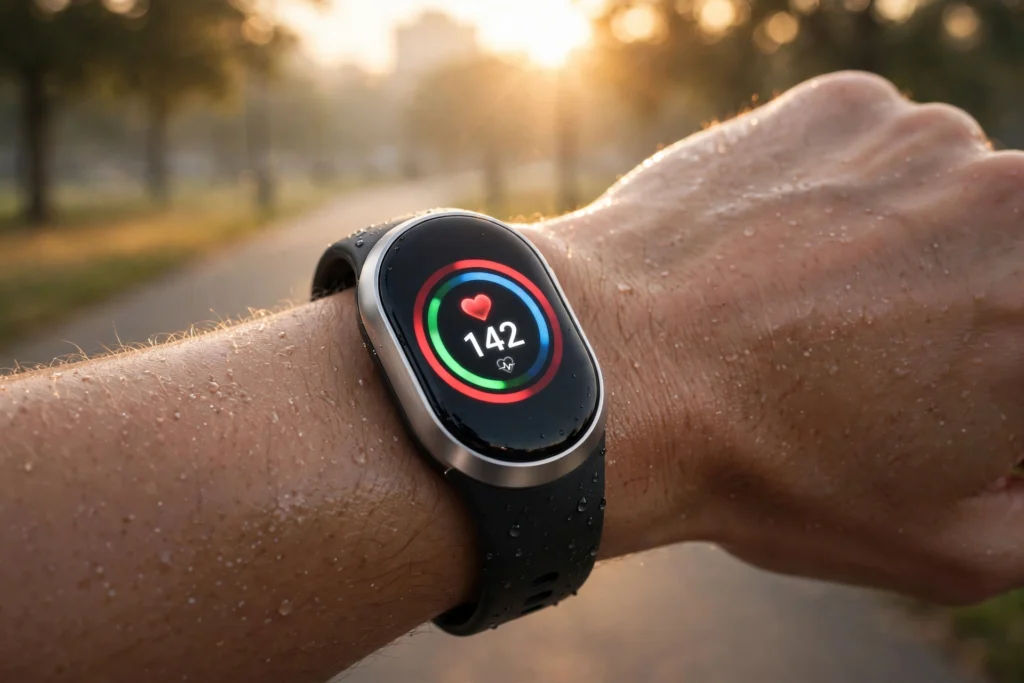
Fitbit Edge Is Official: Google Confirms October 12 Launch — Everything We Know About Specs and Price
After months of leaks, rumors, and a rogue appearance in Google’s own marketing materials, Google has finally stopped playing coy. The Fitbit Edge is real — and it’s arriving much sooner than anyone expected.
In a teaser posted on October 9 through the official Google Health account on X and Instagram, the company confirmed both the name and the date with a single line: “Get an Edge on your health. 10.12.26.” Translation: the Fitbit Edge launches on Monday, October 12, 2026. So if you’ve been waiting to buy a new fitness tracker this year, you’re about to have a very interesting decision on your hands.
Not a Watch, Not a Band: The Middle Ground Nobody Owned
Here’s the thing about the wearable market right now. You’re basically forced into one of two camps: screenless fitness bands that are glorified step counters, or full-blown smartwatches that die before your day does. Annoying, right?
The Fitbit Edge appears to be Google’s answer to that frustration. According to multiple reports — including 9to5Google, Stuff, and Notebookcheck — the Edge slots directly between the screenless Fitbit Air (which sells for $99.99) and the flagship Pixel Watch 5 (which starts around $349–$400). It has a display, real health sensors, and apps — but it doesn’t try to be a smartphone on your wrist.
If that sounds familiar, it should. This is widely believed to be the spiritual successor to the Fitbit Charge lineup, the beloved tracker series that arguably invented the modern fitness band. Only now it’s been rebuilt for Google’s 2026 wearables vision.
The 7-Day Battery (and the Replaceable Battery Nobody Saw Coming)
Let’s talk about the headline feature: battery life. Leaks reported by Android Authority and others suggest the Fitbit Edge delivers up to 7 days of battery life on a single charge — dropping to about 2 days if you keep the always-on display running constantly. That’s roughly a week of freedom from the nightly charging ritual that smartwatch owners know all too well.
But here’s the detail that really caught the industry off guard: the battery may be user-replaceable. In an era when nearly every gadget is sealed shut, a replaceable battery would be a genuine surprise — and a nod to longevity that environmentally conscious buyers will love. Fast charging is reportedly in the mix too, so even if you forget to charge overnight, a quick top-up could carry you through.

Serious Health Hardware: ECG, GPS, and More
The spec sheet reads like a device that costs twice as much. Based on supply-chain leaks, the Fitbit Edge is expected to pack:
- A 1.34-inch always-on AMOLED display
- Built-in GPS, so you can leave your phone at home on runs
- An ECG sensor with atrial fibrillation (AFib) detection
- Blood oxygen (SpO2) monitoring
- A skin temperature sensor
- Altimeter and barometer for elevation tracking
- Google Maps, media controls, and Find My Phone
- IP68 dust and water resistance
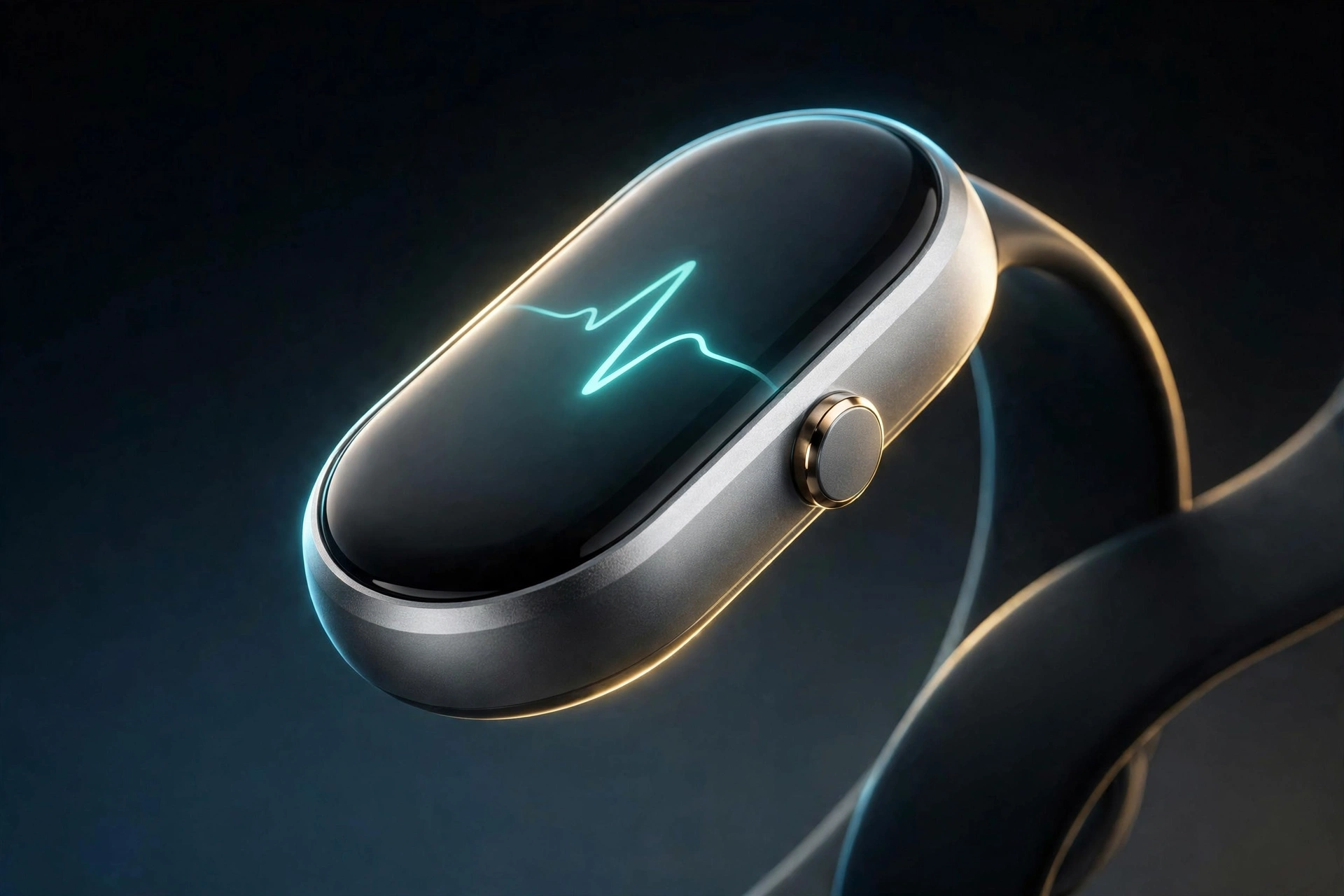
All of this in a body that reportedly weighs just 17.7 grams — lighter than most coins in your pocket. The design language apparently carries over Google’s “Canyon” color scheme from the Pixel Watch 5, with leaked images showing a sleek oval display, a lightweight aluminum body, and a metal side button with golden accents.
And because this is Google in 2026, Gemini integration is reportedly part of the package, alongside apps and notifications. The message is clear: this isn’t a dumb band with a screen — it’s a smart health companion.
iPhone Users, This One’s for You Too
Here’s a detail that could genuinely expand the Edge’s audience. Unlike the Pixel Watch series, which requires an Android phone for full functionality, the Fitbit Edge is expected to support both Android and iOS. That’s a huge deal. It means iPhone owners get access to a serious Google fitness tracker without switching ecosystems — something that hasn’t been true of Google’s flagship watches.
Think about who that targets: runners, gym-goers, and casual fitness fans who want reliable health tracking and week-long battery life but don’t want (or need) a $400 smartwatch. That’s a massive market, and right now it’s dominated by the likes of Garmin and Xiaomi. Google clearly wants in.
How Much Will the Fitbit Edge Cost?
Leaked pricing puts the Fitbit Edge at around $180 in the US, €179 in the Eurozone, and £159 in the UK. If those numbers hold, Google is threading the needle beautifully: far enough above the $99 Fitbit Air to justify the bigger display and sensor array, but less than half the price of the Pixel Watch 5.
It’s aggressive pricing for what’s shaping up to be an aggressive device. And it suggests Google isn’t just filling a gap in its lineup — it’s going after the mainstream fitness tracker crown.
Why Now? Google’s Bigger Wearables Play
The timing is no accident. The Edge’s reveal follows the Pixel 11 launch — where the tracker accidentally appeared in Google’s own marketing material — and a quick stop through the FCC. Meanwhile, Google Health’s latest app update (version 5.09) is rolling out Cardio Load tracking for third-party workouts, signaling that Google’s health software is maturing right alongside its hardware.
Zoom out further and the trend is unmistakable: health technology is having a moment. Researchers recently restored vision in blind patients using optogenetic gene therapy (researchers recently restored vision in blind patients using optogenetic gene therapy), and scientists are testing an experimental drug that destroys fat cells from the inside out (experimental drug that destroys fat cells from the inside out). The Fitbit Edge sits squarely in that wave — the consumer-facing side of a world increasingly obsessed with measuring, understanding, and optimizing the human body.
The question is whether a $180 tracker with a 7-day battery can actually steal the spotlight from the smartwatch giants. On paper, it has everything it needs.
Fitbit Edge FAQ: Your Questions, Answered
When does the Fitbit Edge launch?
Google confirmed an October 12, 2026 launch date in its official teaser. That’s Monday — just days away.
How much will the Fitbit Edge cost?
Leaks point to roughly $180 in the US, €179 in Europe, and £159 in the UK. Final pricing will be confirmed at the launch event.
Does the Fitbit Edge work with iPhones?
Yes — unlike the Pixel Watch, the Edge is expected to support both Android and iOS, making it Google’s most platform-friendly wearable yet.
Is the Fitbit Edge replacing the Fitbit Charge?
That’s the industry’s read. With a display, premium sensors, and mid-range pricing, the Edge appears to be the modernized successor to the beloved Charge line.
The Bottom Line
Google spent months letting leaks do its marketing, then confirmed the Fitbit Edge with a six-word teaser. Bold move — and honestly, it worked. Between the 7-day battery, the ECG and GPS hardware, the featherweight 17.7-gram design, iPhone compatibility, and that ~$180 price tag, this looks like the most interesting fitness tracker of 2026.
The real test comes Monday, when we get official specs, real pricing, and — most importantly — real-world battery and sensor performance. If the leaks hold up, Google may have just built the tracker that finally gives people a reason to skip the smartwatch. We’ll be watching.
Pingback: Satya Nadella Wants an "Emergency Brake" for AI — and the White House Just Made Incident Reporting Mandatory - Storion News
Pingback: Netflix Reportedly Planning 800 Layoffs — Its Biggest Job Cuts Since 2022 - Storion News