
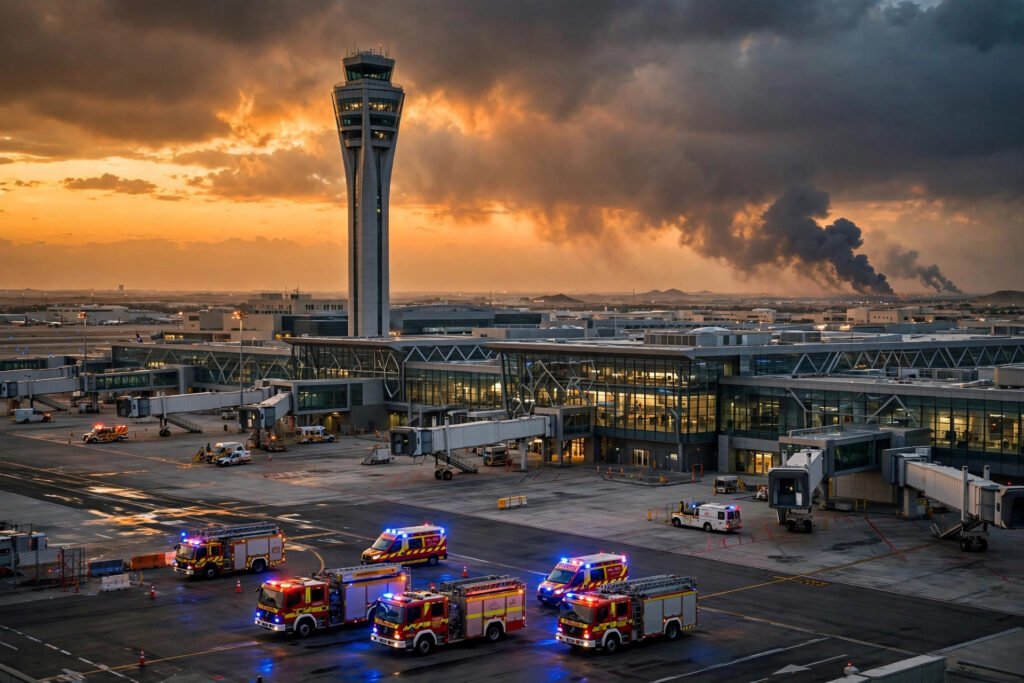
Houthi Missiles Rain on Riyadh Airport: 3 Dead, Airlines Warned as Saudi-Yemen War Spirals
Imagine checking in for your flight at one of the world’s busiest airports — and moments later, a ballistic missile slams into the tarmac. On Thursday afternoon, that’s exactly what happened at Riyadh’s King Khalid International Airport. Three people are dead, several more are wounded, and a national airliner has a smoking hole where passengers used to board. So how did we get here — and why is the Saudi-Yemen war suddenly exploding back to life?
Thursday’s Attack: What We Know
The strikes came in two waves, according to the Saudi civil aviation authority, GACA. The first hit airport facilities on Thursday afternoon. The second struck a Saudia Airlines aircraft itself — empty at the time, thankfully, which kept the death toll from being far worse.
Three Saudi citizens were killed. Several other people, described only as “of different nationalities,” were wounded, with injuries that officials said ranged from minor to serious. The dead included Capt. Hamoud Ali Alkalthami, the Saudia Group said in a statement seen by the Associated Press.
This appears to be the first confirmed attack on Saudi Arabia’s national carrier since Riyadh and its allies launched a major new military offensive in Yemen last weekend — an offensive aimed at retaking territory seized by the Iran-backed Houthi rebels. Saudi officials did not name those responsible for Thursday’s strike, but the Houthis have openly claimed to be targeting the airport with ballistic missiles all week, including on Thursday.
Footage circulating on social media, analyzed by the AP, showed smoke rising over Riyadh’s airport shortly after the reported explosions.
A Week of Bloodshed: Six Dead in Seven Days
Here’s the part that should worry everyone: Thursday’s strike wasn’t an isolated incident. It was the second deadly attack in as many days.
On Wednesday, Saudi officials said Houthi-claimed attacks on airports in both Riyadh and Abha killed three people. That brings this week’s death toll to six — and it looks like the deadliest stretch in Saudi Arabia since the new offensive in Yemen began.
The rhythm is grim but clear: every time Riyadh pushes harder in Yemen, the Houthis answer by reaching past the battlefield and into the heart of the kingdom.
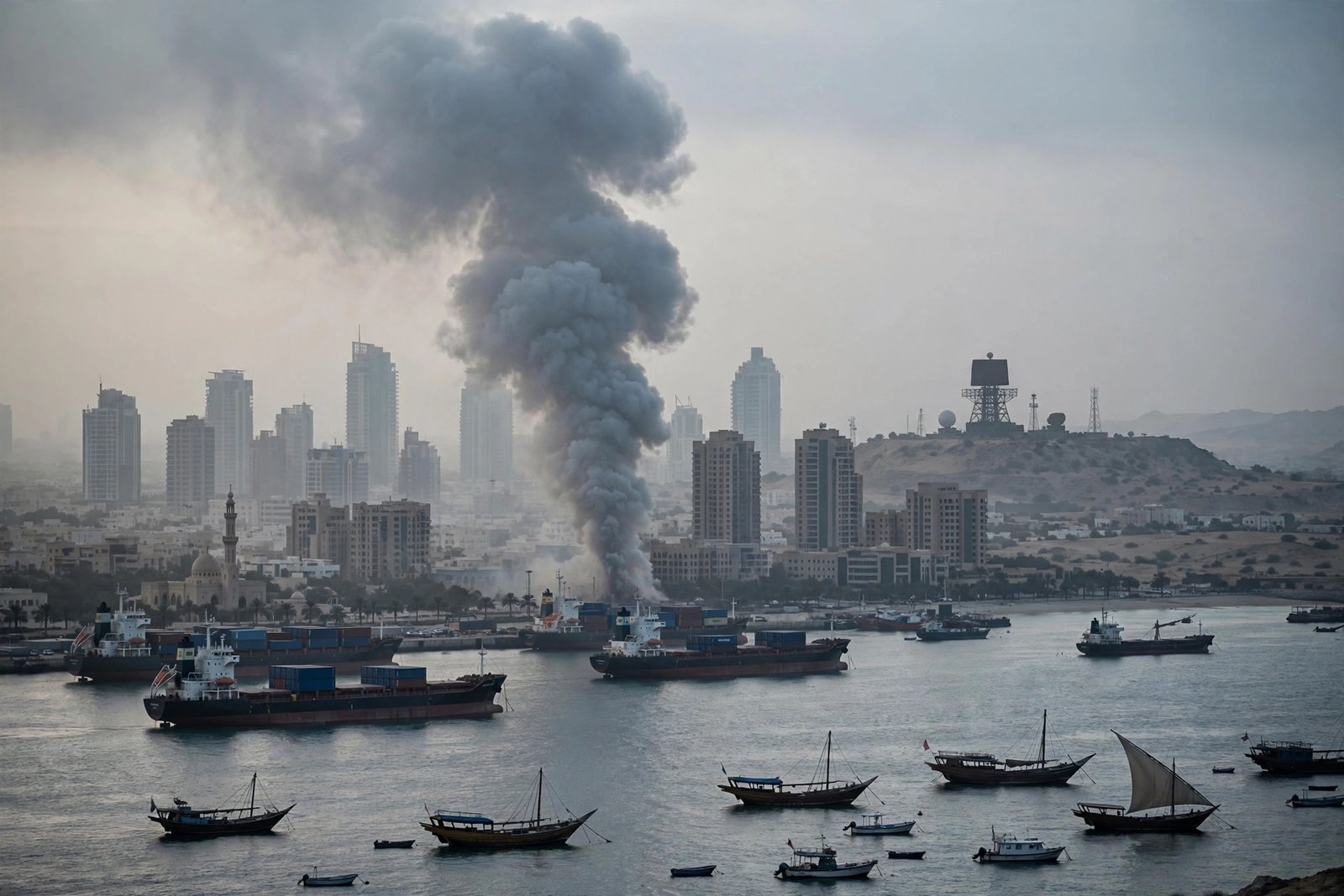
Why This War Is Suddenly Spiraling
To understand this moment, you have to zoom out. The war in Yemen has been simmering for years, but three things lit the fuse for this latest explosion.
First, the new offensive. Last weekend, Saudi Arabia and allied forces launched a major military campaign to claw back territory held by the Houthis. The Houthis, predictably, retaliated — not just on the front lines, but by declaring Saudi airspace a theater of military operations. This week they warned global airlines “for the last time” about the consequences of flying there. That’s not bluster anymore. It’s a promise they’re keeping.
Second, the regional tinderbox. This is the new epicenter of a much wider Middle East conflict, one ignited by the joint US-Israeli assault on Iran back in late February. The Houthis are Iran’s allies — “Iran’s Houthi allies,” as the wires put it — and every escalation between Washington, Tehran, and Riyadh feeds this fire. Just this week, the United States pulled its B-1 bombers from a British air base amid fears of Iranian-linked attacks, a sign of how jumpy every player has become.
Third, America is watching from the sidelines. US officials say Washington is helping Riyadh with intelligence sharing, target identification, and planning for the offensive. But President Donald Trump has shown little appetite for a deeper fight — he has not ordered US forces to resume strikes on the Houthis. Last year, America burned through hundreds of millions of dollars in munitions during a nearly two-month airstrike campaign against the rebels, meant to reopen Red Sea shipping lanes, before Trump called it off. For now, the White House seems determined not to repeat that.
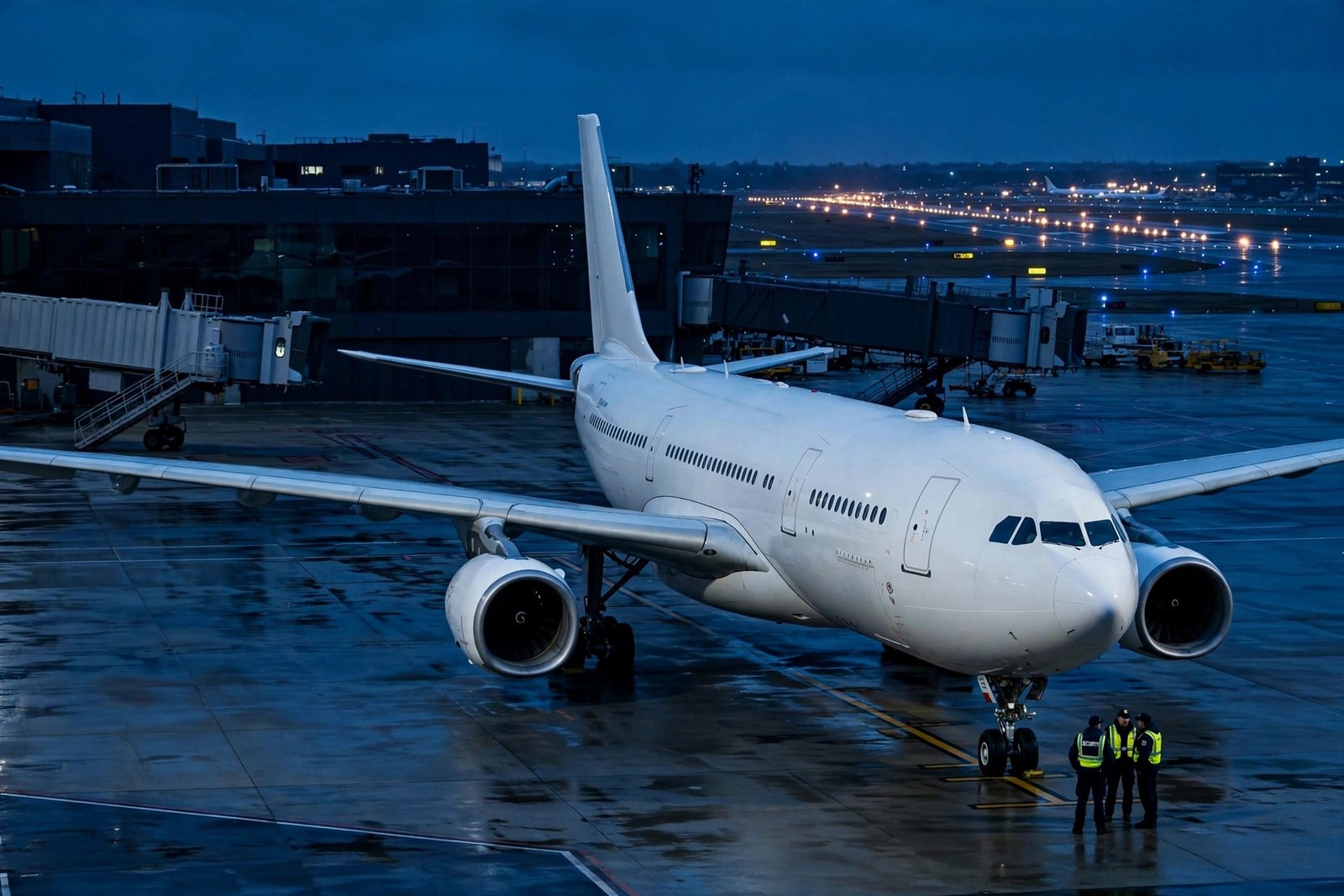
The Airline Warning Nobody Can Ignore
The Houthis’ message to international carriers is chilling in its directness: they have declared Saudi airspace a theater of military operations and warned airlines “for the last time” to stay out. On Thursday, they demonstrated exactly what happens to aircraft that don’t listen.
The struck Saudia jet was empty — pure luck, given that it was parked at a working international airport in the middle of the day. Civil aviation authorities across the region are now under enormous pressure: do you reroute flights around the world’s biggest oil economy, or gamble that the next missile misses?
For ordinary travelers, the message is simpler and scarier: one of the Middle East’s major aviation hubs is now an active target.
Pakistan Enters the Picture
In a development with big implications, Pakistan has said it is making its military capabilities available to Saudi Arabia under a new mutual defense pact. Foreign Ministry spokesman Sajjad Haider Khan told reporters that Pakistani troops already stationed in the kingdom would defend Saudi territory and sovereignty — but would not cross into Yemen to attack the Houthis.
It’s a careful line to walk: backing Riyadh without getting dragged into the Yemeni battlefield itself. Whether that commitment deters the Houthis or simply widens the war’s cast of characters remains to be seen.
What Comes Next
Connecticut Senator Chris Murphy, who met with Saudi Crown Prince Mohammed bin Salman in Riyadh earlier this week, came away unsettled. He told reporters he was concerned the Saudis lacked a clear endgame for the campaign — his sense was that Riyadh will “push as far as they can” toward another truce and a political settlement, but right now, nobody can describe what victory looks like.
That uncertainty is the most dangerous part. Wars without exit strategies tend to expand, not contract. The Houthis have shown they can reach Riyadh at will. Riyadh has shown it will keep pushing in Yemen. And with this week’s Nobel Peace Prize ceremony unfolding against the backdrop of open conflict, the contrast between the world’s peace talk and its war-making has rarely been starker.
Six people have died in Saudi airport attacks this week. The question hanging over the Gulf tonight isn’t whether there will be another strike — it’s when.
Frequently Asked Questions
How many people died in the Houthi missile strike on Riyadh airport?
Three Saudi citizens were killed in Thursday’s attack on King Khalid International Airport and a Saudia Airlines aircraft. Combined with Wednesday’s attacks on Riyadh and Abha airports, six people have died in Houthi-claimed strikes this week.
Did the Houthis claim responsibility for the Riyadh airport attack?
The Houthis have claimed to target Riyadh’s airport with ballistic missiles repeatedly this week, including on Thursday. Saudi authorities did not formally name the perpetrators of Thursday’s strike, but the pattern of claims strongly points to them.
Are airlines still flying to Saudi Arabia?
Yes, flights continue, but the Houthis have warned global airlines “for the last time” to avoid Saudi airspace, which they declared a theater of military operations. Airlines and aviation authorities are reassessing routes after Thursday’s strike hit an actual passenger aircraft.
Is the United States getting involved in the Saudi-Yemen war?
Not directly. Washington is providing intelligence, target identification, and planning support to Saudi Arabia, but President Trump has ruled out ordering new US strikes on the Houthis for now.
The Bottom Line
A passenger jet hit on the tarmac, six dead in a week, and a rebel group openly daring the world’s airlines to keep flying into Riyadh — the Saudi-Yemen war has broken out of its borders. With Washington holding back, Pakistan stepping in, and no clear endgame in sight, the most likely outcome isn’t peace. It’s escalation. And the next missile may not hit an empty plane.
Pingback: North Korea Fires Ballistic Missiles Days After South Korea's Hypersonic Test — Fourth Launch in a Month - Storion News
Pingback: Djibouti Boat Tragedy: 139 Dead, 84 Missing After Migrant Ship Sinks Off Obock - Storion News
Pingback: Pakistan Imposes Emergency and Governor's Rule in Khyber Pakhtunkhwa: What It Means - Storion News
Pingback: Cristiano Ronaldo Scores 981st Career Goal as Missile Threat Delays Al-Nassr Match — 19 Away From 1,000 - Storion News