
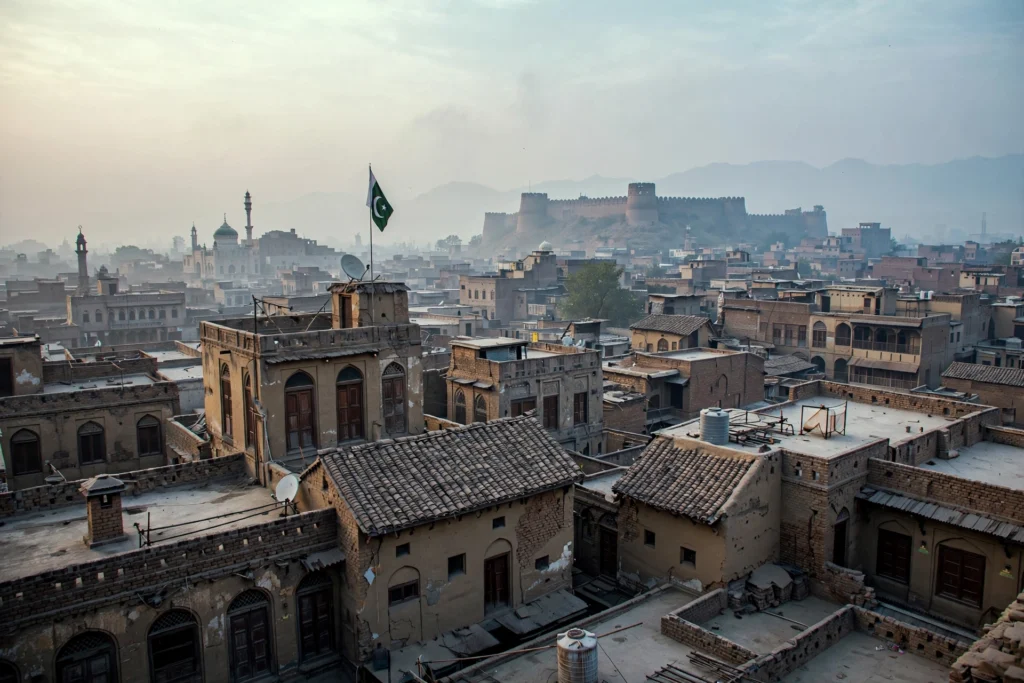
Pakistan Imposes Emergency and Governor’s Rule in Khyber Pakhtunkhwa: What It Means
There are days when the news doesn’t just break — it upends the board entirely. Sunday was one of those days for Pakistan.
President Asif Ali Zardari has imposed an emergency and governor’s rule in Khyber Pakhtunkhwa, formally suspending the provincial government run by jailed former prime minister Imran Khan’s party, the Pakistan Tehreek-e-Insaf (PTI). The Khyber Pakhtunkhwa emergency is the most consequential federal intervention in a Pakistani province in nearly two decades — and it has plunged the country’s politics into uncharted territory.
What Happened on Sunday
Zardari signed the presidential proclamation on Sunday on the advice of Prime Minister Shehbaz Sharif and the federal cabinet, invoking Articles 232 and 234 of the Constitution, according to a notification published in the Gazette of Pakistan. The proclamation states that the provincial government “cannot be run in accordance with the Constitution in the current circumstances.”
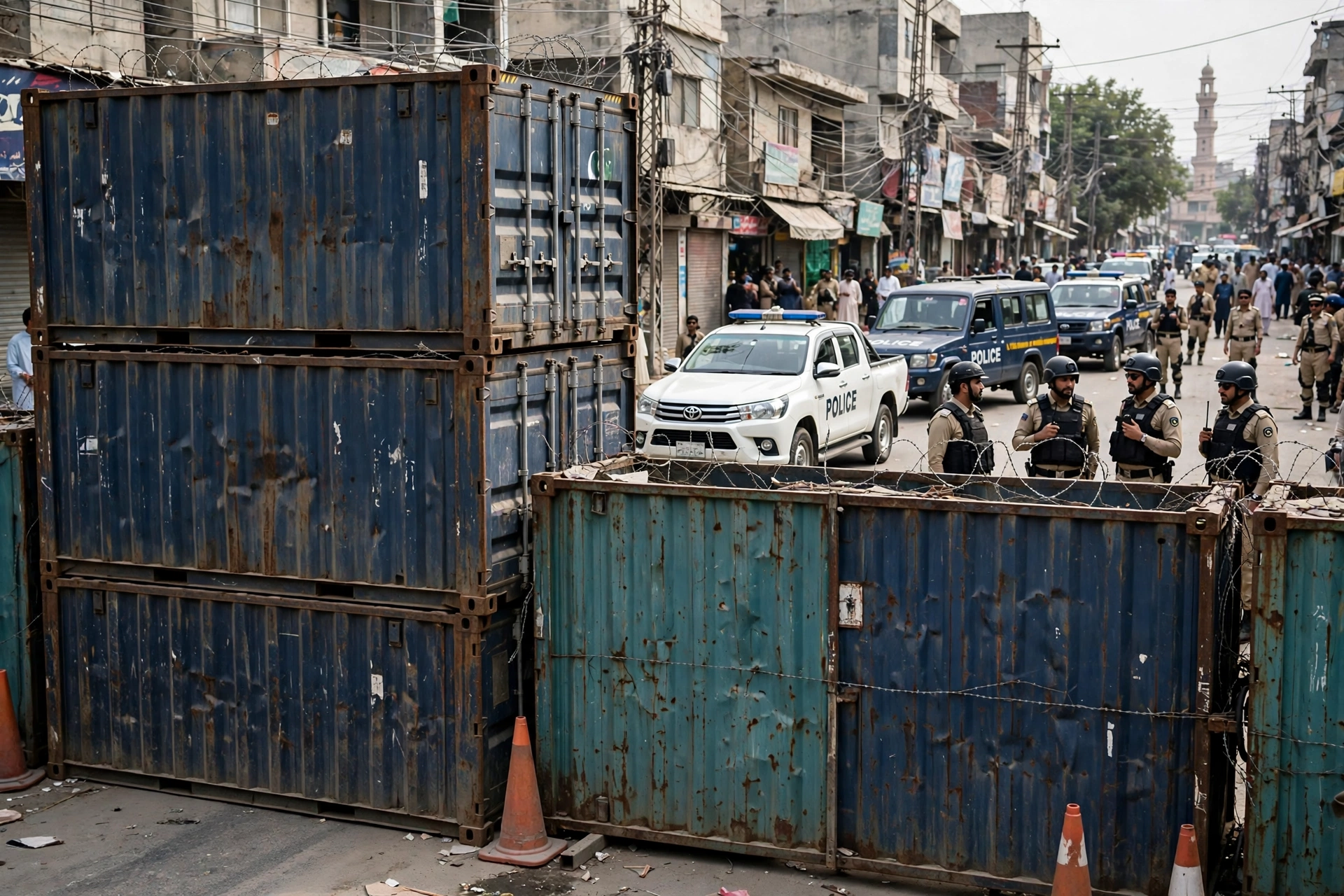
The move took effect immediately. In Peshawar, shipping containers appeared on the roads leading into the Red Zone, a heavy police deployment fanned out across the city, and residents reported targeted disruptions to mobile and internet services in parts of the province. The federal government also authorised the deployment of the Pakistan Army in aid of civil power.
The decision lands at a tense moment for Pakistan’s security posture. It comes just days after a Houthi missile strike on Riyadh airport that injured six Pakistanis — an attack Islamabad condemned as a violation of international law — and amid simmering regional frictions, including the US–Iran standoff that recently saw American B-1 bombers pulled from a UK base.
Why Did Islamabad Pull the Trigger?
The federal cabinet’s stated reason was blunt: the PTI-led provincial government had “deliberately disengaged from the fight against terrorism,” and the law-and-order situation in the province had deteriorated badly. Officials pointed to a reported 195% surge in terrorist activity as the backdrop for the decision.
Interior Minister Mohsin Naqvi said the federal and Khyber Pakhtunkhwa governments had reached a common understanding on combating terrorism — but the cabinet concluded the provincial leadership was not holding up its end. Prime Minister Sharif, for his part, said the federal government could not allow the provincial leadership to derail economic stability or undermine security operations.
But there is an unavoidable political layer here. The move came as the PTI was pressing ahead with a long march toward Islamabad — a march its leadership says it has not called off. Critics of the government see the emergency less as a counterterrorism measure and more as a way to neutralise a province run by the country’s largest opposition party.
What Do Emergency and Governor’s Rule Actually Mean?
This is where the constitutional fine print matters, because the two measures are not the same thing.
The emergency, imposed under Article 232, hands sweeping powers to the federal executive — including the ability to suspend certain fundamental rights. Because Zardari acted without a resolution from the provincial assembly, the Constitution requires both houses of Parliament to approve the emergency within 10 days — that is, by October 21. The National Assembly and Senate have been summoned for Tuesday.
There is a second hurdle too: the emergency must be placed before a joint sitting of Parliament within 30 days, and it lapses after two months unless the joint sitting approves it. Once approved, however, the Constitution sets no fixed end date — it stays in force until revoked or voted down by a majority of both houses’ total membership.
Governor’s rule, under Article 234, is the administrative side of the equation. Governor Faisal Karim Kundi now heads the province’s administration, assisted by a newly formed 11-member technocratic KP Advisory Council. Parliament can extend governor’s rule in two-month increments, up to a maximum of six months in total.
This is not without precedent — provinces have been placed under governor’s rule at least eight times since 1949. Khyber Pakhtunkhwa, then known as the North-West Frontier Province, went through it in 1975 and 1994. But the combination of a full constitutional emergency with a detained provincial leadership is rare in Pakistan’s recent democratic history.
The New Power Structure in Peshawar
With the elected government suspended, a caretaker-style setup is taking shape. Dr. Muhammad Fakhr Alam Irfan has been appointed chief secretary of Khyber Pakhtunkhwa, and senior Pakistan Administrative Service officer Muhammad Yahya Akhunzada has been transferred to the provincial administration.
The 11-member Advisory Council under Governor Kundi is expected to oversee day-to-day administration. Whether that council can govern a province of more than 40 million people — much of it dealing with active militant threats — is one of the biggest open questions of this crisis.
The Arrests: Where Is Sohail Afridi?
The crackdown extended well beyond paperwork. Federal Minister of State for Interior Tallal Chaudhry confirmed that suspended chief minister Sohail Afridi and some of his cabinet members were taken into preventive custody on Sunday.
A senior police official told Dawn that eight people in total were detained, including Afridi, PTI provincial president Junaid Akbar, and Assembly Speaker Babar Saleem Swati. Officials have not publicly disclosed Afridi’s location. Chaudhry said those facing cases would be charged and tried, while others would be released.
PTI sources, meanwhile, have described the detentions as house arrests — and warned that more could follow.
PTI’s Fightback: Courts, Assemblies, and the Streets
The PTI leadership wasted no time framing the narrative. Chairman Barrister Gohar Khan and the party’s parliamentary committee rejected the decision outright, calling it an unconstitutional assault on provincial autonomy and the public mandate.
“We have not formally called off the long march at all. Our struggle will absolutely continue,” Gohar told reporters — a line that all but guarantees the confrontation between the party and the state is far from over.
The party has announced it will challenge the measures in the courts, in the assemblies, and through public mobilisation. Opposition parties have backed that rejection, with some threatening parliamentary boycotts and street protests.
Legal experts are already dissecting the constitutional mechanics. The emergency provisions allow the executive to suspend certain fundamental rights, and analysts note that with no fixed time limit, they can enable prolonged federal control — a feature critics say makes the measure dangerously open-ended, and supporters say is necessary for security operations.
What Happens Next
The next 72 hours will be decisive. Parliament reconvenes on Tuesday, and the government needs both houses to approve the emergency by October 21. A joint sitting must follow within 30 days. If the government cannot muster the numbers — or if the courts intervene first — the entire edifice could collapse.
Expect three parallel battles: a legislative one in Islamabad, a legal one in the higher judiciary, and a political one on the streets of Peshawar and beyond. The PTI’s long march, which the government clearly hoped to pre-empt, may now become the very flashpoint it was meant to defuse.
Frequently Asked Questions
What is governor’s rule in Pakistan?
Governor’s rule, imposed under Article 234 of the Constitution, suspends the elected provincial government and places the province under the direct administration of the federally appointed governor. In Khyber Pakhtunkhwa, Governor Faisal Karim Kundi will govern with the help of an 11-member advisory council. Parliament can extend it in two-month increments, up to six months total.
How long can the Khyber Pakhtunkhwa emergency last?
The emergency under Article 232 needs Parliament’s approval within 10 days (by October 21) and a joint sitting’s approval within 30 days, or it lapses after two months. If approved, there is no fixed end date — it remains in force until revoked or voted down by a majority of both houses.
Who is running Khyber Pakhtunkhwa right now?
Governor Faisal Karim Kundi, assisted by an 11-member technocratic Advisory Council. The PTI-led government of Chief Minister Sohail Afridi has been suspended, and Afridi himself is in preventive custody.
Was the PTI government given any warning?
The federal government says the provincial leadership was repeatedly pressed on counterterrorism cooperation, with Interior Minister Mohsin Naqvi pointing to a common understanding that the cabinet claims was not honoured. The PTI insists the move was political and announced without legitimate constitutional grounds — a question the courts will likely have to settle.
The Bottom Line
The Khyber Pakhtunkhwa emergency is a gamble — by the federal government, that the courts and Parliament will bless it; and by the PTI, that the streets and the constitution will save it. With an 11-member council governing 40 million people, a detained chief minister, and a long march that refuses to die, Pakistan has entered one of the most uncertain weeks in its recent political history. Watch Tuesday’s parliamentary sessions: they will tell you whether this is the start of a six-month federal takeover — or a proclamation that collapses under its own weight.