
North Korea Fires Ballistic Missiles Days After South Korea’s Hypersonic Test — Fourth Launch in a Month
It started as a normal Monday morning on the Korean Peninsula. Then, at 9:20 a.m., the alarms went off in Seoul.
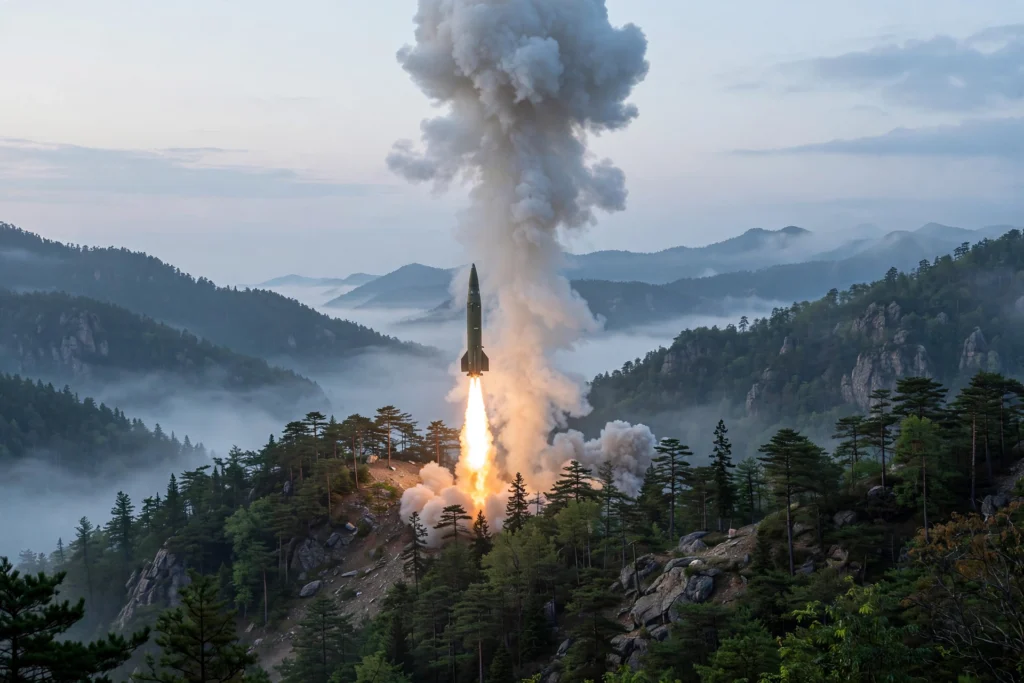
North Korea fired multiple ballistic missiles toward the sea off its east coast on Monday, October 12, 2026 — its fourth missile launch in a single month and, South Korean officials say, a deliberate answer to Seoul’s own missile test just days earlier. One of the missiles flew more than 900 kilometers before splashing down. South Korea’s national security office convened an emergency meeting within the hour.
So what exactly happened, why now, and how worried should the rest of us be? Here’s the full picture.
What Happened on Monday Morning
According to South Korea’s Joint Chiefs of Staff, the ballistic missiles were fired from near Pyongyang at around 9:20 a.m. local time (0020 GMT). The launches appeared to involve missiles of different types, and at least one flew more than 900 km (559 miles) — a range that would put all of South Korea and parts of Japan well within reach.
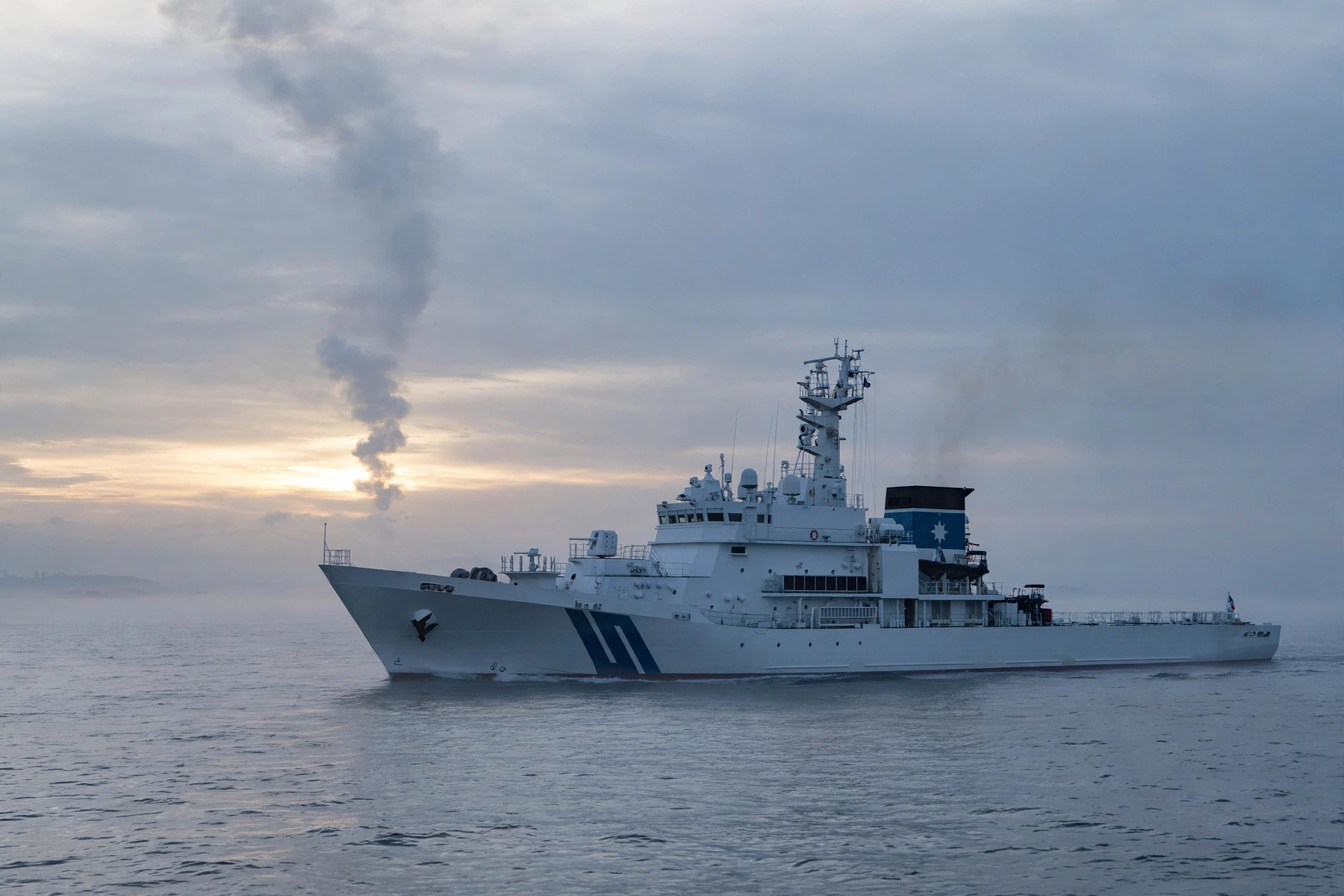
Japan’s coast guard also detected the launch, initially reporting two unidentified projectiles believed to be ballistic missiles, both of which appeared to have fallen into the sea. There were no immediate reports of damage to vessels or aircraft.
Within hours, South Korea’s National Security Office held an emergency meeting and condemned the launches as violations of United Nations Security Council resolutions, urging Pyongyang to stop immediately. North Korea has been under UN sanctions since 2006 aimed at curbing its nuclear weapons and ballistic missile programs — sanctions that have done little to slow the pace of testing in recent years.

Why Now? The Hypersonic Tit-for-Tat
The timing is no coincidence. Just last week, South Korean President Lee Jae Myung personally oversaw the country’s first-ever test-firing of a hypersonic missile — a rare moment in which a South Korean president publicly showcased a weapons test. The message was aimed squarely across the border: Seoul is catching up.
A spokesperson for South Korea’s Joint Chiefs of Staff described Monday’s launches as “a show of force in response to the successful test launch of our hypersonic missile, as well as an intentional demonstration of missile capabilities.” In other words, Pyongyang saw Seoul’s test, took it personally, and answered the only way it knows how.
And this isn’t a one-off. North Korea’s last launch came on October 3, when state media outlet KCNA said leader Kim Jong Un had personally supervised a hypersonic missile test. That makes Monday’s salvo the fourth launch in roughly four weeks — a pace that suggests Pyongyang is in the middle of a deliberate testing campaign, not just throwing tantrums.
This pattern of missile diplomacy is something the region has lived with for years, but the hypersonic angle raises the stakes. Hypersonic weapons travel at more than five times the speed of sound and can maneuver mid-flight, making them far harder to intercept — which is exactly why both Koreas are racing to perfect them.
A Dangerous Game of Catch-Up
Here’s the uncomfortable truth about the Korean Peninsula in 2026: both sides are arming faster than the diplomacy can keep up.
South Korea under Lee Jae Myung has been unusually open about its growing missile arsenal, framing it as deterrence — a shield, not a sword. The rare presidential showcase of the hypersonic test last week was itself a departure from Seoul’s traditionally quiet approach to its own capabilities.
North Korea, meanwhile, sees every Southern test as a provocation that demands a reply. Kim Jong Un’s regime has perfected the art of the calibrated escalation: enough to remind everyone of its arsenal, not quite enough to trigger a military response. Monday’s four-missiles-in-a-month rhythm fits that playbook perfectly.
The problem? Playbooks get misread. With tensions already elevated across the region — from the Houthi missile strike on a Saudi airport earlier this month to US bombers repositioning over the Iran threat — the world has very little appetite for another flashpoint. Yet the Korean Peninsula keeps delivering them.
What Happens Next
The diplomatic response followed its familiar script: condemnation from Seoul, monitoring from Tokyo, and a restatement of UN resolutions that Pyongyang has ignored for two decades. The United States, which keeps nearly 28,500 troops in South Korea, is expected to reaffirm its commitment to defending its ally, though Washington has yet to issue a full statement.
The real question is what Pyongyang does next. Four launches in a month is a statement, but North Korea has historically paused after making its point — or escalated further if it feels the response was too weak. If Seoul follows up with another show of its own capabilities, the cycle could continue into November.
For now, the missiles are at the bottom of the East Sea, the emergency meetings are over, and both Koreas are watching each other. The danger of this kind of tit-for-tat isn’t that anyone plans a war — it’s that one day, the calibration fails.
FAQ: North Korea Missile Launch — October 2026
Q: How many missiles did North Korea fire on October 12?
A: South Korea’s military said “multiple” ballistic missiles of apparently different types were fired from near Pyongyang at around 9:20 a.m. local time. Japan’s coast guard detected at least two projectiles. Exact numbers were not disclosed.
Q: How far did the missiles travel?
A: According to South Korea’s Joint Chiefs of Staff, one type of missile flew more than 900 km (559 miles) before landing in the sea off North Korea’s east coast. Both projectiles detected by Japan fell without causing damage.
Q: Why did North Korea launch missiles now?
A: Seoul believes it was a direct response to South Korea’s first public hypersonic missile test last week, overseen by President Lee Jae Myung. A South Korean military spokesperson called it “a show of force” and an “intentional demonstration of missile capabilities.” It was also the fourth North Korean launch in a month, suggesting an ongoing testing campaign.
Q: Are these launches legal under international law?
A: No — South Korea’s National Security Office condemned them as violations of UN Security Council resolutions, which prohibit North Korea from developing ballistic missile technology. Pyongyang has been under UN sanctions over its weapons programs since 2006.
The Bottom Line
North Korea’s fourth missile launch in a month is less a surprise than a reminder: the arms race on the Korean Peninsula is accelerating, and hypersonic weapons are the new arena. Seoul showed off its hypersonic test last week; Pyongyang answered with missiles this week. The pattern is predictable — until the day it isn’t. In a region already on edge, and a world already stretched thin by crises from Ukraine’s fragile energy ceasefire to the Middle East’s missile exchanges, the Korean Peninsula doesn’t need another miscalculation. That’s why Monday morning’s launch matters far beyond the 900 kilometers those missiles traveled.