
Air India Flight AI2030 Diverted to Jaipur After Hijack Code 7500 Alert — DGCA Probes False Alarm
Imagine you are cruising somewhere over western India, coffee in hand, when the pilot’s voice comes over the intercom — not with the usual arrival-time update, but with the news that you are landing at Jaipur instead of Delhi. Behind that calm announcement on Wednesday morning sat one of the most alarming signals in all of aviation: Squawk 7500, the international distress code that tells the world a hijacking may be underway.
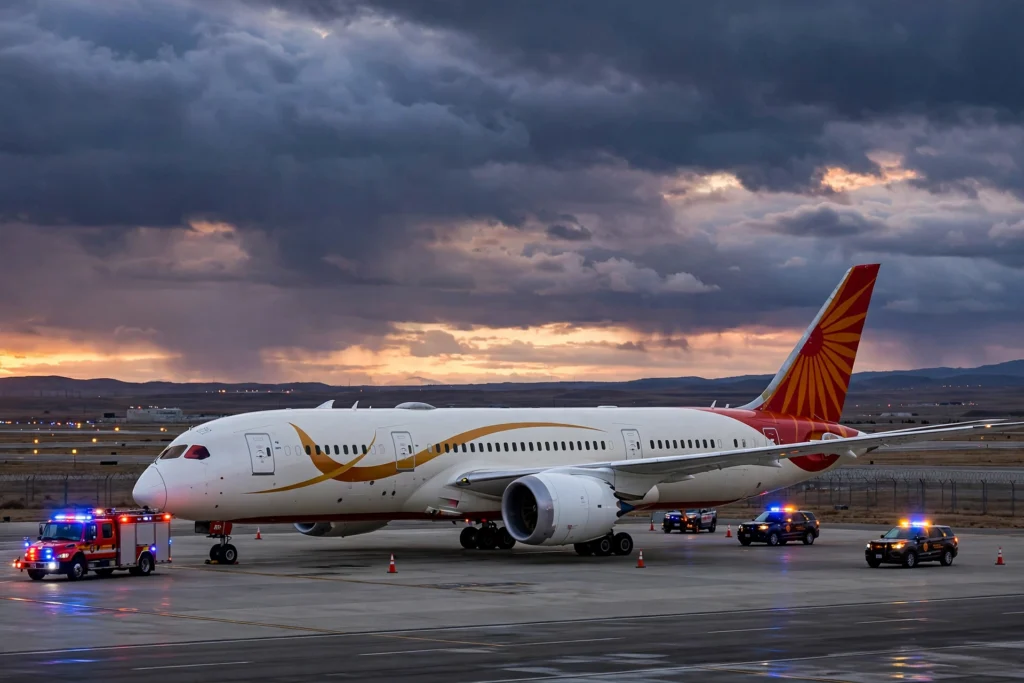
That is exactly what happened aboard Air India flight AI2030, a Boeing 787-9 from Frankfurt to Delhi carrying 293 passengers and 13 crew. What followed was a full-scale security operation at Jaipur International Airport — isolation bays, bomb squads and a five-hour wait — before officials concluded there had never been any real threat. The Air India AI2030 hijack alert was a false alarm. But why that code went out at all is now a question for India’s aviation regulator.
What happened on Flight AI2030
The drama unfolded on Wednesday, October 14, 2026, as the flight neared the end of its journey from Frankfurt. According to PTI and security sources, the aircraft transmitted Squawk 7500 — the transponder code pilots use to discreetly signal unlawful interference — while it was flying within the Mumbai Flight Information Region. The distress signal was picked up through air traffic control channels, and the alert was flagged via Ahmedabad ATC.
Once a 7500 squawk appears on a controller’s radar, there is no such thing as “waiting to see.” Air traffic control immediately directed the aircraft away from its planned destination of Indira Gandhi International Airport in Delhi and toward Jaipur, as a strict safety precaution.
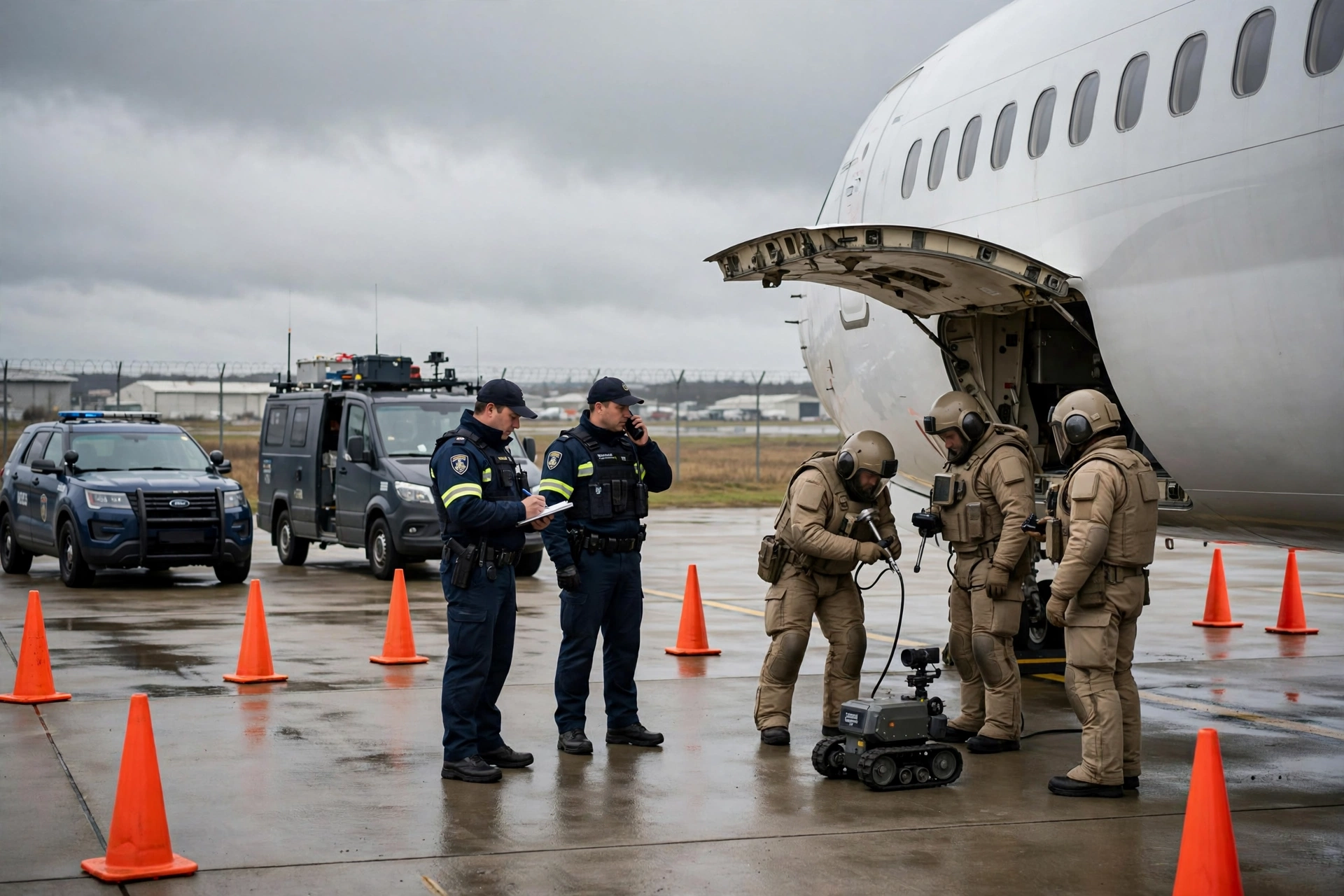
Flight AI2030 touched down at Jaipur International Airport at about 9:35 a.m. local time. Within ten minutes, the Boeing 787-9 — notably wearing the former Vistara livery — was escorted to a designated isolation bay, far from the regular terminals. There, a multi-agency security machine sprang into action. Personnel from the Central Industrial Security Force (CISF), the local police, the Anti-Terrorism Squad and the Bomb Detection and Disposal Squad rushed to the aircraft. Both pilots were de-boarded in line with standard security protocol, and the National Security Guard (NSG) team in Delhi was placed on standby.
Passengers waited hours as the sweep played out
For the 293 passengers, the next few hours were a masterclass in controlled uncertainty. Everyone was deplaned under tight security and moved to the terminal building, where passengers and their luggage underwent secondary screening. Jaipur airport management later confirmed there was no panic and no danger — the passengers were kept in a designated holding area while authorities worked through the standard plan for getting them onward to Delhi.
The security sweep was exhaustive: the aircraft, the passenger baggage and the cargo holds were all inspected by the multi-agency teams. Assistant Commissioner of Police Shiv Dayal told reporters that airport authorities had informed the police of the emergency landing following the threat alert, and police sources confirmed security personnel checked the aircraft thoroughly in the isolation bay.
Then, after roughly five hours on the ground, the all-clear came. The Aerodrome Committee evaluated the situation and concluded the threat alert was resolved. Passengers re-boarded the very same aircraft, which departed Jaipur at about 2:37 p.m. and landed safely in Delhi at 3:11 p.m. — finally ending a journey that had begun in Frankfurt the night before.
What is Squawk 7500 — and why one code emptied a runway
If you have never heard of a “squawk code,” you are not alone. Every aircraft carries a transponder that broadcasts a four-digit code so radar controllers can identify it. Most flights use ordinary assigned codes — but three special codes are drilled into every pilot from day one:
- 7500 — unlawful interference (hijacking)
- 7600 — radio communication failure
- 7700 — general emergency
Transmitting 7500 is aviation’s silent panic button. Controllers cannot ask “are you sure?” on the radio — the code exists so a crew under duress can signal for help without alerting whoever is threatening them. So when the code appeared on controllers’ screens, the response was automatic and maximal: divert, isolate, secure, search.
The mystery at the heart of the false alarm
Here is where the story gets strange. Security sources told reporters that the 7500 code was activated because of a technical glitch — and that there was never any actual hijack threat. The flight was cleared, the code was stood down, and everyone made it home.
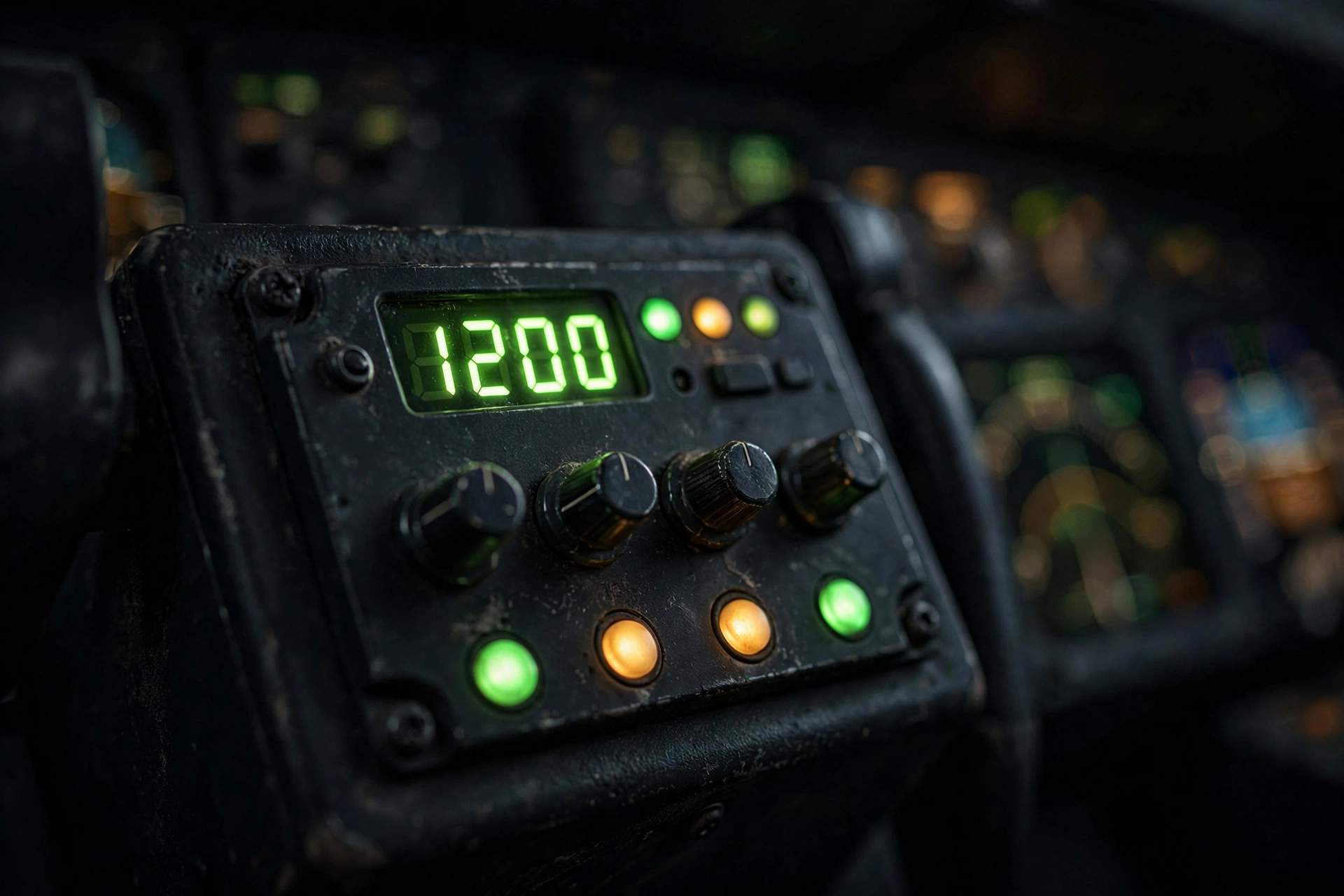
But that explanation has left aviation watchers with questions, because of how these codes actually work. Senior Boeing 787 pilots quoted in Indian media noted that a squawk code is not something you bump accidentally: each of the four digits has to be set deliberately on the transponder panel, one by one. The idea of all four digits landing on exactly 7-5-0-0 by pure chance is, in the pilots’ words, virtually impossible.
So was it a genuine equipment malfunction — a fault in the transponder or the ATC data link that fabricated a code the crew never touched? Or was the code dialed in, then retracted once the pilots realized the situation? The Directorate General of Civil Aviation (DGCA) will investigate, and its findings will determine whether this was a hardware fault, a procedural slip, or something else entirely.
The scare also echoed another week of transport-security drama: just recently, a container vessel was lost in the Strait of Hormuz in a suspected naval mine incident that rattled global shipping lanes. From the skies to the seas, 2026 has been a year when transport corridors keep making headlines — read our full report on the Hormuz ship sinking and what it means for global trade.
Why aviation authorities can never take the safe option
It is easy, with hindsight, to call the Jaipur operation an overreaction. It was not. The history of civil aviation contains too many tragedies for anyone to gamble on a 7500 signal being a mistake. The protocol exists precisely because the cost of guessing wrong in one direction is unthinkable, while the cost of guessing wrong in the other is measured in delayed flights and screened luggage.
Within hours, five separate agencies had swept the aircraft. Passengers were kept informed, safe and calm. And the same aircraft that had caused the alarm was the one that flew everyone home — perhaps the strongest possible signal that the authorities were satisfied nothing was wrong.
Aviation technology, meanwhile, keeps evolving around these human procedures. Earlier this week, a SpaceX cargo capsule docked with the International Space Station carrying biotech experiments — a reminder that flight operations, whether carrying mini-brains or 293 passengers, now depend on layers of redundant systems that mostly work invisibly until one of them cries wolf.
Frequently asked questions
Was there actually a hijacking on Air India flight AI2030?
No. Authorities concluded the hijack alert was a false alarm. Security sources said the Squawk 7500 code was activated due to a technical glitch, and comprehensive security checks found no threat whatsoever. All passengers and crew reached Delhi safely.
What does Squawk 7500 mean?
It is the internationally recognized transponder code that pilots use to signal unlawful interference — a hijacking or attempted hijacking. Because it is designed as a silent alarm for a crew under duress, controllers must treat every 7500 signal as genuine until proven otherwise.
Can a squawk code be set accidentally?
That is the question investigators are examining. Veteran Boeing 787 pilots quoted in Indian media pointed out that each digit of the four-digit code must be dialed in manually, making an accidental 7500 extraordinarily unlikely. The DGCA investigation will determine whether equipment malfunction or human factors were involved.
What happens now?
The Directorate General of Civil Aviation will investigate the incident. The aircraft has been cleared and returned to service, and Air India’s Frankfurt–Delhi operations are continuing normally. If the probe finds a systemic fault, it could trigger fleet-wide checks or procedural changes.
The bottom line
No one was hurt. Nothing was found. Everybody got home — just five hours late, with a story to tell. But the Air India AI2030 hijack alert is a reminder of something easy to forget from the comfort of seat 14A: the invisible safety machinery of modern aviation only works because everyone in it is willing to overreact. A four-digit code, tapped into a panel somewhere over Maharashtra, set in motion two airports, five agencies, a standby commando team and a federal investigation. That is not a bug in the system. That is the system. And the only thing still unexplained is the one thing everyone now wants to know: who — or what — dialed 7500?
Pingback: His Rifle Jammed Outside a Chicago-Area Hindu Temple. Then a Co-Worker Turned Him In. - Storion News