
SpaceX Launches Mini-Brains, Artificial Retinas and the ISS’s Final Solar Arrays Into Orbit
There’s a biotech lab riding into orbit this morning — and it’s bolted inside a cargo ship.
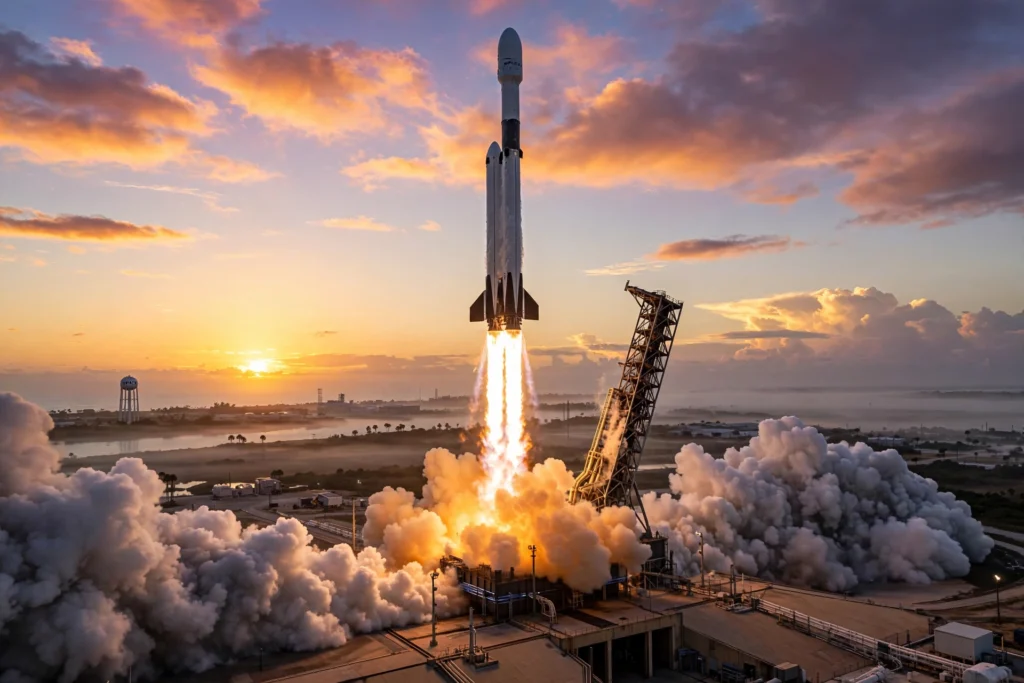
When SpaceX’s Falcon 9 roared off Space Launch Complex 40 at Cape Canaveral at 6:33 a.m. Eastern time on Tuesday, it carried one of the strangest and most important science payloads NASA has ever put on a rocket: lab-grown human brain tissue, hardware to print artificial eye retinas layer by layer, and the very last set of solar arrays the International Space Station will ever receive.
The mission, known as SpaceX CRS-35 — the 35th commercial resupply flight SpaceX has flown to the orbiting laboratory for NASA — is hauling more than 6,300 pounds of cargo. And while rocket launches have become almost routine in 2026, what is inside this particular Dragon capsule reads less like a supply run and more like a glimpse of the future of medicine.
What’s actually inside this Dragon
Forget freeze-dried ice cream. The Cargo Dragon capsule (tail number C211, making its fourth flight after earlier runs on CRS-26, CRS-29 and CRS-33) is packed with hardware that only makes sense in the one place where gravity stops being a problem: orbit.
According to NASA, the headline science cargo includes:
- Hardware to manufacture artificial retinas in microgravity — a device designed to assemble retinal tissue cell by cell, a process gravity disrupts on Earth, with the long-term goal of restoring vision for people with degenerative eye disease.
- Brain organoids — clusters of lab-grown human neural tissue, sometimes called “mini-brains,” that could reveal treatment targets for neurodegenerative diseases such as Alzheimer’s, Parkinson’s and multiple sclerosis.
- 3D heart tissue models — lab-grown cardiac tissue intended to advance large-scale drug testing, letting researchers see how new drug compounds affect heart function before a compound ever reaches a human trial.
- Materials for a new kind of glass — experiments studying how glass forms when gravity isn’t pulling and settling the material as it cools, research that could eventually improve optical components on Earth.
Why grow “mini-brains” in space at all?
It sounds like science fiction, but the logic is refreshingly practical. Brain organoids — three-dimensional clumps of human neural cells grown from stem cells — are among the best models researchers have for studying how diseases attack the brain. The catch is that on Earth, gravity complicates how the cells grow and organize themselves.
Strip gravity out of the equation, and the tissue develops differently — more uniformly, in some ways more faithfully to how real brain tissue behaves. That could give scientists cleaner data on how neurodegeneration works and, crucially, a better testbed for drugs meant to slow or stop it. The brain tissue flying on CRS-35 isn’t a cure for Alzheimer’s or Parkinson’s. It is something arguably more valuable right now: a better place to hunt for one. NASA has designated the brain-organoid research on this flight under investigations including AVATAR-Org1, flying a five-week study of lab-grown “miBrains,” and MINDS, which studies how brain organoids respond to inflammation tied to neurodegeneration — with Alzheimer’s, Parkinson’s and multiple sclerosis named as the disease targets.
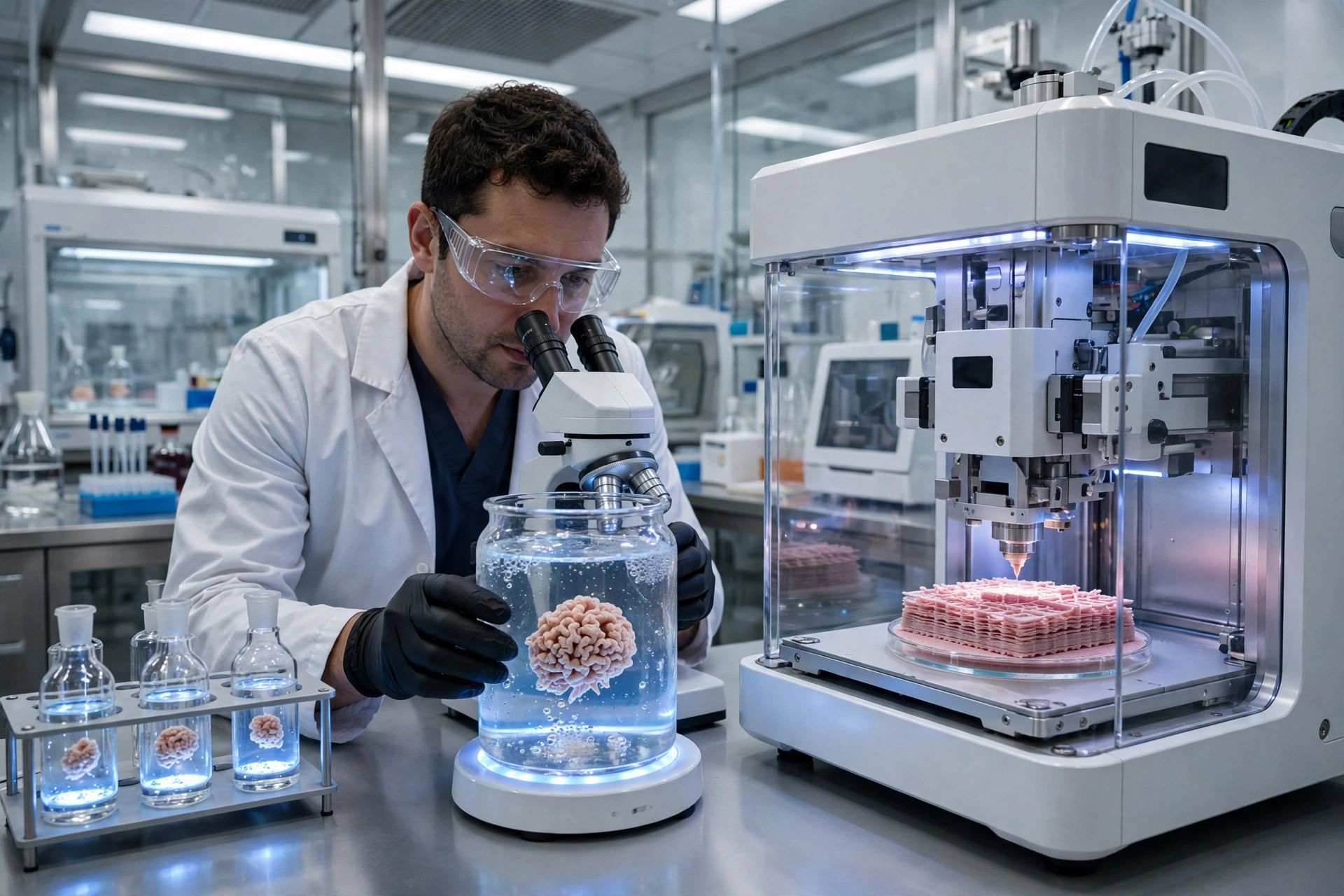
The artificial retina hardware is built on the same idea. NASA’s LambdaVision-1 investigation is testing the manufacturing of artificial eye retinas in microgravity by building them one thin layer at a time — a process gravity constantly sabotages on Earth by making cells settle, clump and deform while they’re being placed. If it works in orbit, the implications for treating blindness are enormous — and build on a wave of vision-restoration breakthroughs already underway on Earth.
The ISS’s final solar panels
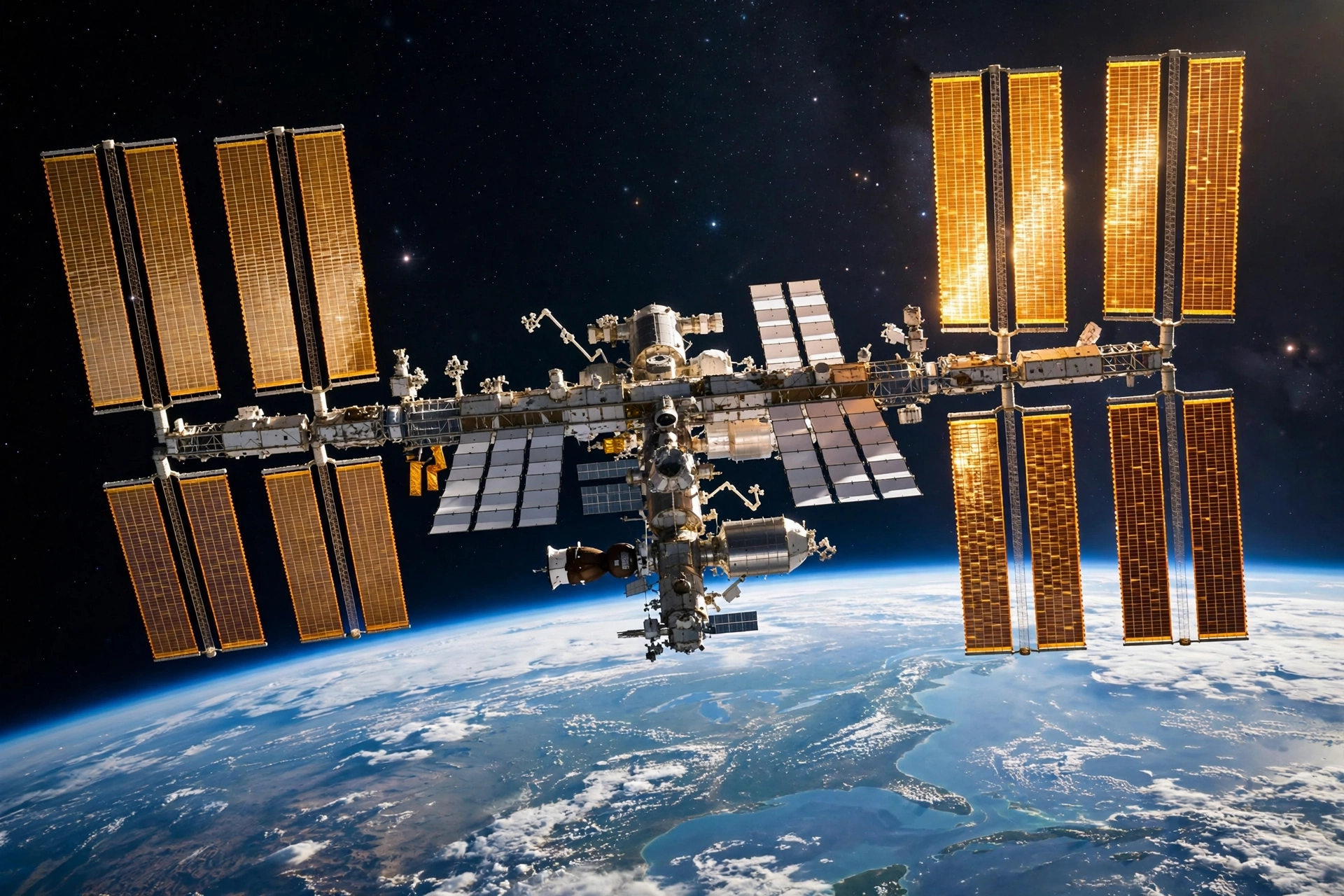
Then there’s the cargo that isn’t science at all: the final pair of ISS Roll-Out Solar Arrays, known as iROSA, tucked into the Dragon’s unpressurized trunk. These will complete the station’s power upgrade, augmenting the aging laboratory’s electricity generation so it can keep running demanding biomedical hardware — including the very retina printer and organoid incubators flying on this same mission — through the final years of the station’s service.
There is something quietly historic about it: the last solar wings the ISS will ever get, delivered on the same flight as the most cutting-edge biology it’s ever hosted.
The rocket itself: an old workhorse on its eighth flight
The Falcon 9 booster that lofted CRS-35, tail number B1096, is no rookie — Tuesday marked its eighth flight, with a career that began on Amazon’s Leo (Kuiper) mission and has included the IMAP observatory, Starlink 6-87, and several national security flights. About eight minutes after liftoff, it came screaming back to Florida for a return-to-launch-site landing at Landing Zone 40, touching down next to the very pad it had just left.
Landings like that still rattle windows across Florida’s Space Coast with twin sonic booms — one more reminder that reusable rockets have quietly turned what used to be disposable hardware into a commuting fleet. It has been a frenetic stretch for SpaceX, from spectrum deals to cargo runs, and the launch cadence shows no sign of slowing.
What happens next: docking Thursday
Dragon is now chasing the space station through a carefully choreographed 52-hour rendezvous. It is expected to dock autonomously at the space-facing port of the station’s Harmony module around 11 a.m. Eastern on Thursday, October 15 — the same port that was just vacated by the Crew Dragon Freedom, which safely brought NASA’s Crew-12 astronauts home with a splashdown on October 8.
Astronauts Anil Menon and Joshua Kutryk will monitor the approach from inside the station. The capsule will stay docked for about a month, unloading its cargo and loading up time-critical research results, before departing in mid-November and splashing down off the coast of California. Riding home with it: experiment samples, a spacesuit — and the failed Canadarm2 joint that astronauts removed during a spacewalk on June 30, coming back for analysis and refurbishment.
FAQ
What is SpaceX CRS-35?
It’s the 35th Commercial Resupply Services mission SpaceX has flown to the International Space Station under its NASA contract — an uncrewed Cargo Dragon flight carrying supplies and science experiments. It launched from Cape Canaveral on October 13, 2026.
What are brain organoids, and why send them to space?
Brain organoids are lab-grown clusters of human neural tissue used to model diseases like Alzheimer’s and Parkinson’s. In microgravity, they grow more uniformly than on Earth, giving researchers cleaner data and a better platform for testing potential drugs.
When will the Dragon capsule dock with the space station?
Docking is scheduled for Thursday, October 15, around 11 a.m. Eastern time, at the Harmony module’s space-facing port. The capsule will remain attached for about a month before returning to Earth in mid-November.
Why are the solar arrays a big deal?
The final pair of iROSA roll-out solar arrays completes the ISS’s power system upgrade, giving the aging station the electrical headroom to run power-hungry science hardware — including the biotech experiments on this very flight — through its remaining years of service.
The bottom line
CRS-35 is what the space station was built for, distilled into a single flight: the most practical, least glamorous, most quietly revolutionary use of orbit — manufacturing things we simply cannot manufacture well on Earth. Mini-brains that could point the way to Alzheimer’s drugs. Retinas printed cell by cell for the blind. Heart tissue that catches dangerous drug side effects before they ever reach a patient.
Rockets launch every week now. This one is carrying the future of medicine in its trunk.