
Trump Ballroom Donors Exposed: Leaked List Shows Apple, Nvidia Each Gave $25 Million of $333M
Here’s a question that would make most Washington fundraisers sweat: what do you get for a $25 million check? We finally have at least part of the answer — and the receipt came from a leak nobody in the White House wanted.
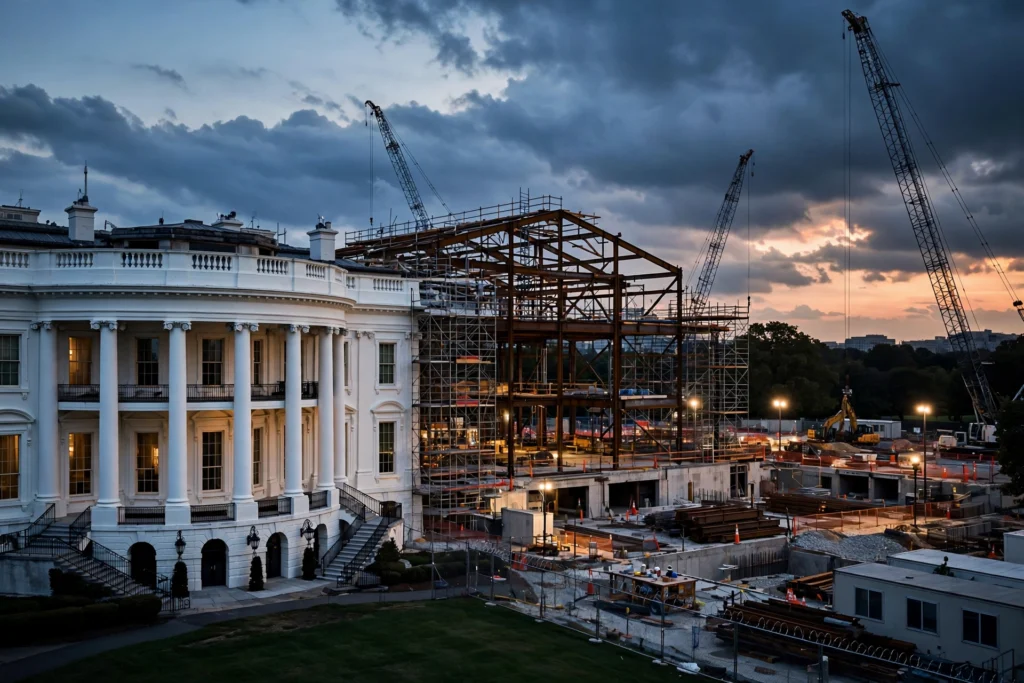
An internal fundraising spreadsheet, obtained and reported by The Washington Post, has pulled the curtain back on the secret money fueling President Donald Trump’s new White House ballroom. The leaked records detail 67 donations of more than $10,000, totaling a staggering $333 million in private commitments. At the very top of the list? Two names you know extremely well: Apple and Nvidia, each committing $25 million — the largest single gifts on record.
And yes, in case you’re wondering — the president’s own name is nowhere on the list. More on that in a moment, because it matters.
The $25 Million Club
According to the Post’s investigation, four donors sit at the very top of the pyramid, each pledging $25 million: Apple, Nvidia, the Adelson Family Foundation, and the household and donor-advised fund of Dish Network co-founder Charles Ergen. Together, those four commitments account for roughly 30 percent of the entire $333 million raised.
Apple’s involvement wasn’t entirely news — the White House had previously confirmed the company as a donor last October without disclosing the amount. But the sheer scale of the check is. This is not a logo-on-a-plaque kind of gift. This is the kind of money that buys naming rights to sports stadiums.
There’s an interesting wrinkle with Nvidia. CEO Jensen Huang had previously told reporters the chip giant was contributing to the ballroom “in a small way,” declining to name a figure. The leaked documents suggest something very different: $25 million, with a request that the donation be kept anonymous. Nvidia pushed back on the characterization, telling the Post: “As an American company, our support for the United States is paramount, and independent of any business interests.”
Tech Money Runs Deep
The spreadsheet reads like a who’s who of Silicon Valley and corporate America. Beyond the top tier, the tech-sector commitments reported include:
- Google, via the John P. Coale Trust: $22 million — reportedly drawn from settlement funds related to Trump’s lawsuit against YouTube
- Microsoft: $10 million
- Palantir: $10 million
- Amazon: $5 million
- Meta: $5 million
- Cisco, Coinbase, Ripple, ServiceNow, and T-Mobile: $5 million each
- HP and Micron: $2.5 million each
- Salesforce: $2 million, plus another $1 million from CEO Marc Benioff’s donor-advised fund
Cryptocurrency businesses and investors, meanwhile, committed more than $18 million collectively, according to additional reporting on the leak.

The Timing Problem
Now, let’s be fair and precise about something the Post’s own reporting stresses: the investigation does not establish a direct link between these donations and favorable government actions. Donors who responded denied any connection. But the documents do show something hard to ignore — the vast majority of the money came from companies and wealthy individuals with active interests before the federal government.
Consider the timelines. Nvidia’s $25 million commitment came nearly three months after the company struck a deal with the Trump administration to sell advanced microchips to China. Ergen’s EchoStar committed its $25 million — split across two installments — around the same time the FCC and Justice Department approved its license sale to AT&T, following a dropped FCC investigation. And the daughter of banker Julio Herrera Velutini pledged $2.5 million roughly a month after his bribery charges were reduced; Trump later pardoned him in January.
Is any of this proof of a quid pro quo? No. Is it the kind of pattern that makes ethics watchdogs lose sleep? Absolutely. When the same companies writing eight-figure checks are also the ones waiting on federal regulators, the questions ask themselves.
Trump’s Missing Name — and the Anonymity Machine
Here’s the part that raised the most eyebrows. Trump himself does not appear on the donor list — despite having said, days after demolition began on the old East Wing: “It’s being paid for a hundred percent by me and some friends of mine.” The spreadsheet contains the source, date, and amount of all 67 donations above $10,000 recorded through late last month. His name isn’t among them.
Then there’s the secrecy infrastructure. At least $77 million of the $333 million came from donors who requested anonymity, per the additional records. The donations flow through a nonprofit into a White House account that the president directly controls — under an arrangement that requires donor anonymity. The Post is publishing the names of the 57 donors listed as having committed $100,000 or more, while at least nine wanted to remain unnamed.
That’s a remarkable setup when you think about it: a sitting president, a nonprofit pipeline, tens of millions in anonymous corporate cash, and a public that only learned the amounts because somebody leaked a spreadsheet. It also explains why the White House has been tight-lipped from the start — it publicly identified 37 donors last October but refused to reveal what any of them gave.
The White House Pushes Back
White House spokesman Davis Ingle dismissed the ethical concerns outright, accusing critics of manufacturing fake conflicts of interest. “The same critics who are alleging fake conflicts of interests, would also complain if American taxpayers were footing the bill for these long-overdue renovations,” Ingle told the Post. “The donors for the White House ballroom project represent a wide array of great American companies and generous individuals, all of whom are contributing to make the People’s House better for generations to come.”
The new White House press secretary now inherits the job of defending a project whose estimated cost has ballooned to a projected $600 million — roughly double the private donations raised so far. The leak landed in the middle of a busy White House news cycle, from his proposed Russian diesel deal with Volodymyr Zelensky to his claim that the Iran war would end soon — but this one is sticking, because the numbers are on paper and anyone can read them.
The White House has also vowed to “relentlessly pursue those responsible for this cowardly leak” — which, if anything, confirms just how badly it wanted these figures to stay hidden.
Frequently Asked Questions
Who are the biggest donors to Trump’s White House ballroom?
Apple, Nvidia, the Adelson Family Foundation, and Dish Network co-founder Charles Ergen each committed $25 million — the largest individual amounts on the leaked donor list.
How much money was raised in total for the ballroom?
The internal spreadsheet obtained by The Washington Post details 67 donations above $10,000 totaling $333 million in private commitments, including at least $77 million from donors who requested anonymity.
Did Donald Trump donate to his own ballroom project?
His name does not appear on the leaked donor list, despite his earlier claim that the project was “being paid for a hundred percent by me and some friends of mine.” The Post noted the absence.
Is there proof the donations bought government favors?
No. The Washington Post explicitly stated its reporting does not establish a direct connection between the donations and favorable administration actions, and donors who responded denied any link — though the timing of several gifts has raised ethics concerns.
The Bottom Line
Here’s what we know for certain: $333 million in private money, $77 million of it anonymous, flowed through a nonprofit into an account the president controls — and the public only found out because of a leak. Apple and Nvidia each wrote the biggest checks in the room. The president, who said he’d pay for it himself, doesn’t appear on the list at all.
Maybe the donations are exactly what the White House says they are — patriotic contributions to a “long-overdue renovation” of the People’s House. Or maybe they’re the price of admission to a president’s good graces. Either way, the era of the secret ballroom fund is over. The checks have been counted, the names are public, and from here on out, every policy decision touching these donors will be read against a $25 million backdrop.