
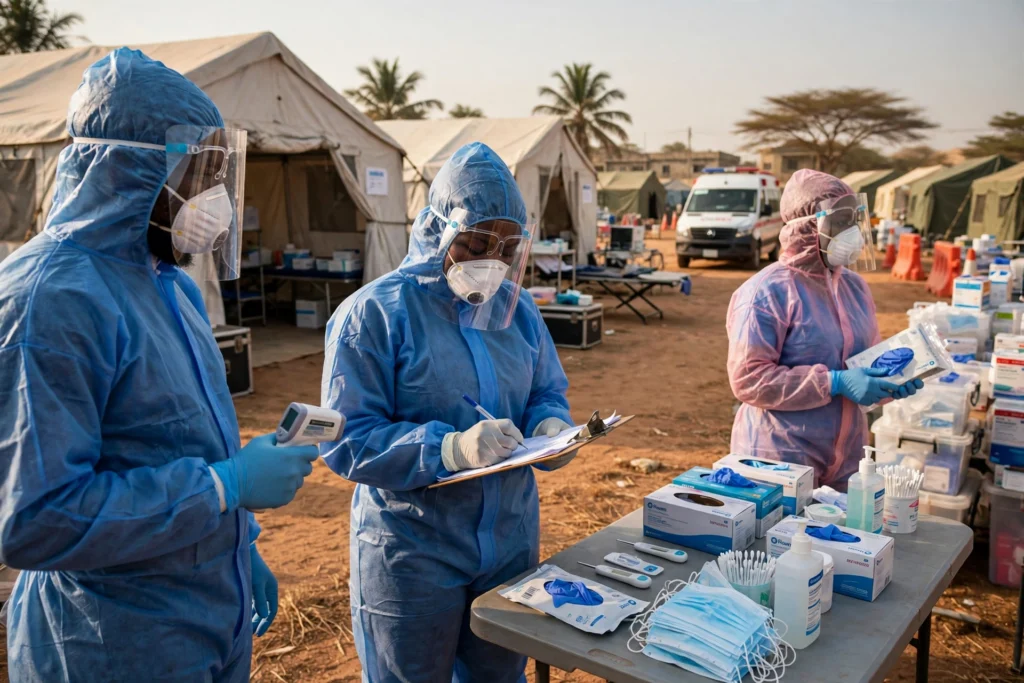
Nigeria Reports First Ebola Case in Over a Decade as Deadly Outbreak Reaches West Africa
She walked into a private hospital in Abuja with what looked like malaria. Fever, fatigue, the kind of symptoms Nigerian doctors see every single day. Eight days later, test results confirmed what everyone hoped it wasn’t: Ebola.
Nigeria has reported its first Ebola case in more than a decade — and the details of how it arrived should concern anyone watching the fastest-spreading Ebola outbreak ever recorded. A Ugandan woman living in the Nigerian capital flew into the country on October 5, felt ill two days later, and was finally tested for Ebola on October 19, according to Reuters. The positive result was confirmed on Tuesday.
She is now in isolation and receiving treatment. Forty-four people she had contact with are being traced — most of them healthcare workers. And health officials across the continent are asking the same urgent question: is this how a regional outbreak becomes a pan-African one?
How the Case Was Discovered
The woman — a Ugandan national who lives in Abuja — arrived in Nigeria via Addis Ababa on October 5 after travelling to Uganda, according to Odianosen Ehiakhamen, assistant director of the Nigeria Centre for Disease Control and Prevention, speaking to Arise TV. Uganda’s health ministry says she had also travelled to the Democratic Republic of Congo, which is the epicenter of the current outbreak.
Two days after landing, she started feeling unwell. On October 11, she went to a private hospital in Abuja with malaria-like symptoms. Her condition did not improve, and once health officials learned she had recently travelled to Uganda — one of the countries caught up in the current outbreak — they tested her for Ebola on October 19. The result came back positive the following day.
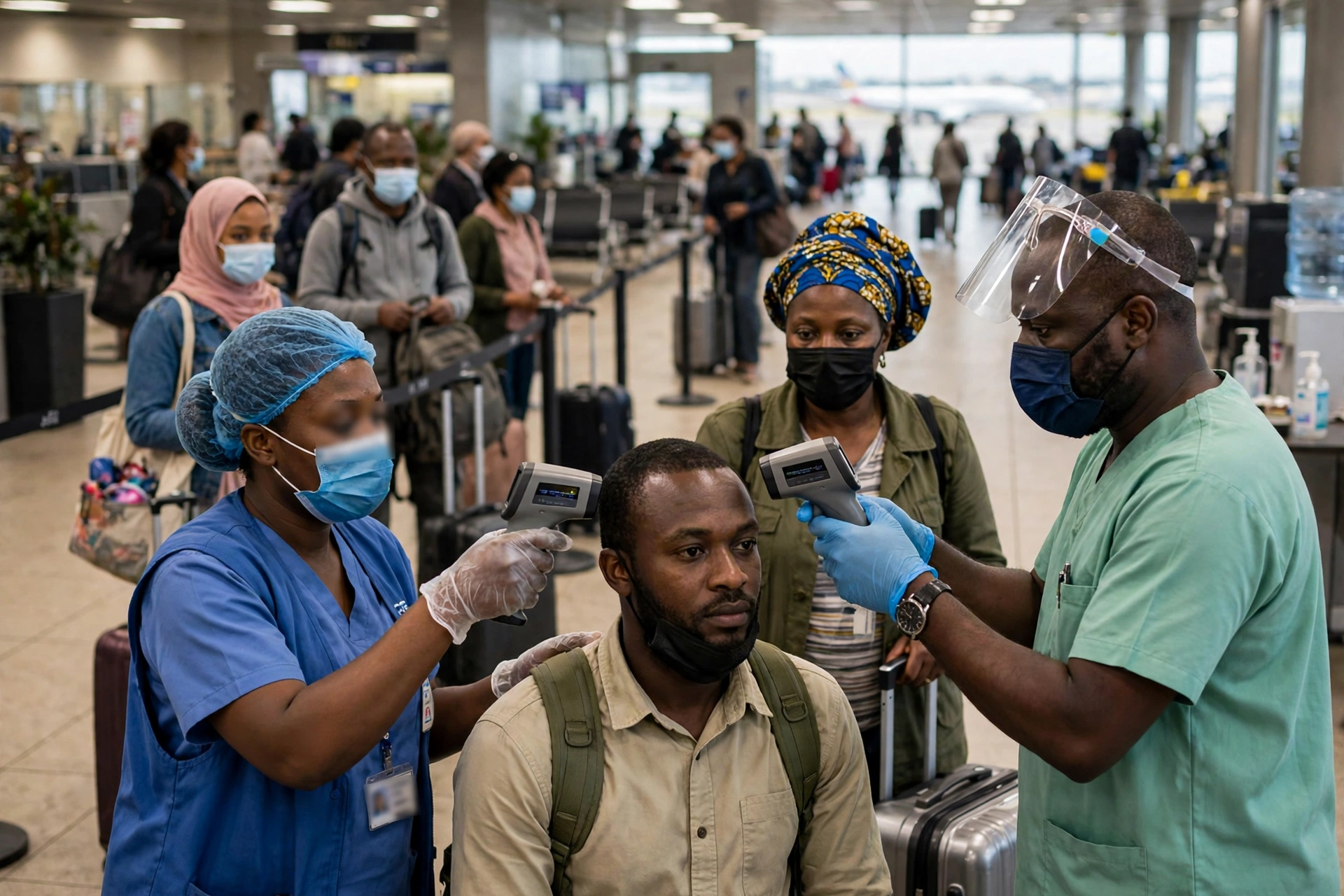
Health authorities are now tracing the passengers who shared her Ethiopian Airlines flights from Uganda, though officials say they do not believe she was showing symptoms while flying. Most of the 44 contacts identified so far are healthcare workers and the patient’s husband, a Swiss national who lives with her in Abuja.
Nigerian Health Minister Muhammad Ali Pate told public broadcaster NTA that the woman was in isolation and receiving quality medical care. He added that Nigeria had successfully contained Ebola in 2014 and has the systems in place to respond this time too.
A Diplomatic Wrinkle: Where Did She Catch It?
Uganda’s health ministry pushed back on any suggestion that the infection came from its soil, saying in a statement that “travel through Uganda does not establish that infection occurred here.” The ministry added that Uganda currently has “no confirmed active Ebola cases” — though the woman’s travel history to the Congo, where the epidemic is raging, means the precise chain of transmission is still being traced.
The Bigger Picture: A Record-Breaking Outbreak
The current epidemic is unlike anything the world has seen from this species of Ebola. The outbreak is caused by Bundibugyo ebolavirus — a species for which there is no approved vaccine and no specific treatment. It was first declared in the Democratic Republic of Congo in May 2026 and has since become the second-largest Ebola outbreak in history and, by health officials’ accounts, the fastest-spreading on record.
The numbers are staggering. As of mid-October, the outbreak had produced more than 9,100 confirmed cases and over 4,400 deaths — a case fatality rate of roughly 48 percent, meaning nearly half of those infected have died. Transmission has been recorded across 65 health zones in seven Congolese provinces, with no sustained downward trend. The World Health Organization has classified it as a Public Health Emergency of International Concern since May 16.
Until this week, the outbreak’s international footprint was limited: cases in Uganda and Kenya, plus one imported case treated in France. Nigeria’s case changes the map. The country of more than 220 million people is the fourth African country affected — and by far the most populous. Crucially, it marks the outbreak’s arrival in West Africa, thousands of kilometers from the epicenter in eastern Congo.
“We Now Have a Pan-African Event”
That east-to-west leap is what has alarmed health leaders most. “Ebola is now affecting three regions of Africa. The situation demands urgent action and political leadership at the highest level,” Africa CDC Director General Jean Kaseya said on X on Wednesday.
Nigerian physician Ayoade Alakija, who co-chairs a G7 committee for investment in global health, put it more bluntly: “My concern, now that this has spread from East Africa to West Africa, is that we now have a pan-African event, as opposed to a few at-risk countries.”
Health officials also warn that misinformation and funding shortfalls could fuel further spread within the region and across borders. With treatment centers in the hardest-hit Congolese provinces already near capacity and armed conflict complicating surveillance, containing the outbreak at its source remains an enormous challenge.

Why Nigeria’s Track Record Matters
If any country in West Africa is equipped for this moment, it is Nigeria. The last time Ebola reached its shores — in 2014, during the great West African epidemic that killed more than 11,000 people — Nigeria pulled off one of the great underappreciated public-health successes in modern history. Aggressive contact tracing, rapid isolation, and clear public communication held that outbreak to just 20 cases and 8 deaths in a country of 200 million.
Outbreak responders around the world still study that playbook. The same machinery — the NCDC, state-level rapid response teams, and the emergency operations infrastructure — is what has now swung into action in Abuja. As the country’s health minister put it, the systems are in place.
Still, this time the virus is different. The Bundibugyo species shows less of the dramatic hemorrhaging associated with the more familiar Zaire strain, which can cause patients to stay home rather than seek hospital care — one reason experts believe it has spread so quickly. And a 2014-style success story depended on finding every contact fast. With 44 contacts already being traced in Abuja — most of them healthcare workers — the next few days of testing will tell the story of whether Nigeria has caught this one in time.
The same rapid-response principles have defined this year’s other outbreaks as well — from the measles surge that infected 1,136 people in Pennsylvania to Bangladesh’s warning to nations facing the world’s worst measles outbreak. Speed of detection and contact tracing remain the difference between a contained scare and a runaway epidemic.
Frequently Asked Questions
Is there a vaccine for this Ebola outbreak?
Not yet. The current outbreak is caused by Bundibugyo ebolavirus, for which no vaccine or specific treatment has been approved. WHO notes that the Ervebo vaccine, developed for the better-known Zaire strain, is being used only within research studies, and trials of candidate treatments are underway. Care for patients relies on supportive treatment — rehydration, managing complications, and treating secondary infections.
How does Ebola spread, and should I worry about travel?
Ebola spreads through direct contact with the blood or body fluids of an infected person, not through the air. The WHO advises against any general travel or trade restrictions related to this outbreak. Standard precautions — avoiding contact with people who are visibly ill, practicing good hygiene, and heeding local health authorities’ guidance — remain the sensible approach.
What are the early symptoms of Ebola?
Early symptoms are frustratingly generic: fever, fatigue, muscle pain, headache, and sore throat — which is exactly why the Abuja patient was first treated for malaria. Later symptoms can include vomiting, diarrhea, rash, and impaired kidney and liver function. Anyone who develops these symptoms within 21 days of travelling to an affected area should seek medical care and mention their travel history immediately.
How is Nigeria containing this case?
The patient is in isolation and receiving medical care. Health authorities have traced 44 contacts — mostly healthcare workers and her husband — and are tracing fellow passengers from her Ethiopian Airlines flights. The country is leaning on the same contact-tracing playbook that successfully contained its 2014 outbreak.
The Bottom Line
One case in a country of 220 million people is not a catastrophe — but it is a warning. The fastest-spreading Ebola outbreak on record has just crossed from East Africa to West Africa, landing in one of the world’s most densely populated countries. The next two weeks of contact tracing in Abuja will determine whether this becomes Nigeria’s second public-health triumph or the moment the outbreak truly went continental. Given what we know about the Bundibugyo strain — no vaccine, roughly half of those infected dying — the world cannot afford for this one to slip through the net.