

Freed at Last: Russia Releases American Teacher Stephen Hubbard After 4 Years as Putin Meets Trump’s Envoy
Imagine spending your seventies — the years that should be slow mornings and grandchildren — locked in a Russian prison, thousands of miles from home, for a crime you say you never committed. For Stephen Hubbard, that nightmare lasted more than four years. On Wednesday, it finally ended.
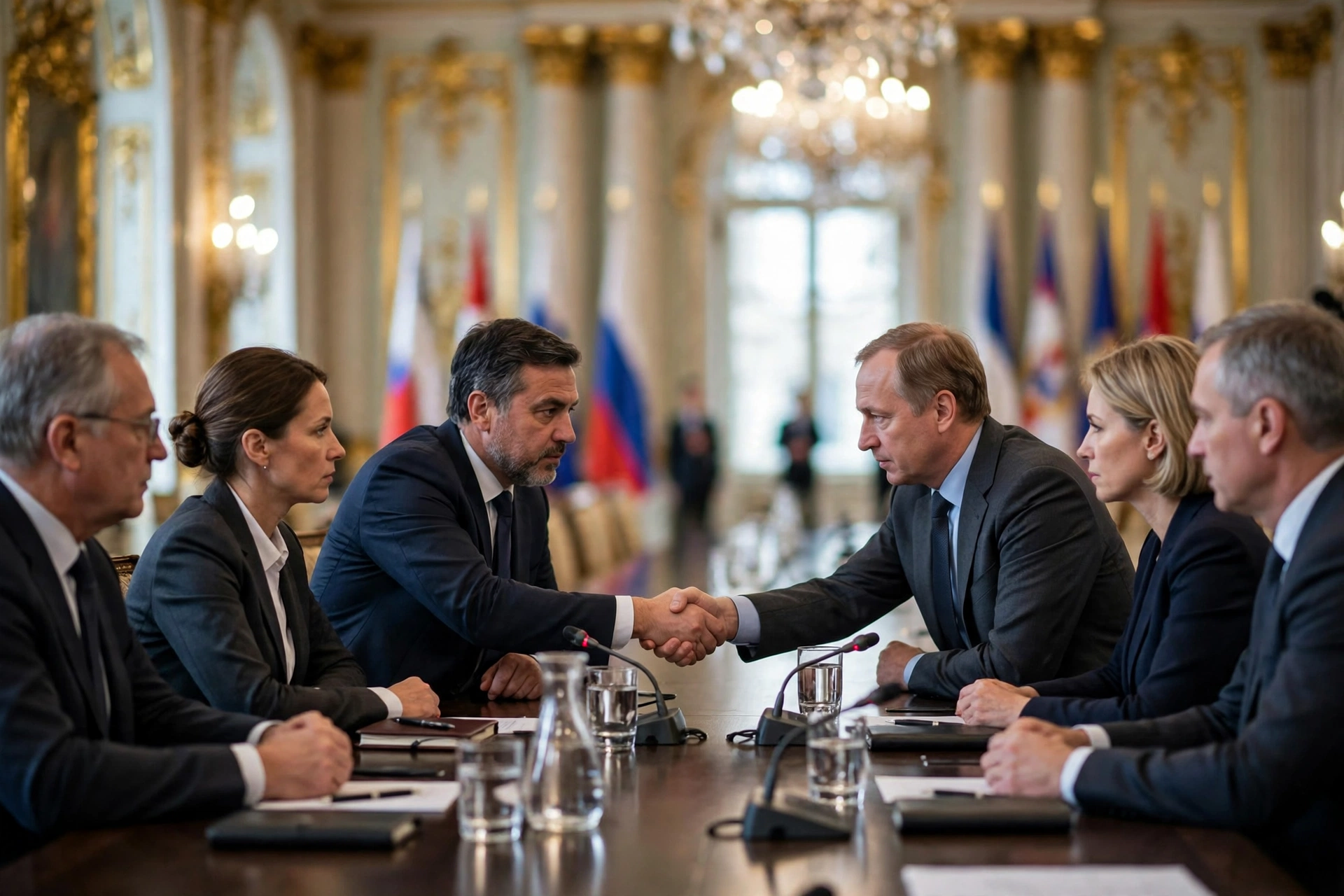
Russia freed the 74-year-old retired American schoolteacher from custody, and the moment it happened could not have been more dramatic: President Vladimir Putin announced the release face-to-face with US special envoy Steve Witkoff at a meeting in St. Petersburg, telling him that Stephen Hubbard was already waiting at the city’s Pulkovo airport, ready to come home.
“The president sends his thanks, our whole nation sends their thanks, because of Stephen Hubbard,” Witkoff told Putin in the televised meeting, as reported by Reuters. “Because of you he’s going home to his family.”
How the release unfolded
Putin made the announcement at the start of what is being described as his ninth round of talks with Witkoff, this time focused on negotiating an end to the war in Ukraine. He gave no further details about how the release was arranged — just that the decision had been made and the American was at the airport.
Kremlin spokesman Dmitry Peskov later filled in some of the picture: Putin had freed Hubbard at the request of US President Donald Trump, and had taken into account the American’s poor health. A video shared with Reuters showed Witkoff and Kremlin envoy Kirill Dmitriev meeting Hubbard in an undisclosed location. The former schoolteacher, wearing a dark fleece and clean-shaven, shook Witkoff’s hand and said simply: “Thank you very much for all your efforts.”
Trump confirmed the release in a post on Truth Social, saying the United States had not been required to give anything in return — “an unprecedented situation for Russia,” he wrote, adding that “there was no swap necessary for this release.” He also claimed the release should have happened long ago, criticizing the Biden administration for getting “nowhere in its negotiations with the Kremlin.”
According to the White House, Trump had personally asked Putin to free Hubbard in a phone call last week. CBS News reported that the release also followed a key move by Washington: the White House stopped new, severe Russia sanctions from taking effect late last week — a decision that may have helped unlock the deal, coming just after Trump delayed tough new Russia sanctions by 60 days.
Who is Stephen Hubbard?
Hubbard’s story is, in many ways, the story of an ordinary American who wandered far from home and got swallowed by history.
He grew up in Big Rapids, Michigan. Military records cited by The New York Times show he served in the US Air Force and the National Guard. He earned a master’s degree in English and then spent 25 years teaching English in Japan. After that came Cyprus — and in 2014, he settled in Izyum, a city in eastern Ukraine.
When Russian forces swept into Izyum in the opening weeks of the full-scale invasion in 2022, Hubbard was detained — in April of that year. Russian prosecutors alleged he had been manning a Ukrainian military checkpoint and had signed a contract with a Ukrainian territorial defense unit worth about $1,000 a month, receiving training, weapons and ammunition.
After a largely closed trial, a Moscow court convicted him in October 2024 of “participating as a mercenary in the armed conflict” and sentenced him to six years and 10 months in prison. The New York Times reported he had been moved through at least five Russian detention centers before his trial, and his legal team only learned in April 2025 that he was being held in the Mordovia region, east of Moscow.
His family says the charges were fiction
Here’s where the official story falls apart — at least according to the people who know him best.
His US-based lawyer, Martin De Luca, has said Hubbard told him the charges were false and that he was never in any combat or military unit. His sister, Patricia Hubbard Fox, rejected the accusations outright in a 2024 interview with Reuters, calling her brother “so non-military” and pointing to his advanced age. Russian state media reported that he pleaded guilty, but his sister and a relative questioned whether that confession was genuine.
In January 2025, the US State Department formally designated Hubbard as wrongfully detained — a step that allowed Washington to pursue negotiations for his release. The department said Russia had refused to grant US officials consular access. As of Wednesday, Hubbard was the only American in Russia carrying that designation.
There is one strange wrinkle in the story, though. His sister has also said her brother had been sympathetic to Russia, and pointed to a video from May 2022 in which Hubbard claimed to have seen Ukrainian forces shelling Izyum and voiced understanding for Putin’s decision to invade. It remains unclear whether he was coerced into making those remarks — a reminder of how little the outside world truly knows about what happened to him in those first weeks of the war.
Why this release matters beyond one man’s freedom
Let’s be honest: prisoner releases between Washington and Moscow are never just about one person. They are signals — carefully timed messages about where the relationship between two nuclear-armed rivals stands.
This release unfolded against a dense backdrop of diplomacy. Before arriving in Russia, Witkoff had participated in a summit in Norway with Ukrainian President Volodymyr Zelensky, Finnish President Alexander Stubb and Norwegian Prime Minister Jonas Gahr Støre, aimed at addressing strains in US-Ukrainian relations. The talks with Putin were the ninth round of direct engagement between the two — all centered on ending the war in Ukraine, even as Russian ballistic missiles continue to strike Kyiv and US intelligence warns of a Putin-ordered sabotage campaign targeting NATO.
De Luca, Hubbard’s lawyer, called the release “a dividend earned along the hard road to peace” — a phrase that captures exactly how both sides seem to be framing it: not as a concession, but as proof that talking works.
And there’s a practical side to celebrate too. With Hubbard’s release, there is no longer a single American formally designated as wrongfully detained in Russia — a milestone the Trump administration will surely tout as evidence its direct-engagement approach delivers results.
Questions people are asking
Who is Stephen Hubbard?
Stephen Hubbard is a 74-year-old retired American English teacher from Big Rapids, Michigan. He served in the US Air Force and National Guard, taught English in Japan for 25 years, lived in Cyprus, and moved to Izyum in eastern Ukraine in 2014. He was detained by Russian forces in April 2022 and held for more than four years.
Why was Stephen Hubbard in a Russian prison?
A Moscow court convicted him in October 2024 of serving as a mercenary for Ukraine’s territorial defense forces, sentencing him to six years and 10 months after a closed trial. Prosecutors claimed he fought under a contract worth $1,000 a month. His family and lawyer insist the charges were false, and the US State Department designated him wrongfully detained in January 2025.
How did Stephen Hubbard get released?
President Donald Trump personally asked Vladimir Putin to free Hubbard in a phone call last week, and Putin announced the release during a meeting with US envoy Steve Witkoff in St. Petersburg on October 21, 2026. Trump said the US gave nothing in return — no prisoner swap was involved. Kremlin spokesman Dmitry Peskov said Hubbard’s poor health was also taken into account.
Is Stephen Hubbard back in the United States?
Hubbard was taken to St. Petersburg’s Pulkovo airport, where he met Witkoff and flew back to the United States with the envoy. Trump wrote on Truth Social: “Welcome home, Stephen, it’s great to have you back.”
The bottom line
After more than four years behind bars in a foreign prison, a 74-year-old teacher from Michigan is going home to his family. Whether you see this as a triumph of diplomacy, a well-timed goodwill gesture, or a bit of both — it is, at its heart, a human story with a happy ending. And in a war that has produced so few of those, that alone is worth pausing for.