
US Intel: Putin Directly Ordered a Sabotage Campaign Against NATO — a German Airport Was the Opening Shot
What if the next big attack on Europe didn’t come from tanks or missiles — but from a handful of explosive drones at a cargo airport in the middle of the night?
According to US intelligence assessments reported by The Wall Street Journal, that scenario almost happened this summer — and it wasn’t a rogue operation. Vladimir Putin personally ordered a stepped-up sabotage campaign against NATO countries, the Journal reports, marking one of the most aggressive escalations of Russia’s shadow war with Europe since the Ukraine conflict began.
The failed drone attack on Leipzig-Halle Airport in early August was, according to the American findings, one of the campaign’s opening shots. And Germany came terrifyingly close to treating it as an act of war.
The Leipzig attack: how close Europe came to Article 5
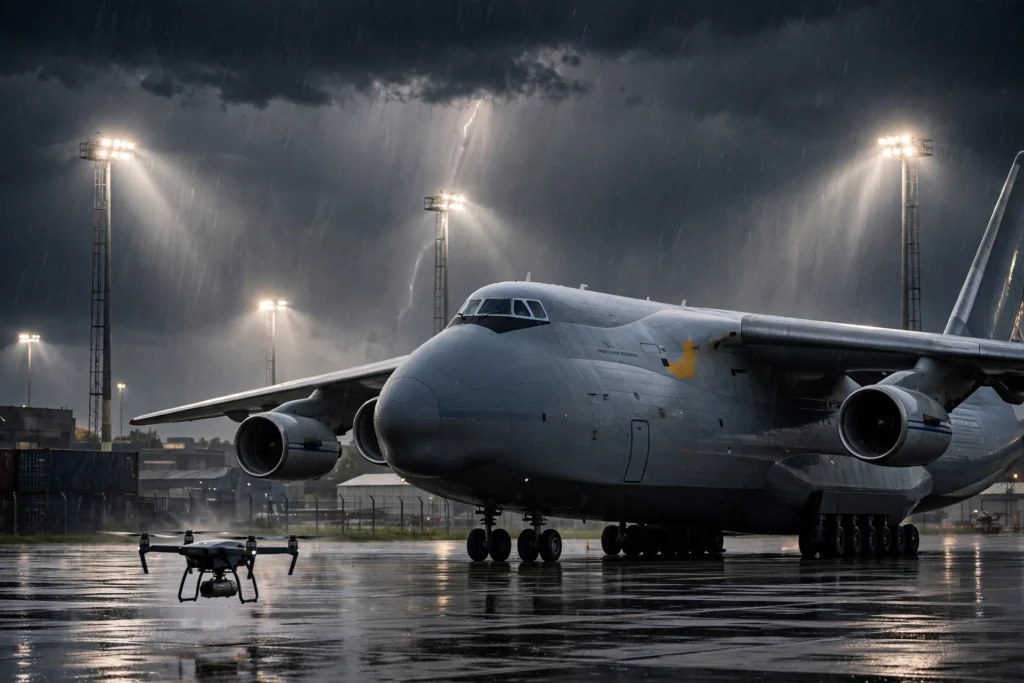
In early August, explosive-packed drones targeted a massive Antonov freighter parked at Leipzig-Halle Airport in eastern Germany — an aircraft used to carry military assistance to Ukraine. German officials say the drones were piloted by agents of Russian military intelligence.
One drone struck the Antonov but failed to explode. A second collided with another plane. A third detonated near the airport perimeter. Investigators later concluded that a successful assault would have caused mayhem — and almost certainly mass casualties — at one of Europe’s most important air-cargo hubs.
Here’s the part that should worry everyone: aides to German Chancellor Friedrich Merz say that had the attack caused heavy casualties, Berlin would have considered invoking NATO’s Article 5 collective-defence clause — the provision treating an attack on one member as an attack on all, invoked only once before, after the September 11 attacks.
Think about that for a second. Europe was one malfunctioning drone away from the biggest NATO crisis in history.
From the Kremlin’s desk: Putin’s alleged order
European officials briefed on the American intelligence findings say the failed Leipzig operation was part of a broader campaign of sabotage and covert action against NATO countries ordered directly by Putin himself.
The motive, according to the reporting: Moscow is frustrated that neither the fighting on the battlefield nor the talks with Washington are pushing Kyiv to accept Russia’s terms for ending the war. With the front lines grinding on, the Kremlin appears to have decided to bring the pressure to Europe’s doorstep instead.
This comes even as diplomatic tracks keep moving in public. Just weeks ago, Putin proposed a trilateral summit with Trump and Xi to end the Ukraine war — a reminder that Moscow is simultaneously negotiating and, allegedly, escalating.
Western intelligence traced the Leipzig operation to a unit of Russia’s military intelligence, with logistics reportedly run through Serbia, where seven suspects have since been arrested. And in a chilling detail, a Kremlin back-channel contact warned Berlin after the attack that it would not be the last.

A summer of “grey-zone” attacks across Europe
The Leipzig incident wasn’t isolated. Since August, officials report a sharp rise in what security experts call “grey-zone” assaults — attacks designed to stay just below the threshold of open warfare:
- August arson attacks on drone manufacturers in Estonia and Poland, facilities tied to Ukraine’s war effort.
- A thwarted arson plot on a Ukrainian drone factory in Slovakia.
- Starlink stations sabotaged in Poland, Lithuania and Bulgaria — cutting at the communications backbone Ukraine’s military depends on.
- Drones striking commercial ships in the Black Sea near Bulgarian and Romanian waters, threatening shipping lanes NATO members rely on.
Each attack alone looks like an incident. Taken together, they look like a strategy — one that lets Moscow inflict real damage while maintaining just enough deniability to avoid a full NATO response.
Merz: “Russia is waging a war on Europe”
The rhetoric from European capitals has hardened. Chancellor Merz has declared that Russia is waging a war on Europe — not just on Ukraine. It’s the strongest language from a German leader since the conflict began, and it signals a fundamental shift in how Berlin views the threat.
Europe’s anxiety isn’t only about Russia, though. There’s a second shadow hanging over all of this: Washington’s reliability. President Trump recently struck a deal allowing Russia to supply diesel to global markets — a move Zelensky called a “gift to Putin” — and earlier announced an energy ceasefire between Russia and Ukraine that caught Kyiv by surprise. European officials are asking an uncomfortable question: if a sabotage campaign crosses the line into open escalation, will Washington stand firmly behind Article 5?
NATO’s military leadership, for its part, is signaling readiness. Supreme Allied Commander Europe Gen. Alexus Grynkewich recently unveiled NATO’s “theory of victory” at the Warsaw Security Forum — rarely has the alliance spelled out its warfighting doctrine so publicly — while more than 20,000 personnel wargamed a massive eastern-flank defence scenario.

Why this matters more than the headlines suggest
Here’s what makes this story bigger than a single WSJ report. Sabotage sits in the hardest possible space for an alliance to handle. A drone attack on an airport isn’t a tank crossing a border — it’s deniable, ambiguous, and aimed at exactly the grey area where NATO’s response thresholds are weakest.
Former US ambassador to NATO Julianne Smith put it bluntly in earlier reporting: because Russia has “not been adequately deterred and Moscow has not paid a price, Putin is interpreting that as a signal to keep going.” The new intelligence suggests he’s not just interpreting the signal — he’s acting on it, on orders signed at the top.
The Kremlin, predictably, has not publicly confirmed any of this. And it’s worth saying clearly: what we know comes from US intelligence assessments and European officials briefed on them, reported by the Journal. Moscow denies involvement in such campaigns. But the arrests in Serbia, the forensic trail to Russian military intelligence, and the pattern of attacks are hard to wave away.
FAQ: What we know — and what’s still unclear
Did Putin really order the sabotage campaign?
According to US intelligence assessments reported by The Wall Street Journal, yes — European officials briefed on the findings say the campaign was ordered directly by Putin. This is an intelligence assessment, not a courtroom verdict; Moscow has not acknowledged it.
What was the Leipzig airport attack?
In early August 2026, explosive-laden drones targeted an Antonov freighter carrying military aid to Ukraine at Leipzig-Halle Airport in Germany. One drone struck but failed to explode; the attack was foiled. Western intelligence links it to a unit of Russian military intelligence, with logistics run through Serbia.
Could NATO really invoke Article 5 over sabotage?
Aides to Chancellor Merz say Germany would have considered it had the Leipzig attack caused heavy casualties. Article 5 has only been invoked once (after 9/11). The threshold question — what counts as an “attack” in the grey zone — is precisely what makes this campaign so dangerous.
What other attacks are linked to the campaign?
Since August: arson attacks on drone manufacturers in Estonia and Poland, a thwarted arson plot in Slovakia, sabotage of Starlink stations in three countries, and drone strikes on commercial ships in the Black Sea near NATO waters.
The bottom line
Europe’s war with Russia is no longer confined to Ukraine. It’s at a cargo airport in Leipzig, a drone factory in Estonia, a satellite dish in Lithuania. The intelligence says the order came from the very top in Moscow — and the warning delivered through back channels says there is more to come.
The question now isn’t whether Europe believes the threat. It’s whether the alliance can respond to a war that refuses to declare itself. One misfiring drone this summer kept the continent from finding out the hard way. The next one might not miss.