
Rubio Lands in India as US Trade Deal Nears Finish Line: Mumbai Talks, Jamnagar Trip, and the Russian Oil Question
Have you ever watched two old friends argue over money? It is awkward, it is tense — and underneath it all, they know they need each other. That is pretty much where India and the United States are right now. And this week, Secretary of State Marco Rubio walked straight into the middle of it.
The Rubio India visit kicked off on Tuesday in Mumbai, and if Washington’s messaging is to be believed, the timing is anything but random. The US says a trade deal with India is nearly done. President Donald Trump has just paused steep tariff threats over India’s purchases of Russian oil. And Rubio — on only his second visit to India this year — is carrying the message in person.
So what is actually happening behind the handshakes and wreath-laying ceremonies? Let’s break it down.
A Visit That Skips the Capital — Deliberately
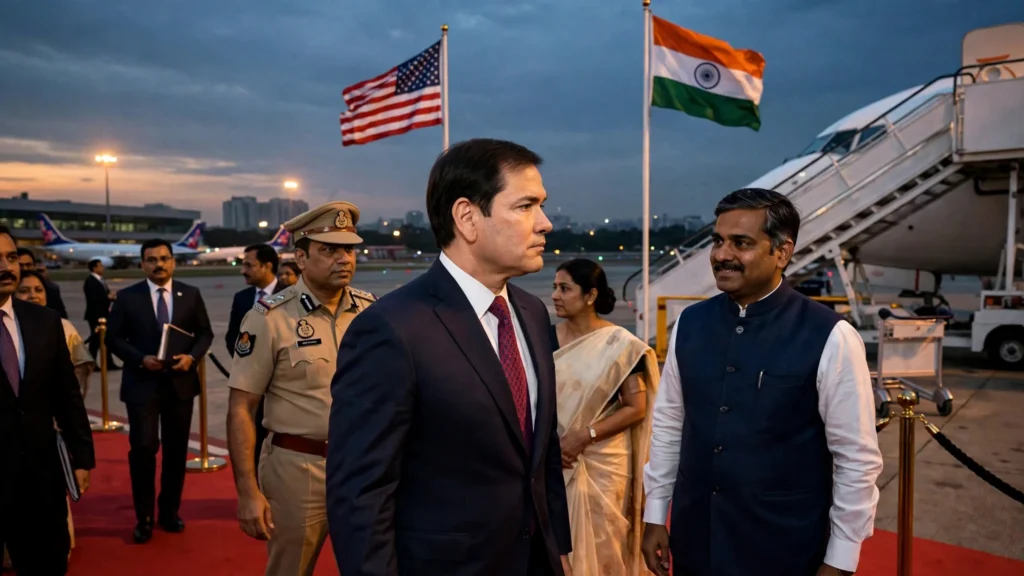
Rubio landed at Mumbai’s Chhatrapati Shivaji Maharaj International Airport at 2:15 pm IST on Tuesday, October 20, fresh from Samarkand, Uzbekistan, where he had been attending Central Asia talks. Joining him: US Ambassador to India Sergio Gor and Rubio’s wife, Jeanette Dousdebes Rubio.
Here is the curious part: there is no Delhi on this itinerary. No prime ministerial handshake at 7 Lok Kalyan Marg, no Raisina Hill photo-op. Instead, Rubio headed straight into a tightly choreographed Mumbai schedule that blended symbolism with substance.
His first stop was a solemn one. At 3:40 pm, Rubio laid a wreath at the 26/11 memorial inside the historic Taj Mahal Palace Hotel, paying tribute to the victims of the November 2008 Mumbai terror attacks — 166 killed, including six Americans. The gesture was designed to signal American counter-terrorism solidarity with India, particularly resonant as New Delhi watches Washington’s recent outreach to Pakistan’s military leadership with unease.
Immediately after, at 3:50 pm, came the business of the day: bilateral talks with External Affairs Minister S. Jaishankar at the same venue. India’s Ministry of External Affairs said the agenda spans energy, trade and investment, defence, and new technologies. Later that evening, Rubio joined Jaishankar as guest of honour at the “Freedom 250” reception at the Jio World Convention Centre, marking 250 years of American independence.
He also visited the Gateway of India with Maharashtra Chief Minister Devendra Fadnavis ahead of their formal meeting.
The Trade Deal: “Very Close” — Again?
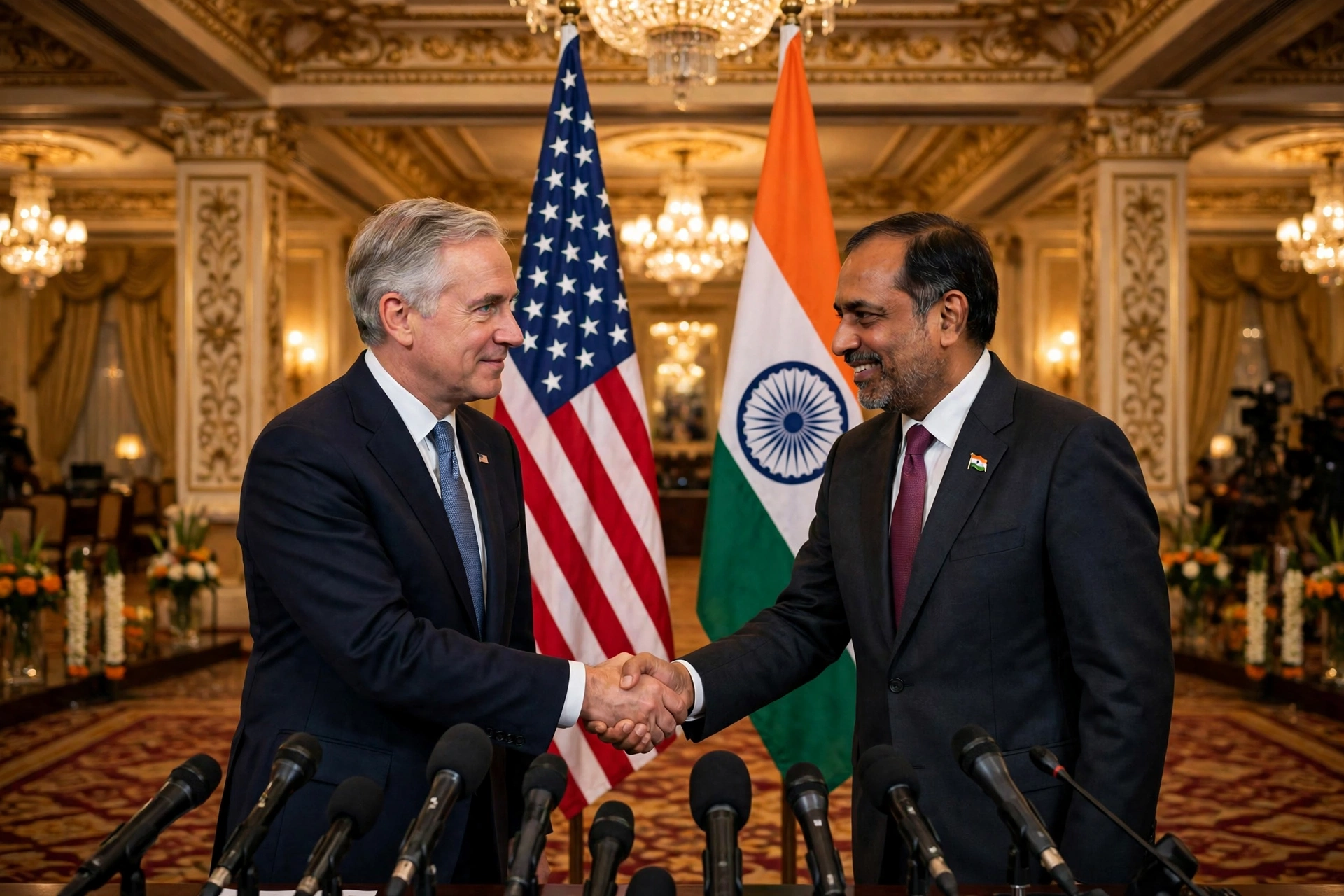
Now, let’s be honest. Washington has been saying a trade deal is “close” for a while. But Rubio’s own words this week carried more weight than usual. Speaking to reporters in Samarkand on Monday, he said plainly: “We’re trying to finalise a trade deal with India right now. We’re very close to doing that.”
What would the deal actually look like? Under a framework announced back in February, the US cut its reciprocal tariff on Indian goods from 25 per cent to 18 per cent and removed an additional 25 per cent duty linked to India’s purchases of Russian oil. In return, India committed to eliminating or reducing tariffs on American industrial goods and farm products — tree nuts, fruit, soybean oil, wine, and spirits.
At its core, the negotiation is a swap: lower and predictable US tariffs on Indian goods in exchange for wider American access to Indian markets. Indian media reports say dairy access is the single biggest unresolved obstacle — an issue that has derailed India trade talks before and touches deep domestic political nerves.
Indian officials have said the first phase of the agreement is complete and is now in legal drafting. But nobody — not Rubio, not New Delhi — has confirmed a signing will happen during this trip. Close, yes. Done? Not yet.
The Russian Oil Question: Why This Visit Matters Now
You cannot understand this visit without understanding the sanctions clock ticking in the background.
Last month, President Trump signed an order implementing the Lindsey Graham Sanctioning Russia and Iran Act (SRIA) — a law that lets Washington impose tariffs of up to 100 per cent on major buyers of Russian crude. India, one of the world’s biggest buyers of Russian oil, was squarely in the crosshairs.
Then came the pause. Days ago, Trump waived those provisions, with Rubio himself saying the trade talks played a part in the decision. As we’ve previously reported, the waiver opened a 60-day review window for the administration to judge whether the tariffs are actually needed — a move that brought visible relief in New Delhi.
Rubio has been unusually candid about why. “Countries like India, for example, have voluntarily diversified their energy portfolio but are still getting a substantial amount of energy from Russia because it’s hard to pivot from one day to the next,” he said, as quoted by ANI. “But they’re also an important ally and partner of the United States.”
That is diplomacy-speak for: we get it, energy transitions take time, and we will not blow up the trade deal over it. At least not right now. The 60-day window gives both sides breathing room — but the threat has not been permanently removed.
Wednesday: Jamnagar and the Ambani Factor
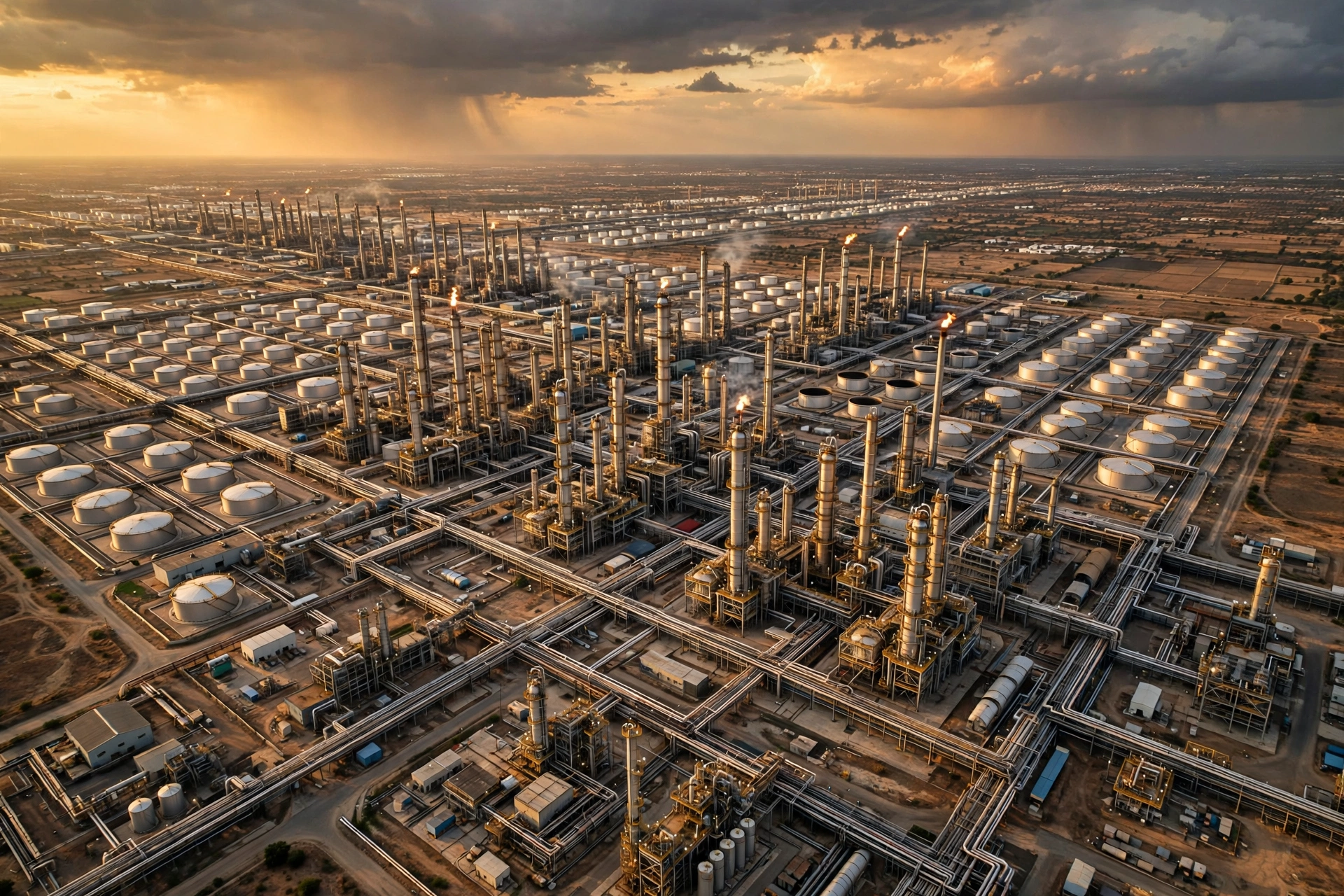
Today, October 21, Rubio completes the Mumbai leg and flies to Jamnagar, Gujarat, departing at 10:30 am. Why Jamnagar? Because it hosts the world’s largest single-site oil refinery — operated by Reliance Industries, the conglomerate led by billionaire Mukesh Ambani.
Rubio is expected to tour the refining complex and meet Ambani himself. The symbolism is deliberate: Reliance has been one of the top refiners of Russian Ural crude (though it has cut its share), and Ambani’s empire — already a flashpoint in US-India business dealings — sits at the intersection of energy, trade, and technology. Reliance is also investing in a refinery planned for Texas.
The visit also includes meetings with business leaders, investors, and bankers — a sign that the commercial track matters as much as the diplomatic one. The State Department says the trip is about strengthening the strategic partnership and “enhanced energy cooperation.”
What Came Before: Central Asia and the Bigger Chessboard
Rubio did not arrive in India in a vacuum. His Samarkand stop was part of a broader regional push — including a C5+1 summit focused on rare earths and critical minerals. Energy security, supply chains, and reducing dependence on adversarial suppliers are the through-lines connecting Uzbekistan, Mumbai, and Jamnagar.
There is also choreography further out. Officials have floated the possibility of meetings between the two countries’ leaders at next month’s ASEAN Summit in Manila and the G20 Summit hosted by the US. A successful Rubio trip could set the stage for exactly that.
Even before Rubio landed, the groundwork was being laid. On Tuesday, Jaishankar met a US congressional delegation in Mumbai — including Representatives Jason Smith, David Schweikert, Elise Stefanik, and Andy Ogles — to discuss trade, energy, security, and technology. Congress matters here: any durable agreement ultimately needs legislative backing.
Frequently Asked Questions
Why is Marco Rubio visiting India now?
Rubio is in India October 20–22 to advance trade talks, discuss energy and defence, and strengthen the strategic partnership. The visit follows Trump’s waiver of Russia-linked tariff threats and Washington’s claim that a trade deal is nearly finalised.
Is a US-India trade deal actually going to be signed?
Not confirmed. Rubio says the two sides are “very close,” and Indian officials say the first phase is in legal drafting. Dairy access is reportedly the main remaining obstacle. No signing has been announced for this visit.
What happened with the Russia oil sanctions on India?
A US law (the SRIA) allows tariffs of up to 100% on major buyers of Russian oil. Trump waived those provisions for now, opening a 60-day review. Rubio noted India finds it difficult to change oil suppliers overnight and called India an important ally and partner.
Why is Rubio going to Jamnagar?
Jamnagar hosts the world’s largest single-site oil refinery, run by Reliance Industries. Energy cooperation is a central visit theme, and Rubio is expected to meet Reliance chairman Mukesh Ambani — whose company is also investing in a refinery in Texas.
The Bottom Line
Strip away the ceremony, and this visit is about three linked bets: that a trade deal can be closed before domestic politics on either side intervene, that the Russian oil question can be managed through engagement rather than punishment, and that the US-India partnership is bigger than any single disagreement.
Two friends arguing over money can still be friends — but only if they keep talking. Rubio flying halfway around the world is Washington’s way of saying this conversation matters. Whether it ends in a signature or just another “very close” will tell us how much it actually did.
Reporting based on IANS, ANI, India Today, the US State Department travel notice, and India’s Ministry of External Affairs. Storion News verified the schedule details and trade framework facts through these sources.