
Democrats Sweep the 2026 Midterms: House and Senate Flip in Stunning Rebuke to Trump
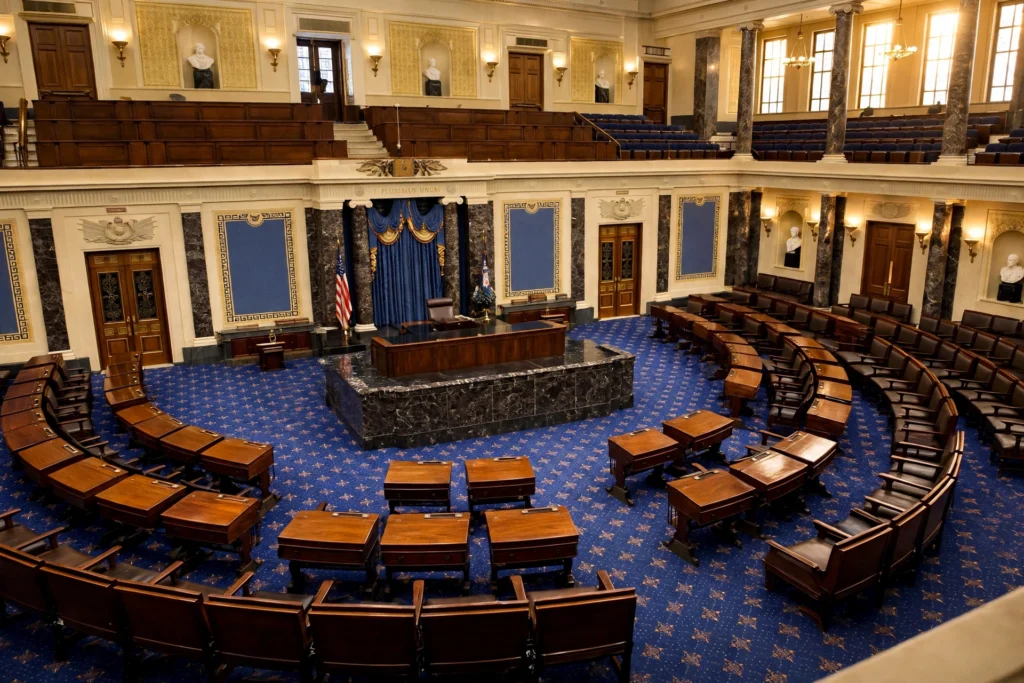
On Tuesday, November 3, American voters delivered one of the most sweeping midterm verdicts in recent memory — handing Democrats control of both the House and the Senate, flipping eight Republican-held Senate seats and six governorships, and ending two years of unified Republican rule in Washington. The 2026 midterm election results rewrote the map in ways few forecasters had predicted, and the counting is still not quite finished.
If you went to bed on election night thinking this would be a long, grinding count, you woke up to a rout. The Associated Press called the Senate for Democrats late on Tuesday night, after Democrat Josh Turek’s victory in Iowa, and the House followed early on Wednesday. House Democratic Leader Hakeem Jeffries is now in line to become Speaker of the House when the new Congress convenes in January 2027.
2026 Midterm Election Results: The Night the Map Turned Blue
Let’s start with the numbers, because they are striking. Republicans went into Election Day holding a 53–47 majority in the Senate and a narrow edge in the House. Democrats needed to gain four Senate seats to take control. They gained eight — and the Republicans flipped none.
In the House, the Associated Press had called 256 seats for Democrats and 169 for Republicans as of November 15, with 10 races still uncalled — comfortably past the 218 seats needed for a majority. The popular vote told the same story: Democrats had collected roughly 62 million votes to about 48.2 million for Republicans. That is a gap of nearly 14 million votes, or about 13 percentage points — a margin no one in either party had predicted.
In the Senate, Democrats will hold at least 55 seats, counting two independents who caucus with them, to at least 44 for Republicans, according to AP race calls tallied by Political.org. Just one race — Alaska — remains uncalled. There, Democrat Mary Peltola led Republican Senator Dan Sullivan by about 4,250 votes, 49.8 percent to 46.1 percent, with ranked-choice tabulation scheduled for November 18. Peltola declared victory on November 15, though Sullivan has not conceded.
It was, in the words of NPR’s election-night coverage, “a resounding rebuke to President Trump and the GOP.” And the rebuke did not stop at Congress.
Eight Senate Seats That Changed Everything
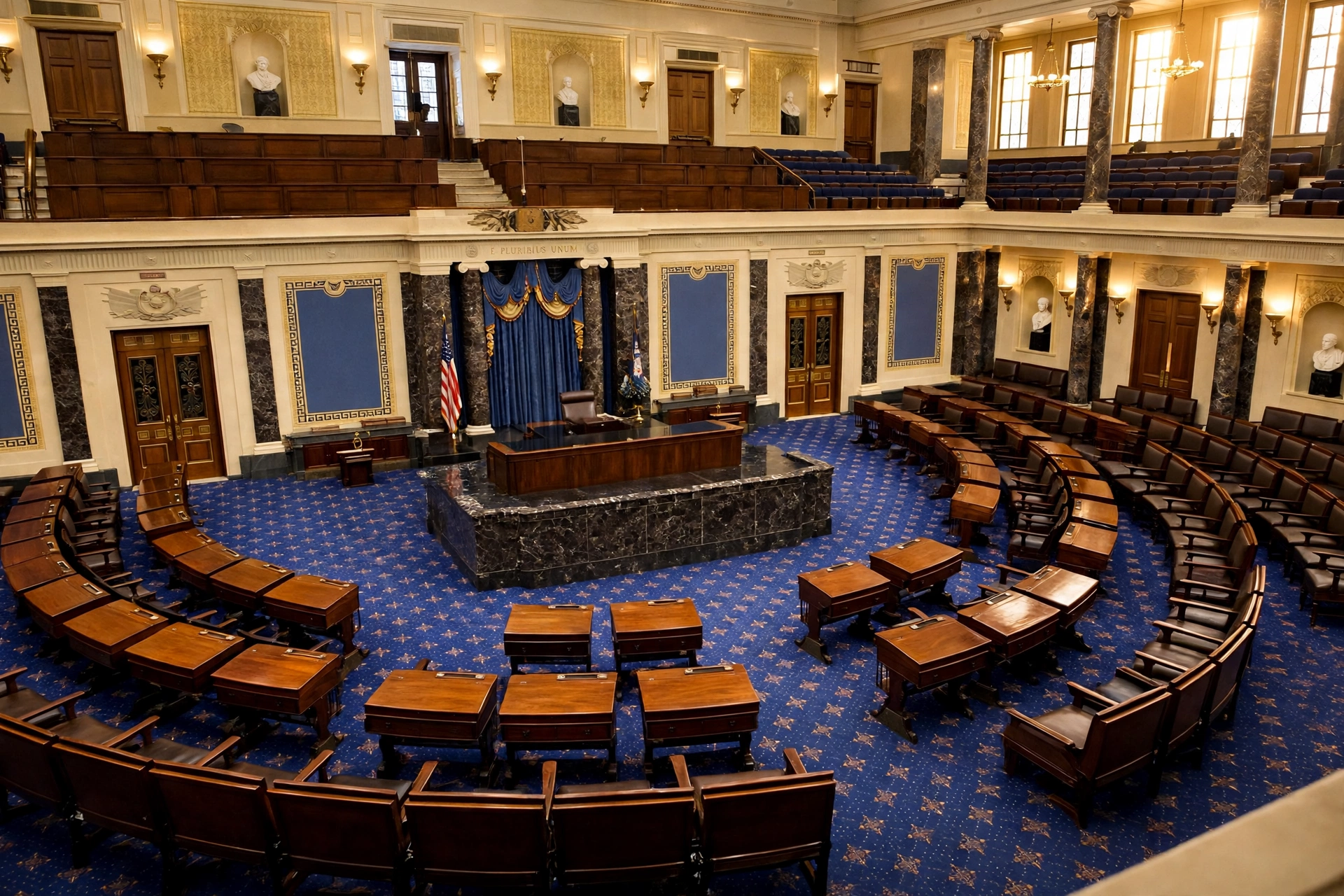
The Senate flips came from every corner of the map — battlegrounds, red states, and places Democrats had not won in a generation. Here are the eight:
- Iowa: Democrat Josh Turek defeated Republican Ashley Hinson — the win that sealed the Senate majority.
- Texas: Democrat James Talarico defeated Republican Ken Paxton, in a state Democrats have spent decades trying to turn blue.
- Ohio: Democrat Sherrod Brown beat Republican Senator Jon Husted, returning to the Senate after a two-year absence.
- Maine: Democrat Troy Jackson defeated Republican Senator Susan Collins, ending a Senate career of nearly 30 years for one of the last Republicans willing to break publicly with the MAGA wing of her party.
- North Carolina: Democrat Roy Cooper won the open seat, holding a crucial battleground for his party.
- South Carolina: Democrat Annie Andrews ousted Republican Senator Darline Graham in deep-red South Carolina. Graham had taken over the seat this year after the death of her brother, longtime Republican Senator Lindsey Graham.
- Kansas: Democrat Adam Hamilton unseated Republican Senator Roger Marshall, a result few forecasters had on their boards.
- Mississippi: Democrat Scott Colom defeated Republican Senator Cindy Hyde-Smith, a race the Associated Press called on November 11. Hyde-Smith conceded that night, and Colom will be Mississippi’s first Black senator since Reconstruction.
Democrats also held seats in Georgia, New Hampshire, Minnesota and Michigan, while Republicans kept Florida, Nebraska and Kentucky.
Governors: History Made in Georgia, Texas and Ohio
The wave rolled through the governors’ races too. Democrats flipped six Republican-held governorships: Georgia, Iowa, Nevada, Ohio, Texas — and Alaska, where Democrat Jonathan Kreiss-Tomkins won the open seat. At 37, he will be the youngest governor in Alaska’s history and the first Democrat elected there since 1998.
Democrats also held Kansas, where Cindy Holscher defeated Trump-endorsed Republican Ty Masterson in a race the Associated Press called on November 12 — keeping the governor’s office in Democratic hands for a third straight term.
Three of the flips made history. In Georgia, Democrat Keisha Lance Bottoms won the governor’s race and will become the nation’s first Black woman governor. In Texas, Democrat Gina Hinojosa will be the state’s first Latina governor. And in Ohio, Democrat Amy Acton — the state’s former health director — will be its first elected female governor.
Texas, in particular, told the story of the night. Democrats did not just win the governor’s mansion and the Senate seat; they swept the state’s down-ballot offices too, capturing the lieutenant governorship — Vikki Goodwin defeated Republican incumbent Dan Patrick — and the attorney general’s office, where Democrat Nathan Johnson defeated Republican Mayes Middleton to become Texas’s first Democratic attorney general since 1994.
Republicans held on to the Florida governor’s mansion, with Representative Byron Donalds set to take over. Donalds becomes Florida’s first Black governor. But in a night of losses, that was a rare bright spot for the GOP.

What Happens Now? A Divided Government — and a Different Trump Presidency
Come January, Donald Trump will face a Democratic Congress for the final two years of his term — a Congress with the power to investigate his administration, issue subpoenas, block his legislative agenda, and shape the budget. It is a transformation of the political landscape, and it arrives just as Trump has been pushing an aggressive second-term agenda at home and abroad.
The contrast with the last two years could not be sharper. With Republicans controlling both chambers, Trump was able to move quickly — from waiving Russia sanctions to high-profile foreign policy plays, including endorsing Benjamin Netanyahu ahead of Israel’s election and the proposed trilateral summit with Vladimir Putin and Xi Jinping over the war in Ukraine. A Democratic House and Senate can now challenge those decisions, demand documents, hold hearings — and block legislation they oppose.
For Hakeem Jeffries, the moment is historic in its own right. The House Democratic leader is poised to become Speaker — and with it, one of the most powerful figures in American politics. His first task will be holding together a caucus that spans the party’s moderate and progressive wings, both of which can claim credit for Tuesday’s wins.
For Trump, the question is whether he adapts or doubles down. Presidents who lose Congress in the midterms typically face a choice: negotiate with the opposition, or govern by executive action and veto. Either way, the era of one-party rule in Washington is over.
What Is Still Undecided
For all the clarity of the result, the counting is not finished. Ten House races were still uncalled as of November 15, and it may be days or weeks before every seat is called. The one uncalled Senate race — Alaska — goes to ranked-choice tabulation on November 18 and could push the Democratic majority to 56 seats if Peltola holds on. That slow tail of counting is normal in American elections, where mail-in and provisional ballots take time. But it will not change the headline: Democrats won the House, Democrats won the Senate, and the balance of power in Washington has flipped.
Frequently Asked Questions
Who won the 2026 midterm elections?
Democrats won control of both chambers of Congress in the November 3, 2026 midterm elections, according to the Associated Press. They flipped eight Republican-held Senate seats and won more than 218 House seats, ending two years of unified Republican rule.
Which Senate seats flipped to Democrats?
Democrats flipped eight Republican-held Senate seats: Iowa, Kansas, Maine, Mississippi, North Carolina, Ohio, South Carolina and Texas. Republicans flipped no Democratic seats. Alaska is the only Senate race still uncalled.
Who will be the next Speaker of the House?
House Democratic Leader Hakeem Jeffries is in line to become Speaker when the new Congress convenes in January 2027, after Democrats won the House majority.
What does the result mean for President Trump?
Trump will face a Democratic-controlled House and Senate for the final two years of his term, with the power to investigate his administration, block legislation and shape spending. It is the first time in his second term that he will govern without a Republican Congress.
The Bottom Line
Tuesday was not a wave — it was a flood. Democrats took the House, took the Senate, flipped eight Senate seats and six governorships, and did it in states their own strategists had written off. The popular vote margin, the eight Senate flips, and the historic firsts in Georgia, Texas and Ohio all point the same way: voters wanted a check on the Trump presidency, and they delivered one with unusual force.
The hard part starts now. Winning Congress is one thing; governing with it is another. But for the first time in two years, Washington has a genuine opposition with real power.