
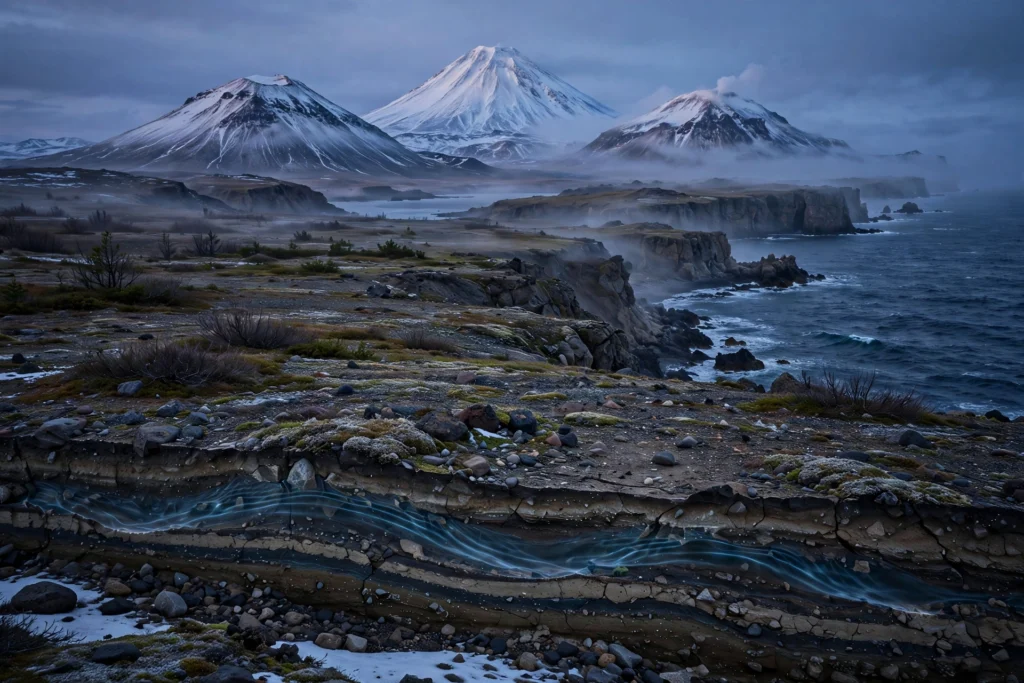
6.9-Magnitude Earthquake Strikes Russia’s Kamchatka — Here’s Why No Tsunami Was Expected
It happened in the dead of night — or, depending on where you were, the middle of the afternoon. At 03:35 UTC on Friday, October 16, the ground beneath Russia’s Kamchatka Peninsula released the kind of energy most places never feel: a magnitude 6.9 earthquake, strong enough to be felt by more than 200,000 people across the peninsula. And then, within minutes, something remarkable: the all-clear. No tsunami. No destruction reported. Not a single confirmed casualty.
How does a quake that powerful strike one of the most tsunami-prone coastlines on Earth and leave it essentially unscathed? The answer, seismologists say, is hiding about 140 kilometers below the surface.
What happened, minute by minute
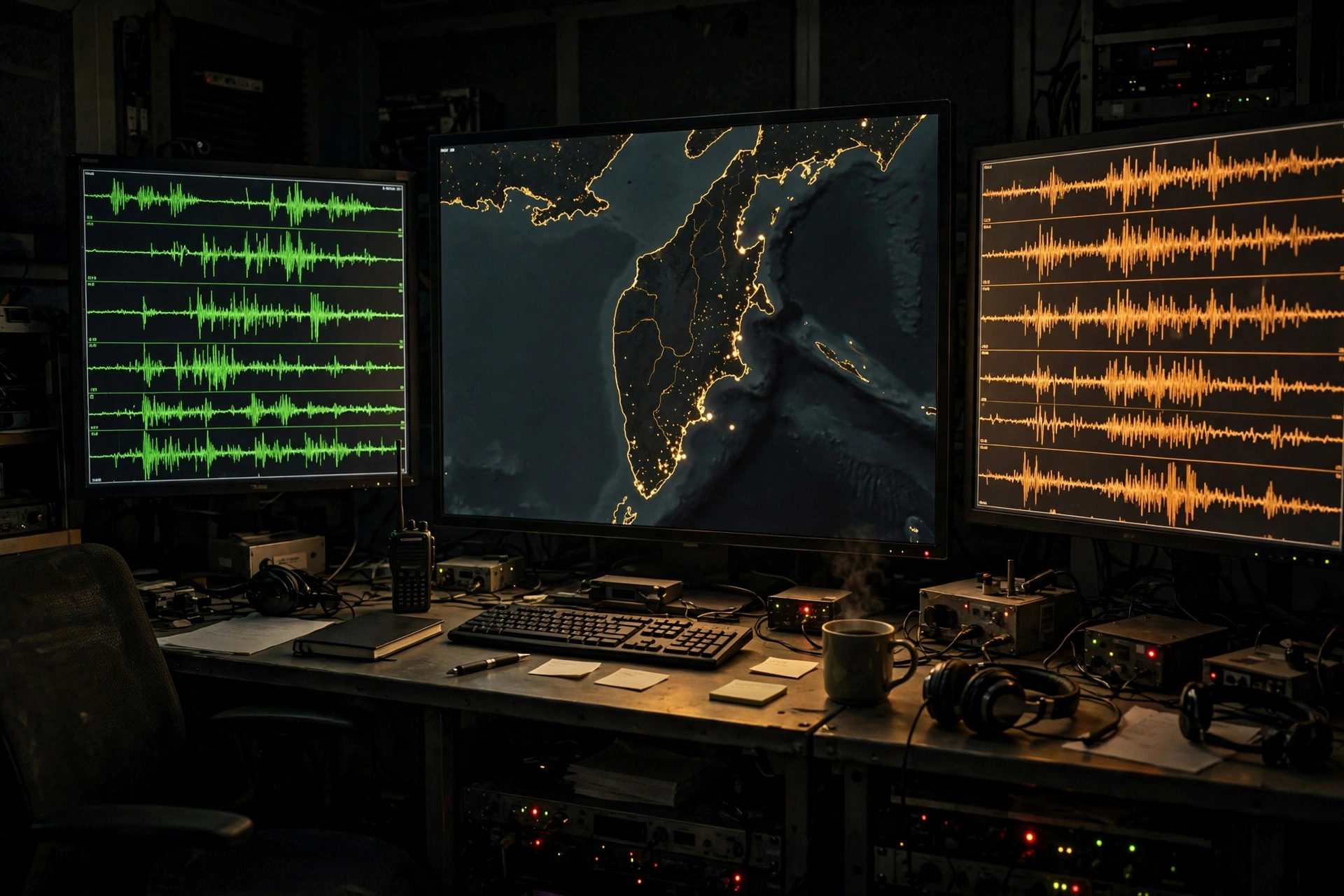
The United States Geological Survey (USGS) recorded the earthquake at 03:35 UTC — 15:35 local time in Kamchatka — placing the epicenter about 76 kilometers northeast of Ozernovskiy, a settlement of roughly 2,600 people on the peninsula’s southwestern coast. The European-Mediterranean Seismological Centre (EMSC) initially reported magnitude 7.0 before settling on 6.9 in its detailed data, while the USGS’s final reviewed solution listed M6.9 at a depth of 143.2 kilometers.
Those slight disagreements between agencies are completely normal. In the first hours after a major earthquake, different monitoring networks work from different subsets of seismic data, and their numbers usually converge as more stations report in. The USGS solution, based on data from 79 reporting stations and reviewed by a seismologist, is considered the reference measurement here.
About eight minutes after the quake, at 03:43 UTC, the Pacific Tsunami Warning Center issued its verdict: no tsunami threat. The US National Tsunami Warning Center concurred — a destructive Pacific-wide tsunami was not expected, and Hawaii was never in danger.
Why depth changed everything
Here is the single most important fact about this earthquake: it was deep.
Earthquakes cause tsunamis when they displace the seafloor — and that mostly happens with shallow ruptures, the kind that tear through the ocean floor near the surface. The Kamchatka quake, by contrast, was an intermediate-depth event, rupturing more than 130 kilometers below ground. At that depth, the energy has to travel through a huge column of rock before it reaches the surface, which dramatically moderates the shaking people feel — and it produces almost no movement of the ocean floor at all.
Contrast that with the shallow magnitude 7.7 quake that struck Panama earlier this month, which ruptured close to the surface, collapsed buildings, and rattled a region that felt every bit of its power. Same planet, wildly different outcomes — and depth is the reason.
A region that never sleeps
If you follow earthquakes at all, you know Kamchatka is not some sleepy backwater. It is one of the most seismically violent places on Earth, sitting where the Pacific Plate dives beneath the Okhotsk Plate along the Kuril–Kamchatka Trench — a stretch of the Pacific “Ring of Fire” that has produced some of the largest earthquakes in recorded history.
Consider the context: according to seismic network GeoShake, Kamchatka has recorded 57 earthquakes in the past 30 days alone, and this was the largest of them. In July 2025, the peninsula hosted a magnitude 8.8 megathrust earthquake that triggered Pacific-wide tsunami alerts and evacuations — an event seismologists still study as a reference for the region’s behavior. Against that backdrop, a magnitude 6.9 barely qualifies as unusual for Kamchatka.
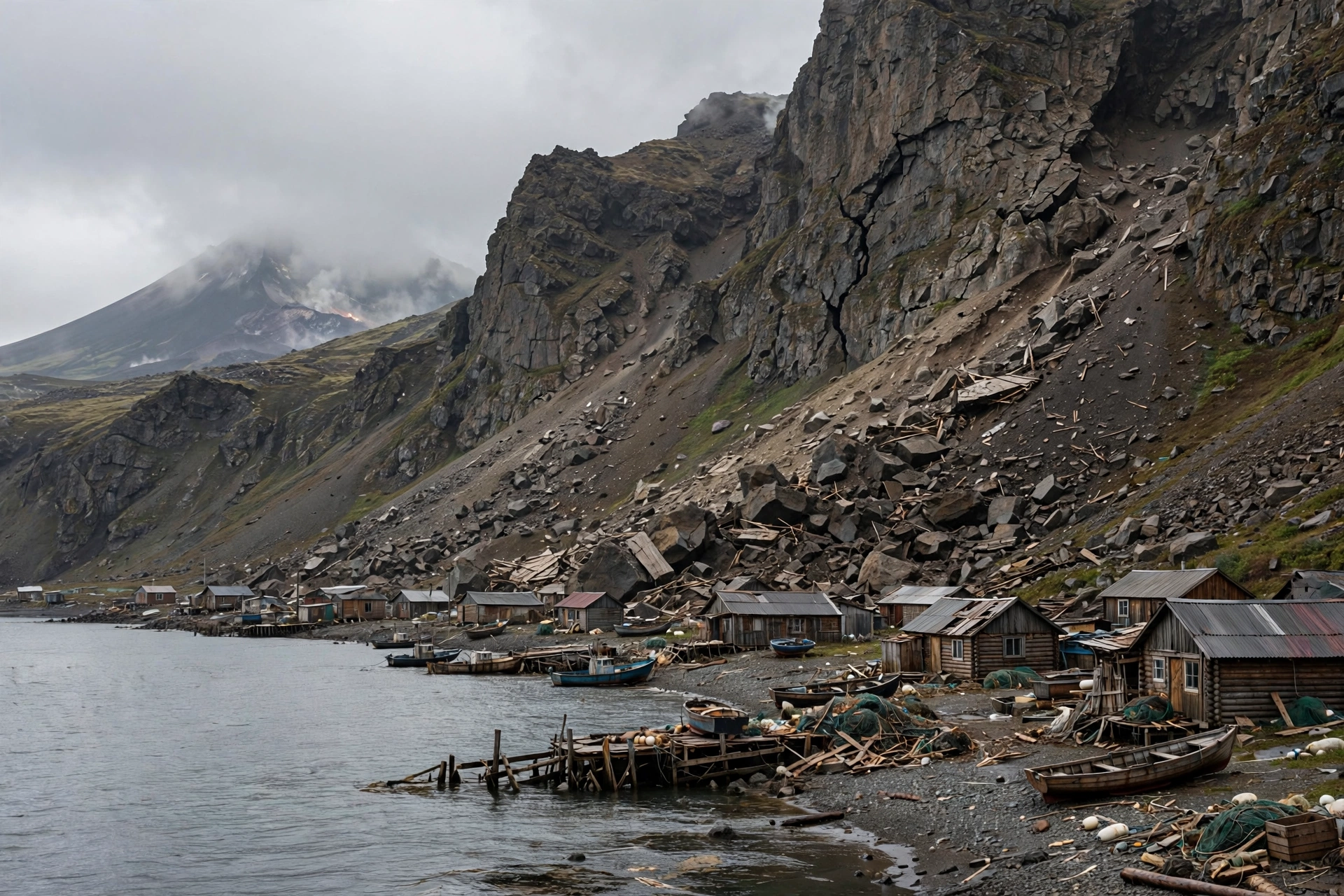
The USGS issued a Green alert for this event — the lowest level — estimating a low likelihood of casualties or economic losses. Around 14,000 people were estimated to have felt moderate shaking and roughly 214,000 light shaking. The agency notes that the region’s population largely lives in structures resistant to earthquake shaking, though some vulnerable buildings — adobe block and unreinforced brick — do exist in the area.
Could something like this hit elsewhere on the Ring of Fire?
That is the question seismologists always face after a Kamchatka event, because the Ring of Fire is a connected system of subduction zones. A major quake in one spot does not “trigger” quakes thousands of miles away in any reliable way — but stress does shift, and the Pacific basin is one restless neighborhood.
As reported by Indian media, several analyses note that a strong Kamchatka earthquake can affect other countries around the northern Pacific — including Japan and Russia’s Far East — primarily through tsunamis and stress transfer along the trench system. This time, the depth of the rupture meant neither of those hazards materialized in any meaningful way.
Still, the broader pattern is worth watching. The Pacific plate boundaries have been unusually busy in 2026 — from Panama’s shallow disaster, which Storion News covered in detail to Kamchatka’s deep rumble. Seismologists treat each event as data, not prophecy. The Ring of Fire doesn’t follow a schedule; it follows physics, and the physics right now says: busy, but not extraordinary.
FAQ: The Kamchatka Earthquake
Did the Kamchatka earthquake cause a tsunami?
No. The Pacific Tsunami Warning Center said within minutes of the quake that there was no tsunami threat. The earthquake’s great depth — about 140 kilometers — meant it could not significantly displace the seafloor.
Was anyone hurt?
No casualties or significant damage have been reported. The USGS issued its lowest-level Green alert, and the quake struck near sparsely populated coastline.
Why did different agencies report different magnitudes?
Initial reports ranged from 6.9 to 7.0 because agencies calculate magnitudes from different sets of early seismic data. This is normal and the numbers typically converge. The USGS’s reviewed solution — M6.9 at 143.2 km depth — is the reference measurement.
Is Kamchatka dangerous for residents?
Kamchatka is one of the most earthquake-prone regions in the world, and its buildings are largely engineered for seismic shaking. The region has endured much larger quakes — including a magnitude 8.8 in 2025 — without catastrophic loss of life.
The bottom line
A magnitude 6.9 earthquake sounds terrifying — and it would be, if it struck a shallow fault under a major city. What Kamchatka’s October 16 quake really shows is how much geography and geology matter. Deep beneath a rugged, sparsely populated peninsula, the Earth shifted violently. More than 200,000 people felt it. And because of a single number — 140 kilometers of depth — the Pacific stayed calm. This time, the Ring of Fire spoke softly.