
US Bombers Fly Near Venezuela for the Second Time in a Week as Trump’s Pressure on Maduro Boils Over
The Loudest Message America Can Send Without Firing a Shot
Picture this: two of the deadliest aircraft on the planet, their transponders blaring so the whole world can watch them on a screen, screaming past Venezuela’s coastline at supersonic speed. And this wasn’t the first time this week.
For the second time in seven days, U.S. long-range bombers have flown near Venezuela’s coast in what is shaping up to be one of the most visible military pressure campaigns against Nicolás Maduro’s government in years. The message is not subtle. What remains unclear is what comes next — and whether anyone in Washington can agree on what the point of all this actually is.
The Second Flyby: What Actually Happened
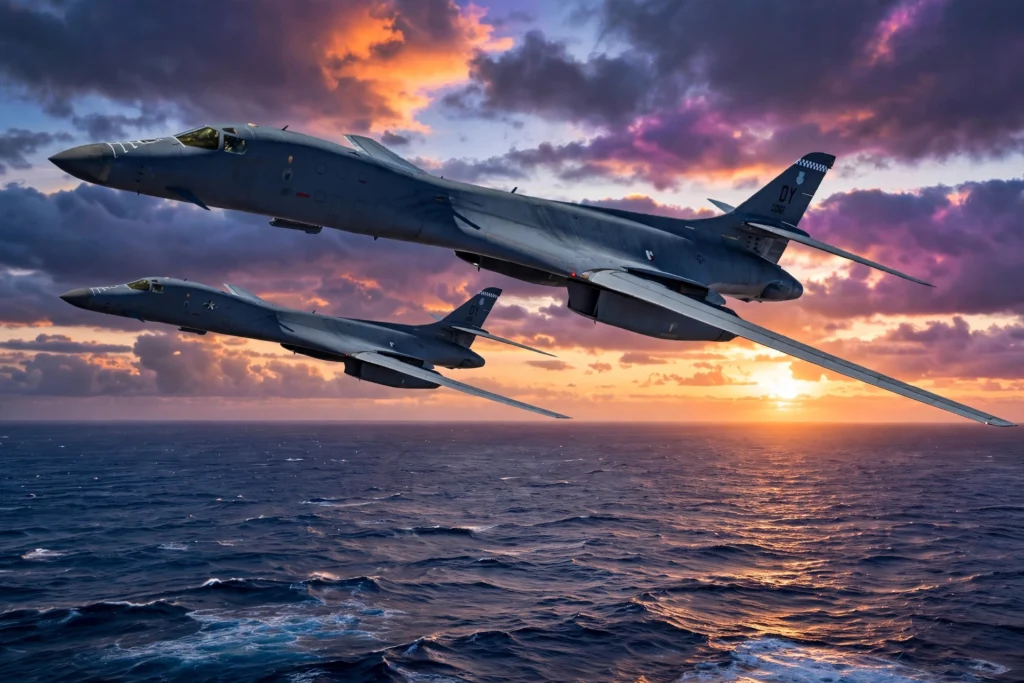
Two U.S. Air Force B-1B Lancer bombers flew just off Venezuela’s coast this week, with their transponders deliberately switched on — a choice that turns a military flight into a public performance. Anyone with a flight-tracking app could watch them go.
Flight-tracking data reported by ABC News showed the bombers circling in the Caribbean Sea, staying in international airspace roughly 150 miles north of Venezuela. That detail matters: staying in international waters keeps the flights legal under international law while putting the aircraft unmistakably “within striking distance,” as military analysts have noted.
The B-1B Lancer is a Cold War legend — a supersonic heavy bomber that can carry up to 75,000 pounds of bombs, the largest payload of any aircraft in the U.S. arsenal. It was designed to penetrate enemy airspace at high speed and low altitude. Sending it past Venezuela’s coast is the aerial equivalent of parking a cannon in your neighbor’s line of sight and making sure he sees you doing it.
Why Trump Is Doing This — The Official Story and the Other Story
The Trump administration’s stated justification is counter-narcotics. Washington has accused Maduro of collaborating with drug cartels and the gang Tren de Aragua, designating them as narco-terror threats. Maduro was indicted in Manhattan for narco-terrorism five years ago, and the administration raised the bounty for his capture to $50 million earlier this year.
The military actions backing up the rhetoric have been very real. The U.S. has carried out airstrikes on at least five alleged drug-carrying boats near Venezuela in recent weeks, killing those aboard. Trump has acknowledged that he authorized covert CIA operations inside Venezuela, and he has publicly floated the idea of land strikes against drug traffickers operating in the country.
Behind the counter-drug framing, though, analysts see something bigger: a coercive pressure campaign designed to squeeze Maduro’s regime toward collapse or capitulation. Trump’s use of heavy firepower as leverage isn’t limited to the Caribbean — it follows the same pattern playing out in the escalating confrontation with Iran, where Washington has also moved strategic bombers and weighed dramatic strike options as a negotiating tool.
The Transponders Were the Point
Here’s what makes these flights so fascinating from a military standpoint: the bombers wanted to be seen.
Military aircraft on sensitive missions typically fly dark — transponders off, radar signatures minimized. The B-1s did the opposite. Their transponders stayed on, broadcasting their position to every flight tracker on Earth. That is not how you conduct a surprise attack. That is how you send a message to Caracas, to the region, and to anyone else watching: we are here, we can reach you, and we want you to know it.
Retired Air Force General David Deptula, a former chief of intelligence and a respected voice on air power, told the Wall Street Journal that the flights signal “seriousness and intent.” When you fly the B-1, he argued, “you’re bringing an enormous set of capabilities — endurance, payload, range, and precision.” In other words: this is not posturing with a propeller plane. This is the heavy stuff.
Maduro’s Response: “Dialogue, Not Conflict”
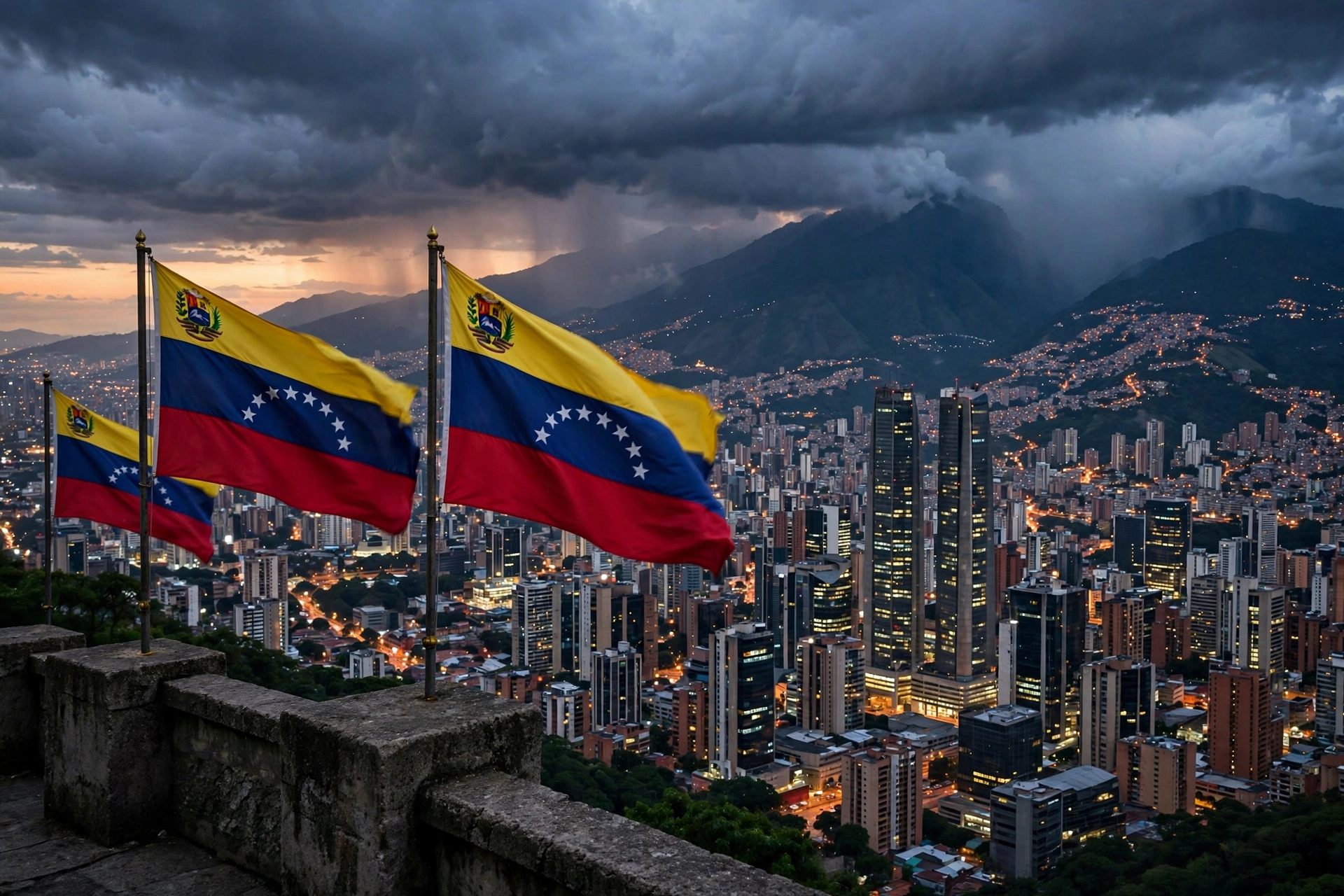
Nicolás Maduro has denied any ties to drug cartels and lashed out at the Trump administration, accusing Washington of plotting regime change under the cover of an anti-drug campaign. Speaking to crowds in Caracas, he insisted he wants “dialogue, not conflict” — a plea for diplomacy delivered while American warships gather off his coast.
Caracas formally denounced the bomber flights as a provocation. Venezuelan officials have responded to previous flybys by scrambling aircraft of their own, a move that carries its own risks: two militaries maneuvering aggressively in a crowded patch of sky and sea is exactly the kind of situation where a miscalculation — a warning shot, a radar lock, a too-close intercept — can spiral out of anyone’s control.
The Contradictory Script in Washington
Perhaps the strangest part of this story is that Washington can’t seem to agree on what it is doing.
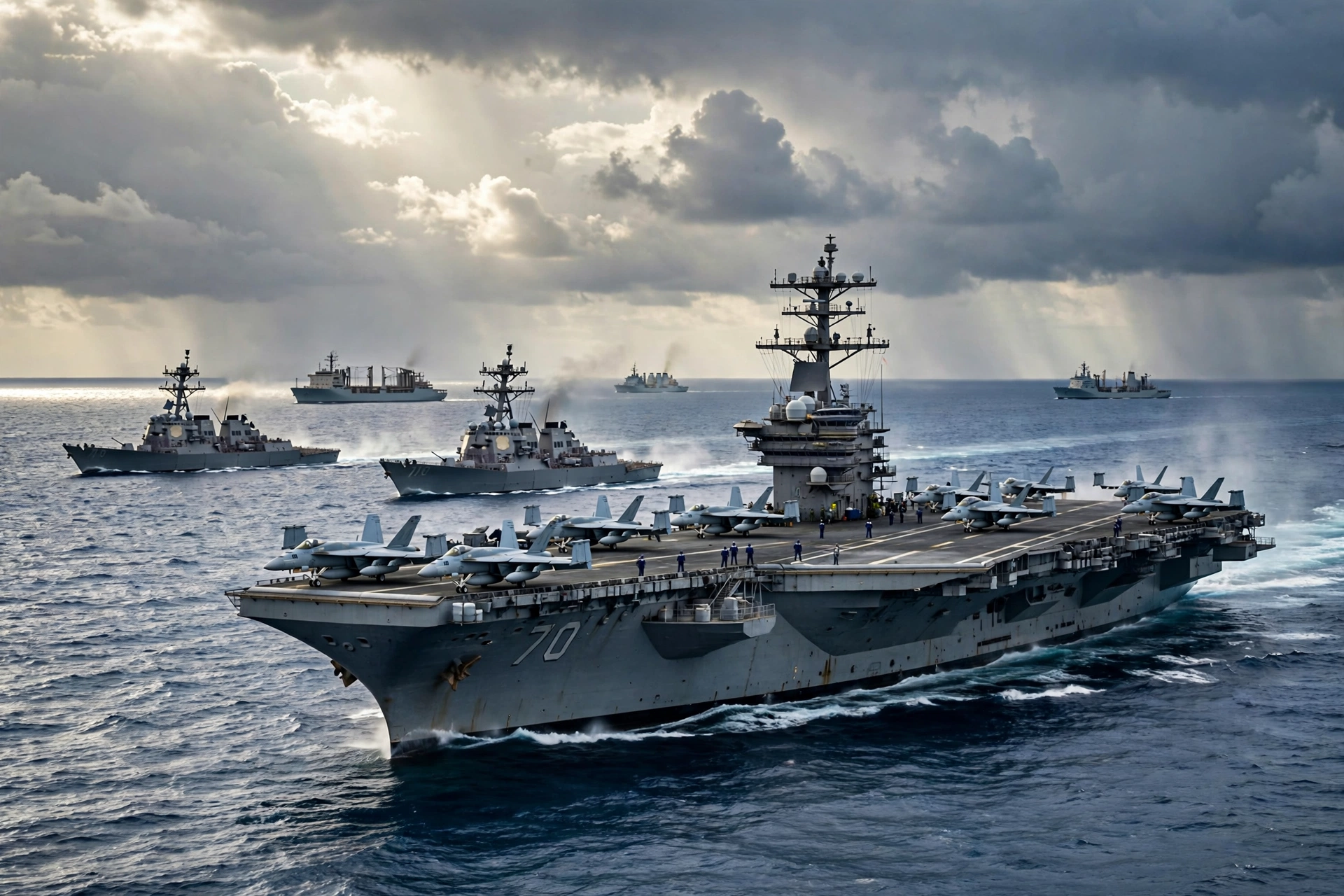
The Pentagon has characterized the bomber flights as “routine training” — a label that fools no one given the timing, the location, and the transponders. Analysts, meanwhile, describe an unmistakable escalation ladder: eight warships, a nuclear-powered submarine, fighter jets, Reaper drones, and now repeated bomber flights, all circling a government the U.S. accuses of narco-terrorism.
Trump himself has kept his options deliberately fuzzy. He said he remains open to holding a direct conversation with Maduro “soon,” pairing military pressure with a possible diplomatic opening. At the same time, he has not publicly said he is seeking Maduro’s ouster — even as his government calls the Venezuelan leader a cartel collaborator with a $50 million price on his head.
Strategic ambiguity can be a tool. But it can also be a vacuum that gets filled by accidents. When the White House and the Pentagon can’t agree on the script, allies and adversaries alike are left guessing — and guessing is how crises start.
Why This Matters Now
The timing is worth noting. The pressure campaign against Maduro is unfolding as Trump, who campaigned hard for the 2026 Nobel Peace Prize, watched that prize go to 85-year-old South African judge Navi Pillay last week — an award he has publicly fumed about. The midterms land on November 3, and Trump has already indicated that major military decisions may wait until after the vote.
A show of force without a stated end goal can go two ways. It can frighten an adversary into concessions. Or it can box everyone in, so that backing down becomes politically impossible for both sides. The bombers made the first point loudly. Whether anyone in Washington knows how to land the second act is the question nobody is answering.
Frequently Asked Questions
Did U.S. bombers enter Venezuelan airspace?
No. Flight-tracking data reported by ABC News showed the B-1 bombers circling in the Caribbean Sea in international airspace, about 150 miles north of Venezuela. International law permits such flights; the provocation is in the visibility, not the geography.
Why does the U.S. say it is pressuring Venezuela?
The administration’s official justification is counter-narcotics: it accuses Maduro of collaborating with drug cartels and the Tren de Aragua gang. But analysts widely read the bomber flights, naval buildup, and covert operations as a broader pressure campaign aimed at the regime itself. Trump has not publicly stated that regime change is the goal.
Has Trump really authorized CIA operations in Venezuela?
Yes — Trump has publicly acknowledged authorizing covert CIA operations inside Venezuela, a rare admission. He has also said the administration is considering land strikes against drug traffickers in the country, escalating beyond the boat strikes already conducted.
Could this lead to actual conflict?
The risk is miscalculation, not necessarily intent. Both sides are maneuvering armed forces in close proximity, and the contradictory messaging from Washington adds uncertainty. For now, the bombers are flying in international airspace and the pressure is coercive rather than kinetic — but coercive pressure is how wars sometimes begin by accident.
The Bottom Line
Two bomber flybys in one week is not routine anything, whatever the Pentagon calls it. The Trump administration is running the most aggressive military pressure campaign against Venezuela in modern times — bombers overhead, warships offshore, covert operators in the shadows, and a $50 million bounty over Maduro’s head. The strategy is clear: make the pressure unbearable and let Maduro draw his own conclusions. The danger is just as clear: pressure that loud leaves very little room for a quiet exit. What happens next — a deal, a strike, or a standoff that just keeps humming — will be decided in the weeks ahead, and everyone will be watching the transponders.