
Nobel-Winning Gene Therapy Lets Blind People See Again
Two days after a trio of scientists won the 2026 Nobel Prize in Physiology or Medicine, the technology behind their prize did something remarkable: it helped blind people see.
Well — partially. But for people who haven’t located a doorway or spotted an object on a table in years, “partially” is life-changing. And this week, researchers published results showing that an experimental optogenetic gene therapy improved light sensitivity in seven out of ten blind participants — extending a success first seen in a single patient back in 2021 to a much larger group.
The findings, published October 7 in the New England Journal of Medicine, are part of the international PIONEER study. And they represent something science has chased for decades: a way to restore vision not by fixing the eye’s broken parts, but by reprogramming the parts that still work.
How a Pond-Scum Protein Became a Nobel Prize
Let’s rewind, because this story starts in a very strange place: green algae.
Optogenetics — the technique at the heart of this breakthrough — was built on the discovery of light-sensitive proteins in pond algae, called channelrhodopsins. These proteins act like tiny light switches embedded in cell membranes: shine a light on them, and they open, letting ions rush in and activating the cell.
On October 5, 2026, the Nobel Prize in Physiology or Medicine went to Karl Deisseroth of Stanford University, Peter Hegemann of Humboldt University of Berlin, and Georg Nagel of the University of Würzburg for their pioneering work on these light-gated ion channels and the optogenetics method that grew from them.
Over the last two decades, optogenetics became one of neuroscience’s most powerful research tools. Scientists used it to map the brain circuits behind thirst, attention, fever — even anxiety. They made neurons fire on command with pulses of light. It revolutionized how we study the brain.
But here’s what nobody was sure about: could a lab technique built for research become an actual treatment for people?
This week, the answer started to arrive.
Inside the Trial: From One Man to Ten
All ten participants in the study had retinitis pigmentosa — a group of genetic disorders, affecting more than 1.5 million people worldwide, that progressively kills off the light-sensing cells in the retina. In its advanced stages, it leaves people functionally blind.
The story began in 2021, when a man blind for 40 years received an optogenetic treatment in one eye and, wearing special goggles, regained enough vision to locate and count objects on a table. That case report, published in Nature Medicine, was a stunning proof of principle — but it was one patient. One patient is a hint, not evidence.
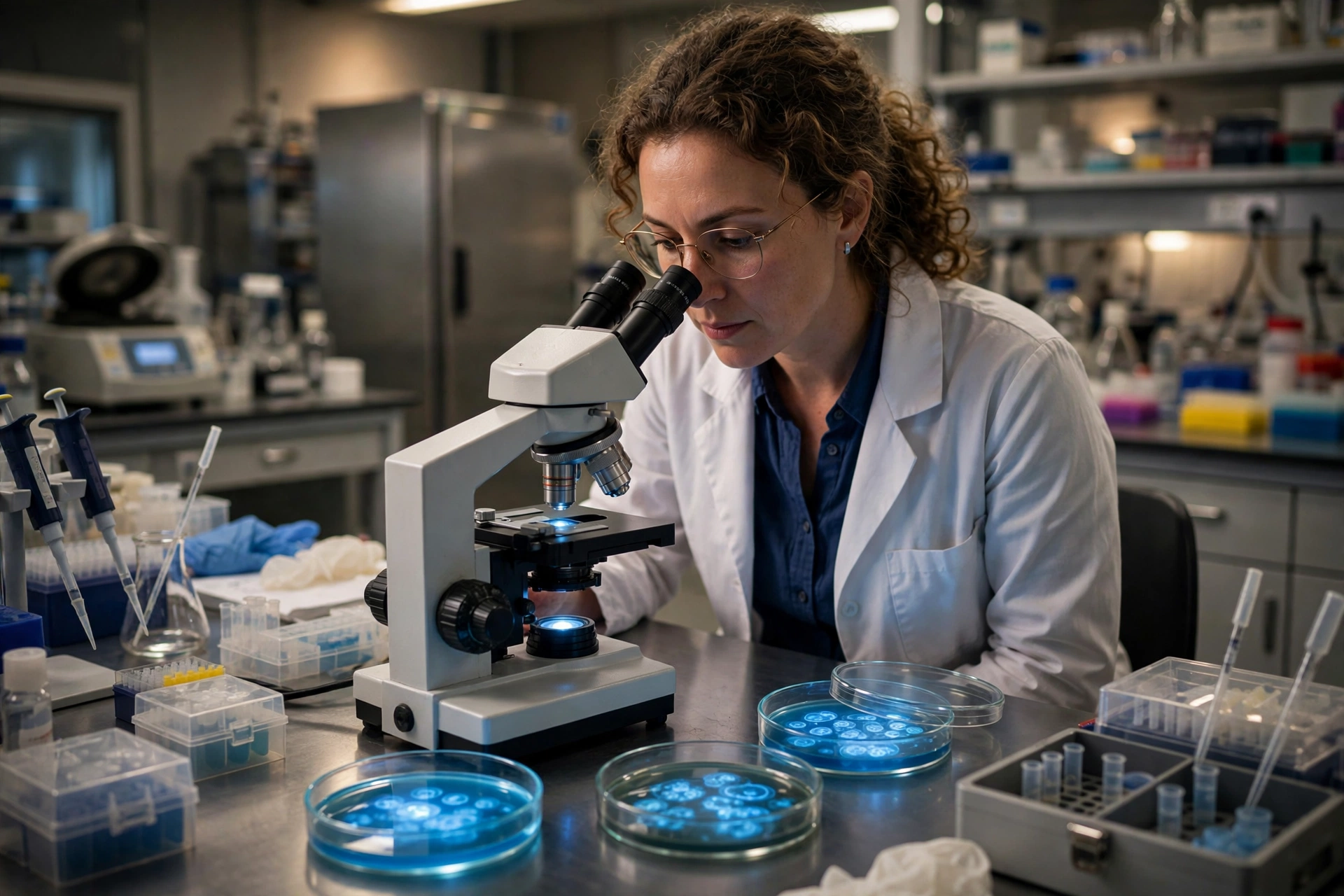
The new study, led by José-Alain Sahel of the University of Pittsburgh and Botond Roska of the Institute of Molecular and Clinical Ophthalmology Basel (IOB), expanded that hint into something more substantial. Seven of the ten participants showed improved light sensitivity after treatment.
“This is a proof of concept that optogenetics can bring back some visual activity and object sensitivity,” Roska told Science News.
Safety was the trial’s primary endpoint, and most eye-related side effects reported were mild or moderate, according to coverage of the study.
What the Goggles Actually Do
So how does it work? The concept is brilliantly sideways.
In retinitis pigmentosa, the retina’s light-detecting cells — the photoreceptors — die off. But other cells in the retina, called ganglion cells, deteriorate much more slowly. These are the cells that normally relay visual signals from the eye to the brain. They’re still there. They just can’t “see” anything.
The gene therapy changes that. Patients receive a single injection into the eye containing a harmless, synthetic virus that delivers genetic instructions into those surviving ganglion cells. The instructions tell the cells to produce a light-sensitive protein — the channelrhodopsin borrowed from algae. Suddenly, cells that never responded to light before can be switched on by it.
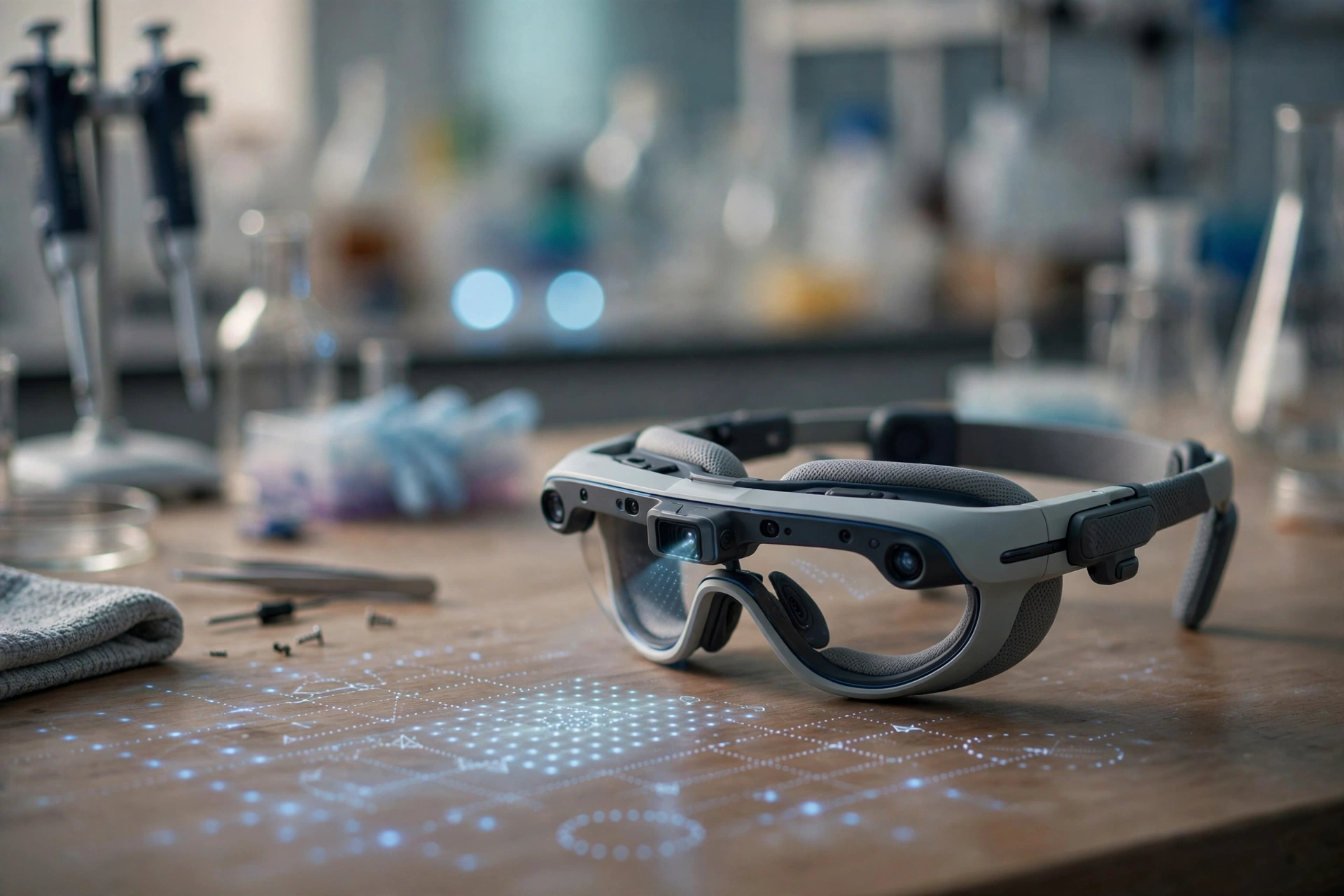
But natural light isn’t quite right for the job. That’s where the custom goggles come in. After treatment, participants wear goggles equipped with a camera that captures the scene in front of them and converts images into precise patterns of light pulses. Those pulses activate the newly light-sensitive ganglion cells, which fire signals to the brain — creating a crude but real form of vision.
It’s not normal eyesight. Participants aren’t reading books or recognizing faces. But they can detect light, find a doorway, locate an object. For someone who has lived in darkness for years, that is not small.
As Prof. Roska put it: “What we can say for sure is that the concept of optogenetics is valid for vision restoration.” The team now aims to push toward higher-resolution vision — a goal Roska estimates could take five to ten years.
What This Means — and What It Doesn’t
Let’s be honest about where things stand, because Nobel-week hype can run ahead of reality.
This is still an experimental therapy, not an approved treatment. Ten patients is a small study — a major step up from one, but still early. The vision restored is limited. And according to analysis by Medical Daily, an optogenetic therapy for retinitis pigmentosa is under regulatory review but has not yet been approved.
There are also fair cautions about the broader field. As reporting on the Nobel Prize noted, using optogenetics in people means inserting a foreign gene into human cells and delivering light deep into tissue — neither step is routine, and the long-term safety of carrying an algal protein in human neurons isn’t fully established yet.
And patients should be wary of anyone selling “light therapy” miracle cures in the wake of Nobel headlines. If it’s not a registered clinical trial, it’s not this science.
But none of those cautions erase what happened here. A technique invented to probe mouse brains has now, twice over, given blind humans a measure of sight. The path from pond scum to the Nobel podium to a patient’s retina — in about two decades — is one of the great translation stories in modern medicine.
FAQ: Gene Therapy That Restores Sight
How is this different from regular gene therapy for blindness?
Most gene therapies try to fix or replace the faulty gene causing the disease. This one doesn’t repair the broken photoreceptors at all. Instead, it repurposes healthy surviving cells — the ganglion cells — by giving them a new light-sensing ability they never had. It’s a workaround, not a repair.
Who can this treatment help?
So far, it has been tested in people with advanced retinitis pigmentosa, where photoreceptors are gone but ganglion cells survive. Whether it could work for other causes of blindness is an open question researchers are actively exploring.
Is the vision restored like normal eyesight?
No. It’s limited — detecting light, locating doorways and objects. Think of it as moving from total darkness to a rough, functional awareness of the visual world. The research team hopes to reach higher resolution over the next five to ten years.
When will this be available to patients?
There’s no approved optogenetic vision therapy yet, and no firm timeline. The treatment must go through larger trials and regulatory review before it could be offered clinically. Patients interested in experimental options should look for registered clinical trials and discuss them with their eye doctor.
The Bottom Line
Two days. That’s the gap between optogenetics winning the Nobel Prize and optogenetics proving, again, that it can restore sight in blind people. It’s hard to imagine better timing — or a better illustration of what basic science is for.
Nobody funded the study of algal proteins to cure blindness. Scientists studied them because they were interesting, because light-switchable neurons were a beautiful idea, because understanding the brain mattered. And now that curiosity has become a therapy that lets a blind person find a doorway.
Seven out of ten patients. Limited vision. Early days. But undeniably: sight, restored, from darkness. If that’s not worth a headline, nothing is.
Pingback: PAK vs SL 1st T20I: Sri Lanka Bat First in Rawalpindi Opener — Squads, Live Streaming and Key Battles - Storion News
Pingback: Fitbit Edge Is Official: Google Confirms October 12 Launch — Everything We Know About Specs and Price - Storion News
Pingback: Pennsylvania Measles Outbreak Hits 1,136 Cases and 5 Deaths — America's Largest in Three Decades - Storion News
Pingback: Pope Leo XIV to Undergo Lung Surgery This Week After Doctors Find Nodule - Storion News
Pingback: SpaceX Launches Mini-Brains, Artificial Retinas and the ISS's Final Solar Arrays Into Orbit - Storion News