
Elon Musk Says He’ll Give a SpaceX Share to Every Kid in America — Is a $10 Billion Giveaway Even Realistic?
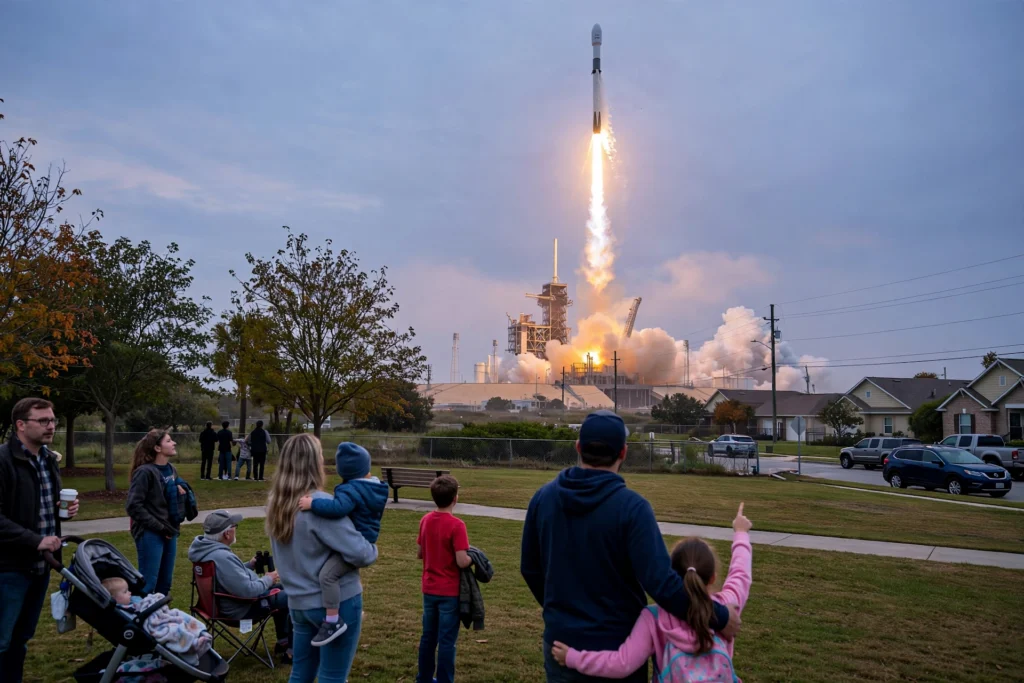
Stop and imagine this for a second. You’re twelve years old, scrolling through your phone, when the richest man in the world announces on social media that you’re about to become a part-owner of his rocket company. Not metaphorically — literally. A real share of SpaceX, with your name on it.
That’s exactly what Elon Musk promised on Monday. “Next year, I will give one of my SpaceX shares to every kid in America,” the billionaire posted on X. “This will be the first of many.”
One share per kid. Around 72 million kids. Do the math, and you’re looking at a giveaway worth more than $10 billion. It would be one of the largest individual share distributions in history — and the questions started piling up within minutes. Who qualifies? How do you claim it? Is this even legal for minors? And is Musk serious, or is this the latest episode in billionaire-on-billionaire one-upmanship?
The pledge that broke the timeline
Musk’s announcement didn’t come out of nowhere. A day earlier, AI company Anthropic revealed it was committing 5% of its shares to a new public benefit fund — a vehicle meant to direct donations toward nonprofits and “specific populations.” Musk, who has never met a corporate announcement he didn’t want to top, replied on X: “I recommend giving the shares directly to the public.”
Then he made it real — or at least, made it a promise. “This is what I will be doing,” he wrote, before dropping the headline-grabbing pledge aimed squarely at America’s under-18 population.
The numbers behind the stunt are genuinely staggering. According to U.S. Census Bureau data, there are roughly 72 million children under 18 in the United States. SpaceX shares closed Friday at about $146. Multiply it out and the total value of the pledge lands near $10.5 billion — roughly 2% of Musk’s personal SpaceX holdings. The company completed its blockbuster initial public offering in July this year, one of the largest in history, and now carries a valuation in the neighborhood of $2 trillion.
Regulatory filings paint the picture of what Musk has to work with: he holds approximately 6.42 billion SpaceX shares, good for a 48.4% stake — making him comfortably the largest shareholder. Handing out 72 million of those would barely dent his position.
Why now? The timing is telling
Nobody who has watched Musk for more than five minutes believes this announcement exists in a vacuum. The pledge landed right as the United States hurtles toward its 2026 midterm elections — and Musk has, by multiple reports, become the biggest known individual donor of the cycle, pouring hundreds of millions of dollars into backing Republican congressional majorities.
There was also a delicious irony in the timing for anyone paying attention to the AI wars. Musk has been locked in a long-running public feud with OpenAI’s Sam Altman and has increasingly positioned himself as a skeptic of centralized AI power. Anthropic’s public-benefit commitment was, in its own way, an attempt to show that AI riches could be shared. Musk’s response was essentially: watch this, I’ll do it directly.
Cynical? Maybe. But it also fits a pattern. Musk’s Starlink venture has been expanding aggressively into new markets like India, and his companies increasingly blur the line between corporate strategy and political theater. A share giveaway to 72 million kids isn’t just philanthropy — it’s a story that gets told at every dinner table in America.
The trillion-dollar question: is it even possible?
Here’s where the excitement meets the fine print — and there’s a LOT of fine print. As of right now, Musk has offered almost no details about how any of this would actually work. Let’s walk through what would have to happen.
First, eligibility. Who counts as a “kid in America”? Every child under 18 with U.S. citizenship? What about resident minors, or kids whose parents opt out? Minors generally cannot hold brokerage accounts in their own names in the U.S. — they’d need custodial accounts under laws like the Uniform Transfers to Minors Act, which means a parent or guardian would have to act for each child. That’s 72 million custodial accounts. The logistics alone are mind-bending.
Then there’s the tax question. A gift of stock to a minor can trigger gift tax and “kiddie tax” rules, and the administrative burden of issuing tax documentation to tens of millions of households would be unlike anything ever attempted. Securities regulations would also come into play: even though SpaceX is now a public company following its July IPO, distributing shares to millions of new shareholders isn’t as simple as sending a tweet.
And what about the shares themselves? Would kids get actual voting shares they could sell, or restricted shares they have to hold until adulthood? Musk hasn’t said. The difference matters enormously — a share you can sell is a $146 windfall; a share you must hold is a long-term bet on the future of spaceflight.
What $146 per kid actually buys
Let’s be honest about the scale for a second. One share of SpaceX, at current prices, is worth about $146. That’s not life-changing money. It’s a nice dinner out, a decent pair of sneakers, a week of groceries.
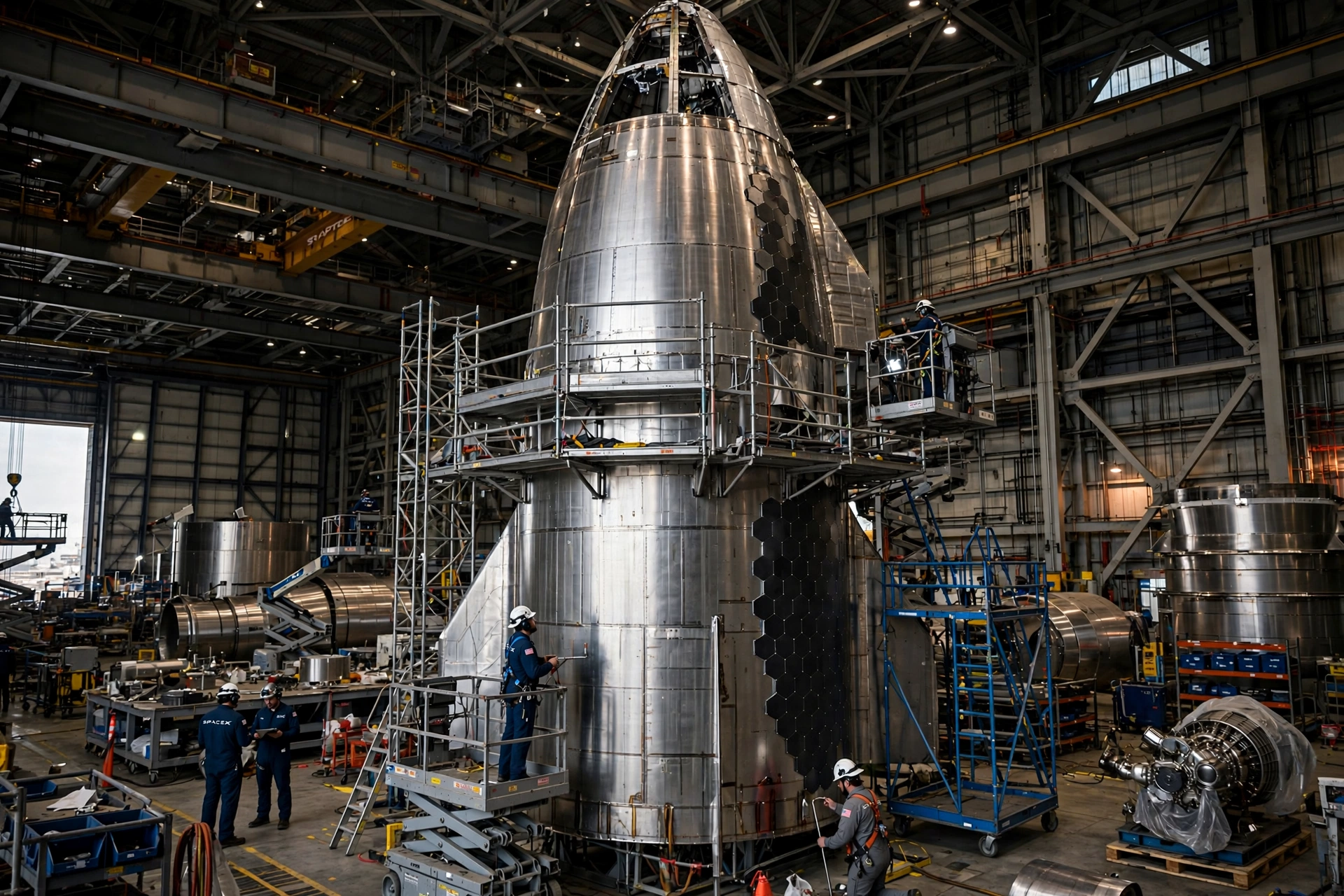
But that’s also not the point. The real prize is ownership in a company that launches more rockets than anyone else on the planet — a company whose rocket thrusters are literally going into Tesla’s new Roadster, a company at the center of the AI boom through its satellite and compute infrastructure. If SpaceX keeps growing the way it has, that $146 share could be worth a lot more by the time today’s ten-year-old graduates college.
And for Musk, the math is almost embarrassingly favorable. His net worth is reported at over $900 billion. A $10.5 billion giveaway is a little over 1% of his fortune — the rough equivalent of someone with $100,000 to their name donating about a thousand dollars. Generous, sure. Transformative for him? Not exactly.
The one-upmanship theory
Look, there’s no way to talk about this story without talking about the billionaire gamesmanship baked into it. Musk explicitly framed the pledge as a response to Anthropic — “give the shares directly to the public” instead of funneling them through a fund. The subtext was hard to miss: your 5% commitment to a board-managed entity? Cute. I’ll hand stock directly to 72 million children.
This is also a man whose SpaceX military business has pulled him deep into geopolitics and the Trump administration’s orbit. A populist giveaway to American families plays very differently than a foundation announcement. It creates 72 million households with a direct financial interest in SpaceX’s success — and in the man who runs it.
Critics will call it a stunt. Supporters will call it visionary. The truth is probably that it’s both: a genuine, if logistically absurd, wealth-sharing idea wrapped in a perfectly timed headline.
What the experts are actually watching
Beyond the social media frenzy, the people who follow this stuff professionally — securities lawyers, wealth-management experts, policy analysts — are all asking the same set of questions. How does a single individual transfer stock to 72 million minors? What entity does the distribution? What happens to unclaimed shares? Does Musk get a charitable deduction, and from which vehicle?
None of this is unanswerable. Billionaires have done large-scale share distributions before, usually through foundations or trust structures. But nothing approaching this scale, this directly, has ever been attempted. If Musk actually follows through, the structure he invents to do it could become a template — or a cautionary tale.
For now, though, all America has is a tweet, a promise, and a whole lot of “what if.” Which, if we’re being honest, might be exactly how Elon Musk likes it.
Frequently asked questions
What exactly did Elon Musk promise?
On October 19, 2026, Musk posted on X that “next year, I will give one of my SpaceX shares to every kid in America,” adding that “this will be the first of many.” He gave no details on eligibility, timing, or how the shares would be distributed.
How much would the giveaway be worth?
With roughly 72 million Americans under 18 and SpaceX shares closing around $146, the total value would be approximately $10.5 billion — about 2% of Musk’s roughly 6.42-billion-share stake in the company, per regulatory filings.
Can minors legally own stock?
Yes, but with complications. Minors in the U.S. typically can’t hold brokerage accounts directly; shares are held in custodial accounts managed by a parent or guardian under laws like the Uniform Transfers to Minors Act. Tax reporting and securities regulations add further layers of complexity to any mass distribution.
Why did Musk make this announcement now?
The pledge came one day after AI company Anthropic announced it would commit 5% of its shares to a public benefit fund. Musk publicly urged Anthropic to “give the shares directly to the public” and said he would do the same. It also arrives amid the 2026 U.S. midterm election cycle, in which Musk is reportedly the largest individual donor.
The bottom line
Elon Musk’s pledge to give every American kid a SpaceX share is equal parts breathtaking and bewildering — a $10 billion promise made in a single social media post, with zero details attached. If he pulls it off, it could reshape how billionaires think about sharing wealth. If he doesn’t, it joins a long list of Musk moonshots that sounded better in a tweet. Either way, 72 million families are about to learn what a share of a rocket company feels like — or at least, they’re about to hear a lot about it at the dinner table.
Sources: Moneywise, MobileSyrup (via the Globe and Mail), Daily Economy News, The New York Ledger.