
North Korea Tests AI-Guided ‘Super-Speed’ Torpedo Zam-2.0 — What We Know So Far
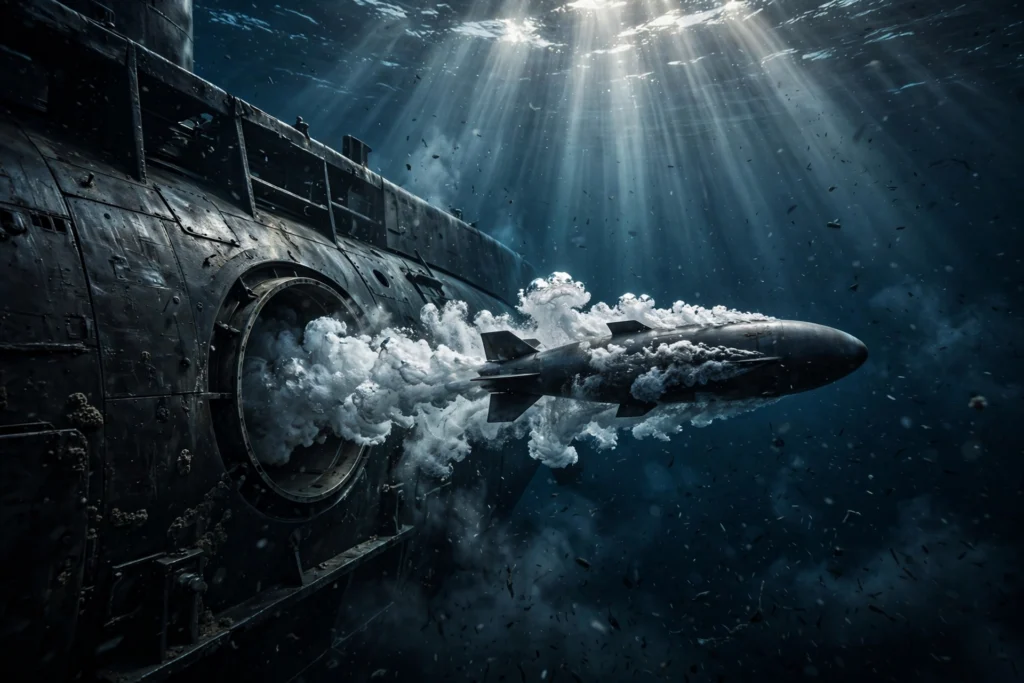
There is a new weapon under the water off the Korean Peninsula — or at least, there is a new claim of one. On Saturday, North Korea’s state-run Korean Central News Agency (KCNA) announced that the country had successfully tested an AI-guided, “super-speed” precision torpedo dubbed the Zam-2.0, and defense analysts from Seoul to Washington are now racing to figure out how much of the story is real.
If the claims hold up, this is a significant development: a weapon that can find its own target underwater, dodge decoys, and move too fast to intercept. If they don’t, it’s still a significant development — because Pyongyang wanted the world to believe it, and it wanted that belief now.
What KCNA says the North Korea AI torpedo can do
According to KCNA, the underwater test took place on Thursday, October 15, and was carried out jointly by the Academy of Defense Sciences, the Missile Administration and the Underwater Weapons Research Bureau. The weapon — officially a “new-type super-speed precisely guided torpedo weapon” — was tested “to confirm the successful technical updating” of the system.
Here is what the state agency claims the Zam-2.0 demonstrated:
- AI-powered target detection and guidance. “AI technology was applied to the target detection and the guidance function,” KCNA said — though it offered no technical details, no data, and no evidence of what that AI actually does.
- Improved rocket propulsion. The test verified performance of a rocket propulsion unit, backed by more than 180 trials conducted over the past five years.
- A “significant step” for the navy. Senior defense science officials who observed the test called it a major achievement that could bring about a “significant change” in the development of North Korea’s naval forces.
What KCNA did not say is almost as important: no range, no measured speed, no accuracy figures, no deployment timeline, and not even where the test happened. Yonhap News Agency, citing KCNA, was the first to push the story internationally, and outlets including Reuters and Aju Press quickly followed — but every published account traces back to that single state-media report. The South Korean military, which often accuses Pyongyang of exaggerating its weapons technology, has not commented on the claims.
Why AI in a torpedo is such a big deal
To understand why military watchers took this announcement seriously enough to debate it, you have to understand the torpedo problem. Traditional torpedoes are dumb weapons: they run straight or follow a simple wire, and modern navies defeat them with decoys — noisemakers that seduce the torpedo into chasing the wrong target.
A torpedo that genuinely used artificial intelligence to detect and classify targets would be a different animal. Analysts cited in South Korean and international coverage say such a weapon could distinguish a real ship from a decoy, adjust its course autonomously as the vessel moved, and execute maneuvers to evade countermeasures. That is exactly the threat KCNA wants its adversaries to imagine.
Then there’s the speed claim. Military experts quoted in Korean coverage suggest the Zam-2.0 could be a supercavitating torpedo — a design that forms a layer of gas at the nose to reduce water resistance, allowing ultra-high underwater speeds. The reference to a rocket propulsion unit supports that theory. But combining high-speed travel with reliable guidance is extraordinarily difficult, and analysts assess that other countries developing such torpedoes have hit technical walls getting them to work operationally.
“At high speeds underwater, a torpedo generates significant noise, making it easier to detect,” analysts point out — and reducing that noise is a major technical challenge that North Korea does not yet appear to have solved. In other words, the fastest torpedo in the world is also the loudest one, and loud things get noticed.
A message aimed squarely at South Korea’s navy
Lim Eul-chul, a professor at Kyungnam University’s Institute for Far Eastern Studies, interpreted the test as a signal aimed at a very specific audience. “The test launch appears to have been intended to flaunt its super-speed AI-driven torpedo, which is difficult to detect in advance and avoid, targeting the South Korean Navy’s major surface ships,” he said.
The logic is straightforward: a faster incoming weapon leaves a ship less time to detect the threat and respond. Reliable AI guidance would compound that difficulty by letting the torpedo adjust as its target moves. Lim’s reading explains why Pyongyang’s announcement pairs the words “super-speed” and “AI” so deliberately — together, they describe a weapon that the South Korean Navy’s larger surface vessels would struggle to defend against.
That message lands in a hostile political climate. Kim Jong Un has halted diplomacy and cooperation with South Korea, describing the South as a permanent enemy, while nuclear negotiations with Washington remain stalled. Against that backdrop, every weapons test doubles as a statement of intent.
One test in a much bigger arms race
The torpedo trial did not happen in isolation. The Korean Peninsula is in the middle of a fast-moving weapons race, and October has been a busy month:
- Oct. 8: South Korea test-fired its first domestically developed hypersonic glide vehicle, overseen by President Lee Jae Myung — a weapon designed to change course in flight and slip past missile defenses.
- Oct. 14: North Korea launched two types of submarine-launched strategic cruise missiles in the East Sea. The Washington Post reported the launches were likely conducted from the Hero Kim Kun Ok, a submarine unveiled in 2023 that Pyongyang claims can carry tactical nuclear weapons — though outside experts have questioned the vessel’s capabilities. South Korea’s military assessed the two missiles were fired using different launch mechanisms, which analysts say could signal progress toward making the vessel operational.
- Oct. 15: The underwater test of the Zam-2.0 torpedo, announced two days later.
This is also part of a broader naval buildup. North Korea has commissioned two 5,000-tonne destroyers — the Choe Hyon and the Kang Kon — and is pursuing submarines capable of launching strategic weapons, including a nuclear-powered submarine it unveiled under construction in March 2025. Last month, Kim Jong Un explicitly emphasized the need to raise “the level of artificial intelligence” in the country’s weapons systems, and earlier this month Pyongyang announced an AI-assisted launch of an intermediate-range hypersonic missile. The Zam-2.0 fits squarely into that declared program.
The AI-weapons race is not unique to Pyongyang, either. Military technology is becoming a political flashpoint in its own right — the Trump administration has been tightening the leash on Elon Musk’s Starshield satellite network for Ukraine, and US bombers have flown near Venezuela twice this month in a show of force. Who controls the smartest weapons — and the smartest eyes watching them — is now one of the defining contests of the decade.
Why experts are not convinced (yet)
Skepticism is warranted, and analysts are not hiding it. The reservations break down into a few clear lines:
- No independent verification. Everything traces back to KCNA. No measured speed, no range, no accuracy data, no operational status. The South Korean military’s silence leaves Pyongyang’s account as the only public record.
- The AI claim is unproven. KCNA did not explain what it means by AI. Experts cited by The Hindu questioned whether North Korea’s weapons possess the advanced digital capabilities described in these presentations. “Smart” in a press release and smart in combat are very different things.
- The physics are brutal. Supercavitating weapons are loud, and loud is detectable. If the Zam-2.0 is truly super-speed, it may be trading stealth for velocity — a trade-off that changes the threat calculation entirely.
- The exaggeration record. South Korean and Western analysts have a long history of catching North Korean weapons claims inflated or staged. That pattern does not disprove the test, but it sets the bar for belief higher.
One theory drawing attention: analysts say North Korea may be advancing its missile and weapons technology with Russian military support, in exchange for sending troops to support Russia’s war against Ukraine. If true, the Zam-2.0 might represent not just domestic progress but technology transfer — which would make it more credible, and more concerning.
Meanwhile, the sea remains a dangerous place for reasons beyond any single weapon. Earlier this month, a container vessel was sunk by a suspected naval mine in the Strait of Hormuz, a reminder that underwater warfare is not a hypothetical — it is already reshaping the world’s most critical shipping lanes.
Frequently asked questions
What is the Zam-2.0?
It is the name North Korea’s state media gave to a “new-type super-speed precisely guided torpedo weapon” it says it tested on October 15, 2026. KCNA claims the torpedo uses artificial intelligence for target detection and guidance, but no independent evidence has been published.
When did North Korea test the AI torpedo?
The underwater test took place on Thursday, October 15, 2026, according to KCNA, which announced the result two days later on Saturday, October 17. The agency said the test was conducted by the Academy of Defense Sciences, the Missile Administration and the Underwater Weapons Research Bureau.
Is the North Korea AI torpedo a real threat?
That is the question analysts are debating. A torpedo that combined super-speed with genuine AI guidance would be harder to detect, decoy and intercept — a real problem for navies. But KCNA provided no technical evidence, South Korea’s military has not commented, and experts caution that noise, guidance reliability and the country’s history of exaggerated claims all need verification before the threat can be measured.
Why does this test matter for South Korea and the US?
Analysts interpret the test as a message aimed at the South Korean Navy’s larger surface ships — a weapon they would have less time to detect and defend against. It also fits a declared program by Kim Jong Un to put AI into more of North Korea’s weapons, and arrives during a rapid tit-for-tat arms race that has included South Korean hypersonic tests and North Korean submarine missile launches in the same month.
The bottom line
North Korea says it has built an AI-guided torpedo fast enough to change naval warfare. What is proven is narrower: Pyongyang publicized an underwater trial, called the weapon the Zam-2.0, and associated it with AI-enabled detection and guidance. Everything else — the speed, the smarts, the operational reality — remains a state-media claim awaiting evidence.
But here is what is not in doubt: the direction of travel. Submarine-launched cruise missiles this week, a super-speed torpedo this week, AI in weapons by declared policy, a nuclear-powered submarine under construction, and a rival across the border testing hypersonic glide vehicles of its own. Whether the Zam-2.0 is a breakthrough or a bluff, the arms race it sits inside is accelerating — and the sea off the Korean Peninsula just got a little louder, and a little more dangerous.