
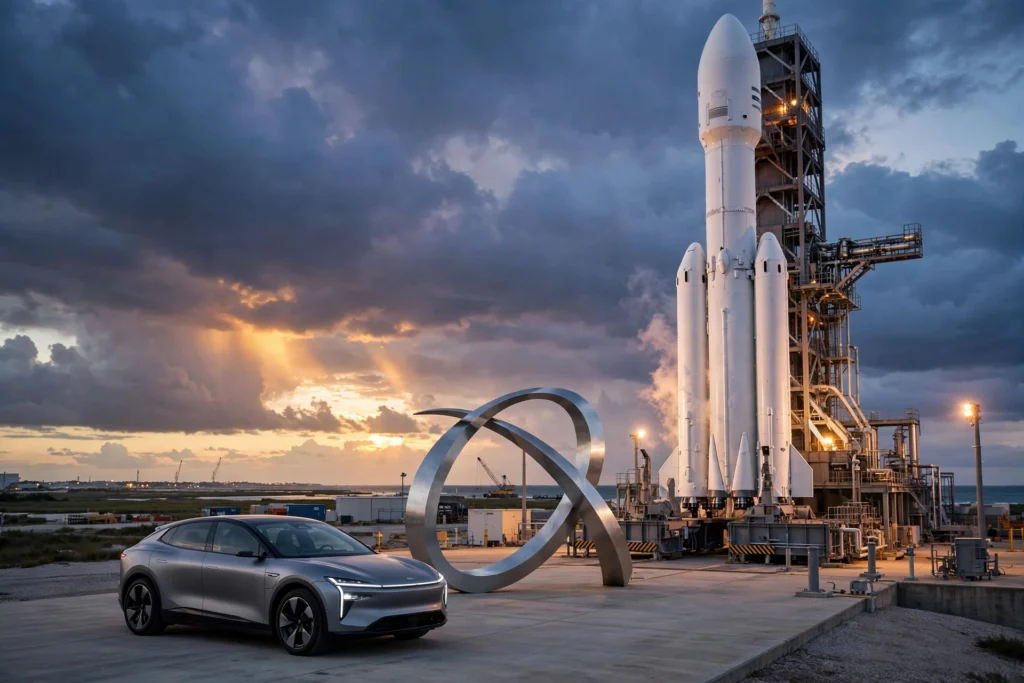
Elon Musk Confirms Tesla–SpaceX Merger Talks: Two Special Committees Formed, But a Deal Is Not a Certainty
What if the company that put electric cars on every street suddenly joined forces with the company that owns the sky? That is no longer a dinner-table fantasy. Elon Musk confirmed on Tuesday that Tesla and SpaceX have each set up special committees of independent board directors to explore a merger — the first formal step toward combining two of the most valuable companies on the planet.
And in classic Musk fashion, the disclosure came with a twist: the world’s richest man cannot take part in the talks himself.
Speaking on SpaceX’s third-quarter earnings call, Musk told investors the committees were created at the request of shareholders and will negotiate without him, because he runs both companies. “Because I’m a conflicted party, I can’t actually be in the discussions of the special committees,” he said. “So, it’s an odd kabuki dance where two groups of people are talking and I can’t be in the conversation.”
The numbers are almost absurd
Let’s put the scale of a possible Tesla SpaceX merger in plain terms. SpaceX is valued at roughly $2 trillion, and Tesla at nearly $1.5 trillion, according to reporting by Mint citing Reuters data. Combined, they would be worth at least $3.5 trillion — bigger than any company in history. SpaceX ranks as the world’s seventh most valuable company, while Tesla sits in 11th place.
If a deal happens, Musk — who controls about 82% of SpaceX’s voting power and owns around 45% of the rocket company — would hold roughly a third of the combined giant.
Investors wasted no time placing bets. Tesla shares climbed in extended trading after Musk’s remarks, rising 1.73% to close at $380.45, within touching distance of their 20-day high. SpaceX’s shares were up about 8% after hours at the time of writing, with Tesla also around 2% higher. The market, it seems, likes the idea — even if Musk keeps insisting it might never happen.
“Don’t assume it’s a certainty”
This is the part the headlines risk burying: nothing has been agreed. Musk stressed that the two committees have not settled on the terms of any transaction, and there is no guarantee they ever will.
“I think some people out there assume that a SpaceX and Tesla merger is a certainty, and I think that would be overstating it,” he said, per NBC News. “At this point, the special committees have not reached agreement on the terms of any transaction. Obviously, there’s no guarantee that they will.”
There is also a serious procedural mountain to climb. Any deal would need shareholder approval — and on the Tesla side, that means a majority of ALL outstanding shares, not just the shares that get voted. Musk himself called that “quite a high hurdle.” He has reason to be cautious: Tesla’s 2025 attempt to declassify its board won support from only 39.4% of outstanding shares and failed. Musk’s own voting stake sits near 20%, so a merger would need broad backing from institutions and a retail investor base that often leaves its votes uncast.
Why Musk thinks it’s a good idea anyway
Make no mistake about where the CEO stands personally. “Do I think it would be a good idea? Yes,” he said on the call. His case for the Tesla SpaceX merger rests on one word: superintelligence.
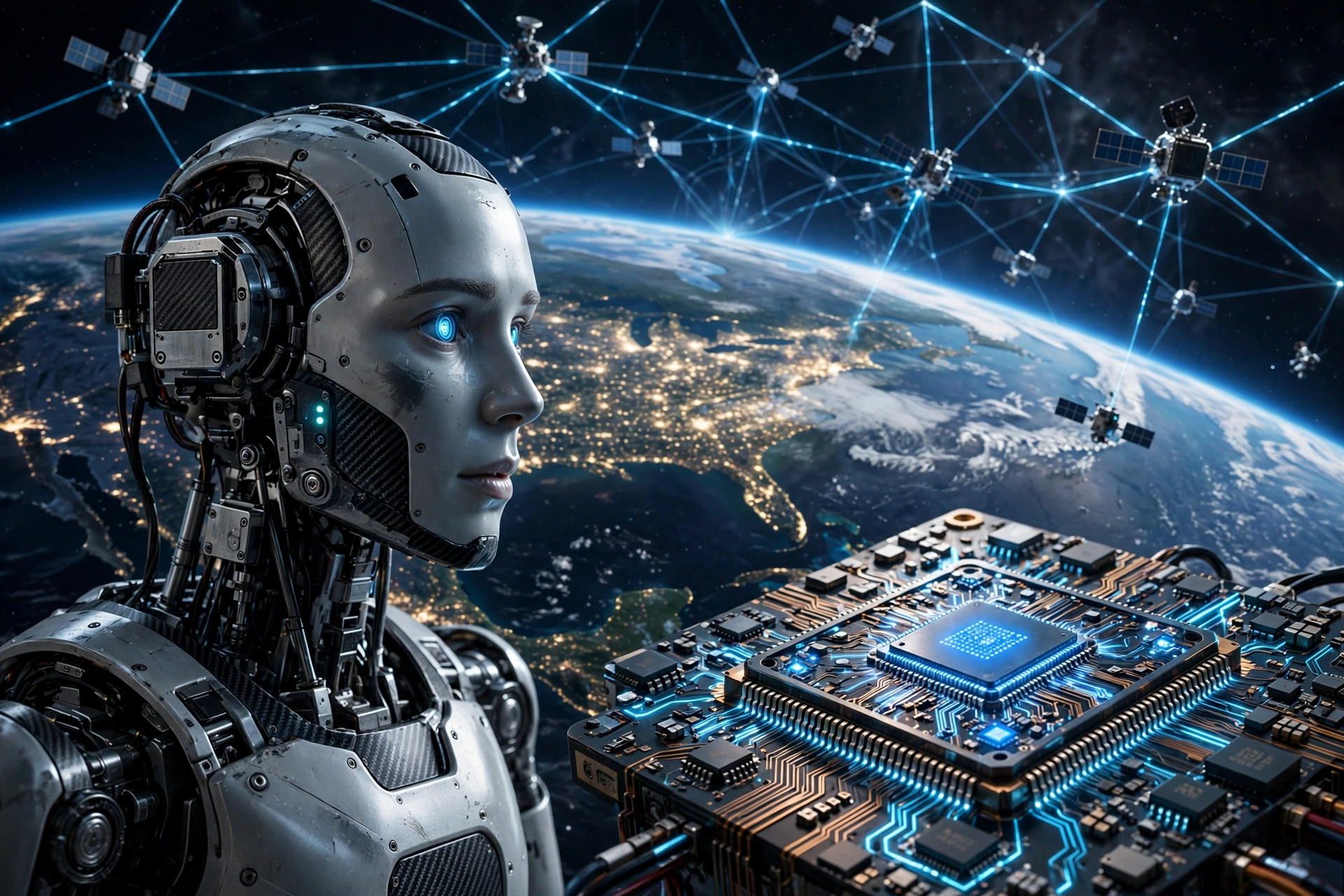
“I do think there’s a lot of merit to combining the companies as we are pretty much in the superintelligence singularity,” Musk told the call. “And there’s a lot to be gained from cooperating on developing superintelligence software, chip design, the TeraFab, obviously robotics, mass to orbit with the Starlink constellation, connectivity.”
That is more than rhetoric. The two companies already work together on a surprising number of projects: the next-generation Roadster — the sports car promised with optional SpaceX-built rocket thrusters — and Terafab, a major chip-making facility in Austin, Texas. Tesla also sells its energy-storage products and electric vehicles to SpaceX, and the two firms have shared personnel and some board members for years.
A question investors couldn’t stop asking
The merger speculation did not appear out of thin air. It has been simmering for months, and the trail is worth following.
Back in January, Bloomberg reported that SpaceX had weighed a merger with Tesla as an alternative before it ultimately acquired Musk’s AI lab xAI in February. Then in July, Musk told a Wells Fargo analyst on Tesla’s second-quarter earnings call that combining the companies “could not be discussed on an earnings call” and would require a proper process. Now, that process appears to have begun.
Ahead of Tuesday’s call, shareholders submitted questions on SpaceX’s Q&A platform, and one went straight to the point: “When will SpaceX merge with Tesla?” It was among the most supported questions. Musk’s answer — two committees, no terms agreed, no certainty — was the most honest version of a response he could give.
What the financials say
Separately on the earnings call, SpaceX disclosed that it had $63 billion in backlog or contracted revenue yet to be recognized as of the end of the third quarter. That is the kind of pipeline most companies can only dream of, and it helps explain why a combined Tesla-SpaceX could dominate both the automotive and space industries for the next decade.
For Tesla, the timing is also notable. The carmaker has been repositioning itself as an AI and robotics company — robotaxis, the Optimus humanoid robot — rather than just an automaker. Folding in SpaceX’s satellite constellation, chip ambitions, and manufacturing culture would supercharge that pivot. As we reported earlier, SpaceX is already expanding its connectivity footprint through moves like its 800MHz spectrum deal for mobile satellite service.
The biggest “what if” in business
Let’s be honest about what a merger would actually mean. Cars that talk to satellites built by the same company. Robots trained on chips designed in-house and manufactured at the Terafab. Rockets whose avionics run on software from the same team writing the code for your car. It would be the most vertically integrated industrial empire ever assembled.
It would also be a governance nightmare, a regulatory magnet, and a valuation puzzle with no precedent, no template, and — per Musk’s own warning — no guarantee of success.
Then again, this is Elon Musk, the man who once gave away a SpaceX share to every kid in America as a gesture — a figure who has made a career of attempting things the rulebook says shouldn’t work. His track record is exactly why investors are listening even as he tells them to temper their expectations.
Frequently asked questions
Are Tesla and SpaceX merging?
Not yet. Both companies have formed special committees of independent directors to explore a potential merger, but no terms have been agreed and Elon Musk says a deal is “not a certainty.”
Why would Elon Musk want to merge Tesla and SpaceX?
Musk’s stated rationale is “superintelligence” — cooperation on AI software, chip design, the Terafab semiconductor project in Austin, robotics, launch capacity, and Starlink connectivity. The companies already collaborate on projects like the next-generation Tesla Roadster with SpaceX thrusters.
What is the combined value of Tesla and SpaceX?
SpaceX is valued at about $2 trillion and Tesla at nearly $1.5 trillion, so a combined entity would be worth at least $3.5 trillion — the largest in corporate history.
Why can’t Elon Musk take part in the merger talks?
As CEO and a major shareholder of both companies, Musk is a conflicted party. Securities rules exclude him from the special committees’ discussions, which consist of independent directors. He called the arrangement “an odd kabuki dance.”
What needs to happen for the merger to go through?
The committees must first agree on terms, and then shareholders of both companies would need to approve the deal. On Tesla’s side, approval would require a majority of all outstanding shares — a high hurdle that has tripped Tesla up before.
The bottom line
For now, the Tesla SpaceX merger is officially a possibility, not a plan. Two committees are talking, the world’s richest man is watching from the hallway, and Wall Street is pricing in the dream. Musk believes combining his car company and his rocket company would unlock a new era of superintelligence — and the industrial logic is genuinely compelling. But the vote-counting math is brutal, the committees have agreed on nothing, and the man himself says don’t treat this as settled.
Watch the committees, not the commentary. If they reach terms, history gets made. If they don’t, the kabuki dance ends quietly — and both companies keep doing exactly what they were doing: building the future, separately.